
1971 Ferrari 365 GTB/4 ‘Daytona’ Competizione
price on application
The only example prepared to Competizione specification in period by famed Ferrari distributors and privateers Charles Pozzi, this Ferrari 365 GTB/4 'Daytona' with period racing history is an ideal entrant for the Le Mans Classic Heritage, Modena Cento Ore, Tour Auto and much more.
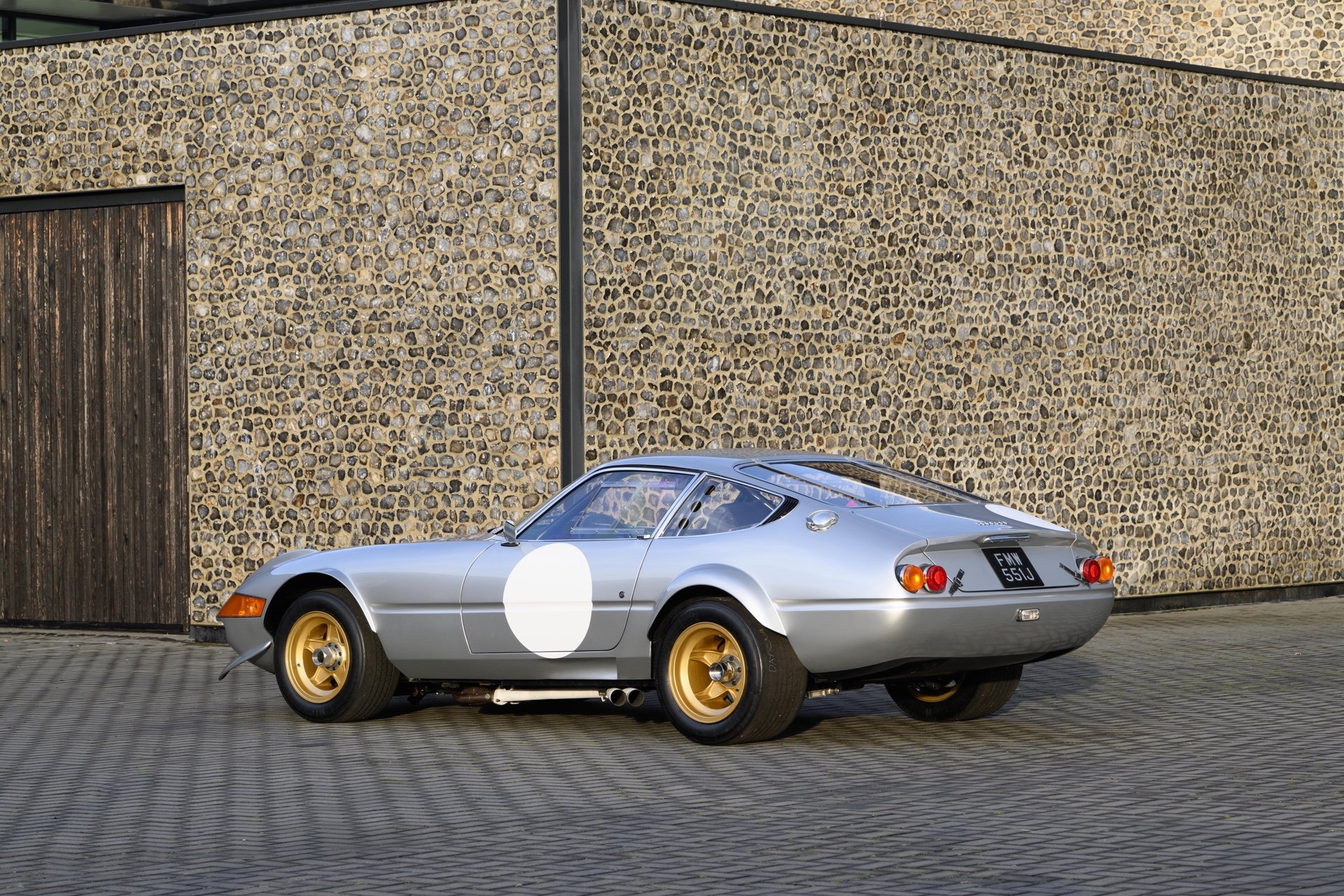
OverviewThe only known example to be converted to full Competizione specification in-house by famed and highly regarded specialists Charles Pozzi S.A. of Paris
Fitted with numerous upgrades in period, including body modifications as well as suspension upgrades
Raced in the 1972 4 Hours of Le Mans by French privateer and known enthusiast Philippe Cornet-Epinat
Well-established car with known history from new, particularly in recent years under the stewardship of classic Ferrari authority, Michael Sheehan
Converted to Spider configuration after its period competition use before being fully restored to its 1972 4 Hours of Le Mans specification
Displayed at the Cavallino Classic in 2015 and 2017
Road registered and taxed in the United Kingdom
Prepared for historic racing by UK specialists ERA Motorsport and most recently used during the 2025 season
Highly eligible for the Le Mans Classic Heritage (as recently confirmed by Peter Auto), Modena Cento Ore, Tour Auto, Le Mans Classic Series (CER1), the Sebring and Daytona retrospectives and much more

-
There is very little that can match the poise and stance of a competition prepared Ferrari 365 GTB/4 'Daytona'. It is quite remarkable that it would take three years before the first 'Daytona' hit the racetrack and only on the insistence of major Ferrari distributors like Luigi Chinetti and Charles Pozzi. None of the subsequent cars were built by the official Ferrari competition department but the striking 'Daytona' racers would go on to win their class at Le Mans for three years running (1972, 1973 and 1974) and one would finish second overall at Daytona as late as 1979. Highly sought after today, the Group 4 Ferrari 365 GTB/4 'Daytonas' are eligible for events like the Le Mans Classic, Modena Cento Ore and the Tour Auto.
Styled for Pininfarina by Leonardo Fioravanti and introduced at the 1968 Paris Auto Salon, the 365 GTB/4 'Daytona' stands as a striking mix between the curvaceous designs of the 1960s and the wedge shapes that would go on to dominate the 1970s. Under the skin, the 'Daytona' boasted a sophisticated 4.4-litre four-cam V12 engine, five-speed transaxle and all-round independent suspension. Ahead of the introduction there was a lot of speculation in the media that the new range-topping Ferrari would be dubbed the 'Daytona', as a nod to Ferrari's 1-2-3 victory in the 1967 Daytona 24 Hours. Story has it that Enzo Ferrari was so upset that the proposed model name had been leaked that the new car was officially only ever referred to as the 365 GTB/4 but the 'Daytona' name stuck.
The 365 GTB/4 followed in the footsteps of the 250 GT and 275 GTB. Whereas the immediate predecessors had formed the basis of hugely successful, factory-built GT racers, no official competition 365 GTB/4 was developed. This was partly due to Ferrari's strained relationship with the governing bodies over homologation issues, which had started with Ferrari somewhat optimistically trying to suggest that the mid-engined 250 LM was an evolution of the front-engined 250 GTO. There was also a shift in the class structure that favoured purpose-built competition cars over production-derived GT racers. As a result, the Ferrari competition department focused on Formula 1 and top-level sports car racing after the 1966 season.
Several major Ferrari customers like Luigi Chinetti and Charles Pozzi recognised the competition potential of the 'Daytona.' Chinetti, Ferrari's North American distributor and owner of the North American Racing Team (N.A.R.T.), led the way with one-off outings in 1969 and 1970 with a mildly modified example. N.A.R.T. then had a 365 GTB/4 prepared for the 1971 edition of the 24 Hours of Le Mans. Ferrari had no official involvement, but the chassis used had been a factory development car until it was acquired by Chinetti in April of 1971. Competing in the same class as the iconic Porsche 917 and Ferrari 512, come 3pm on Sunday it would cross the line in an incredible 5th overall.
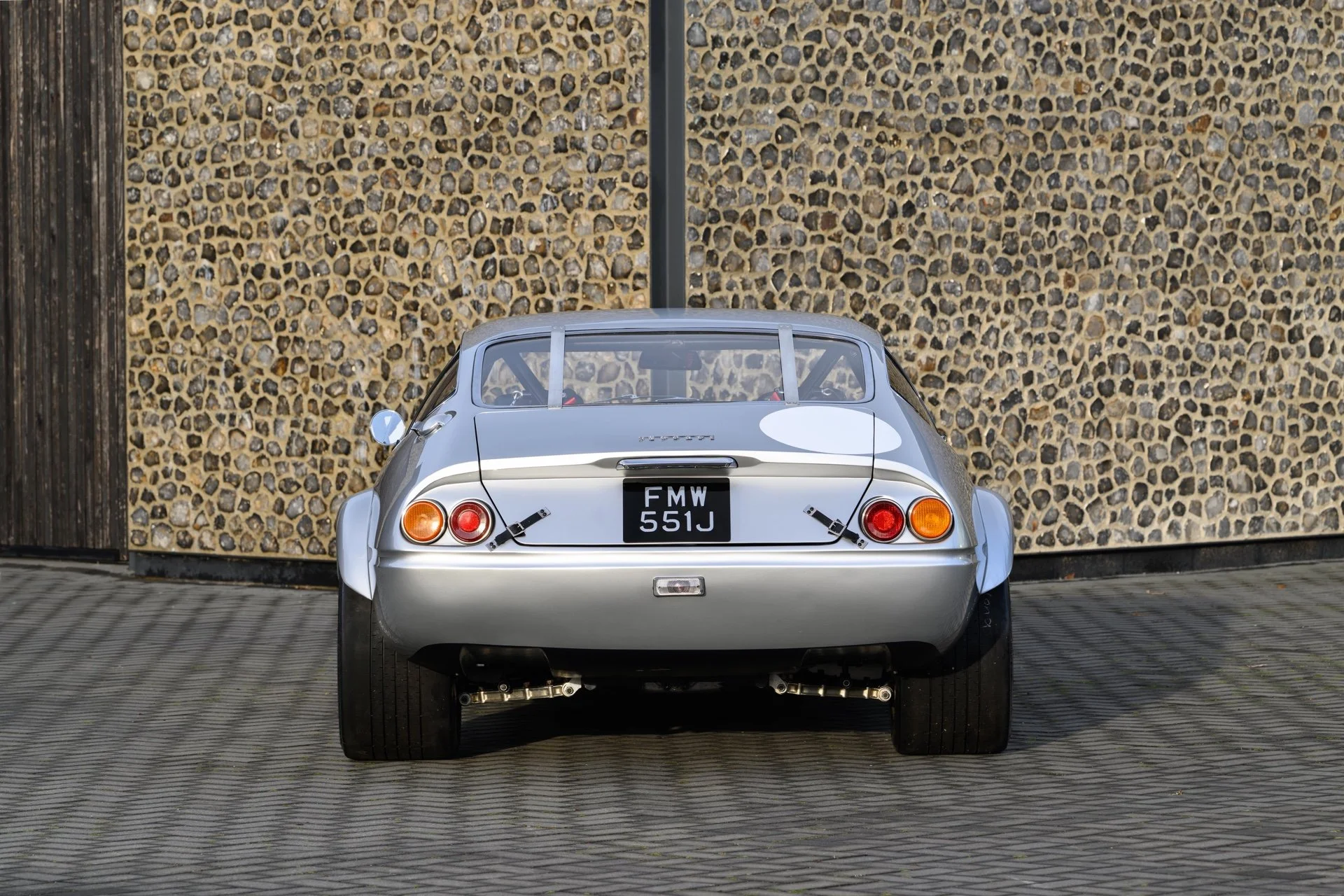
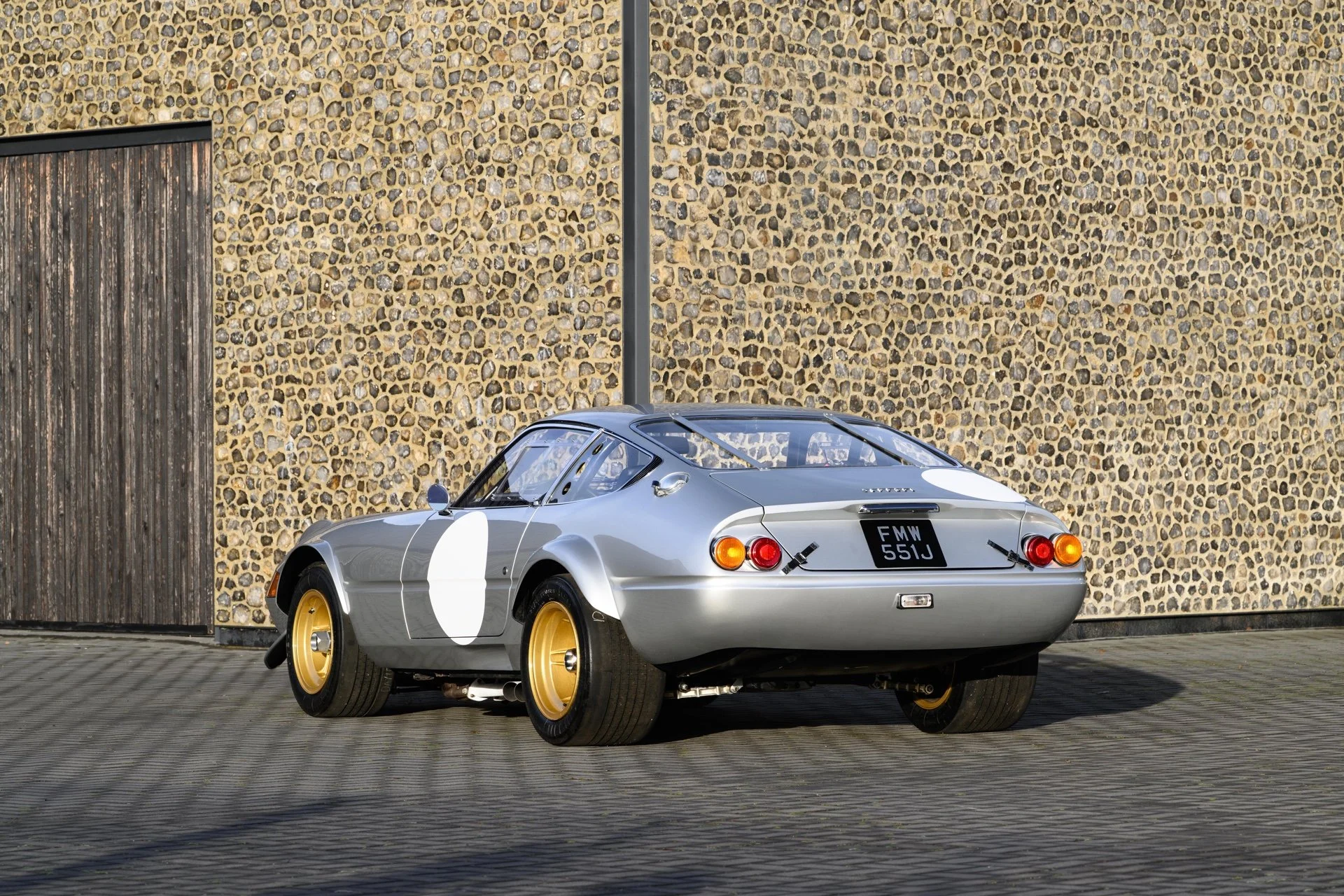
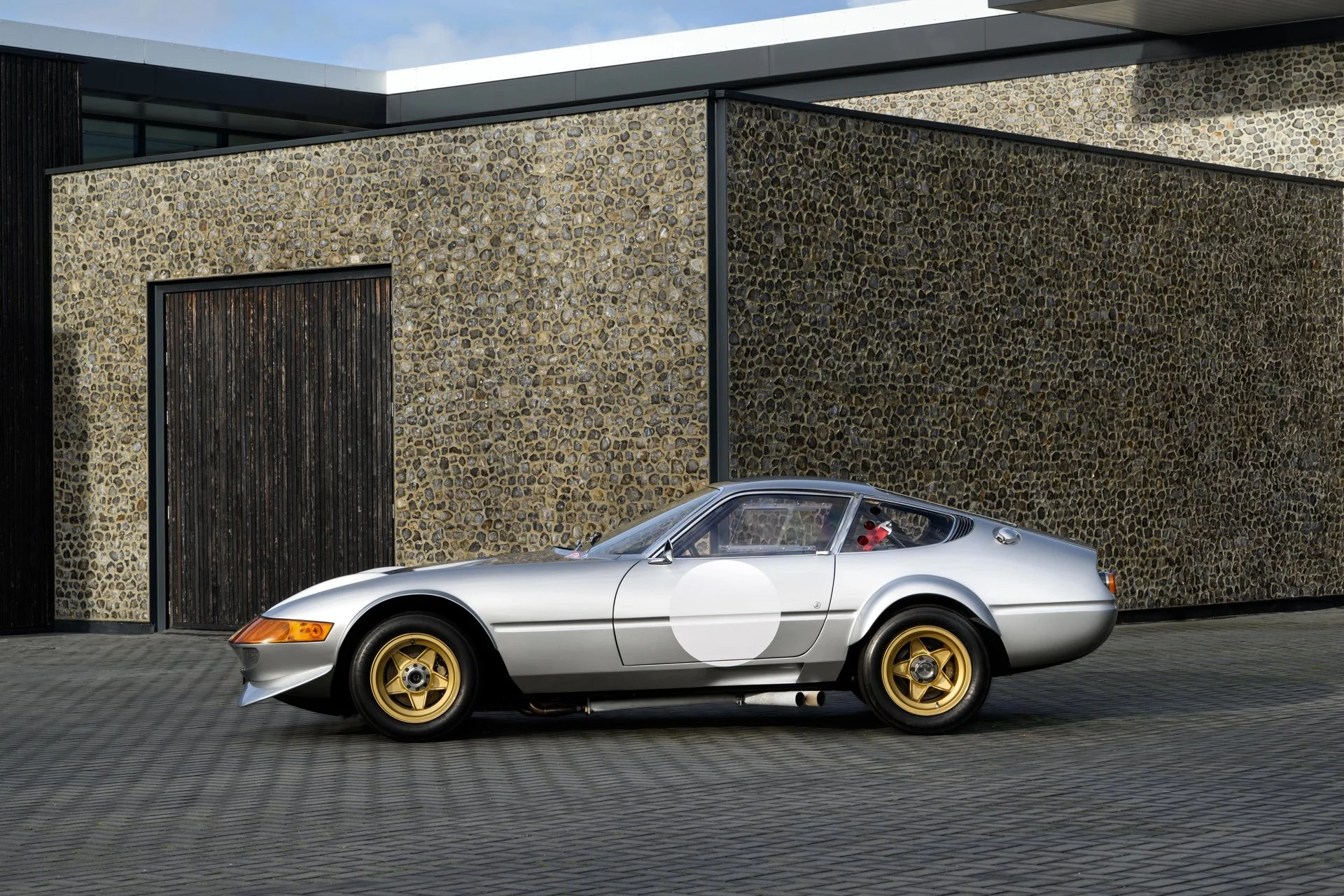
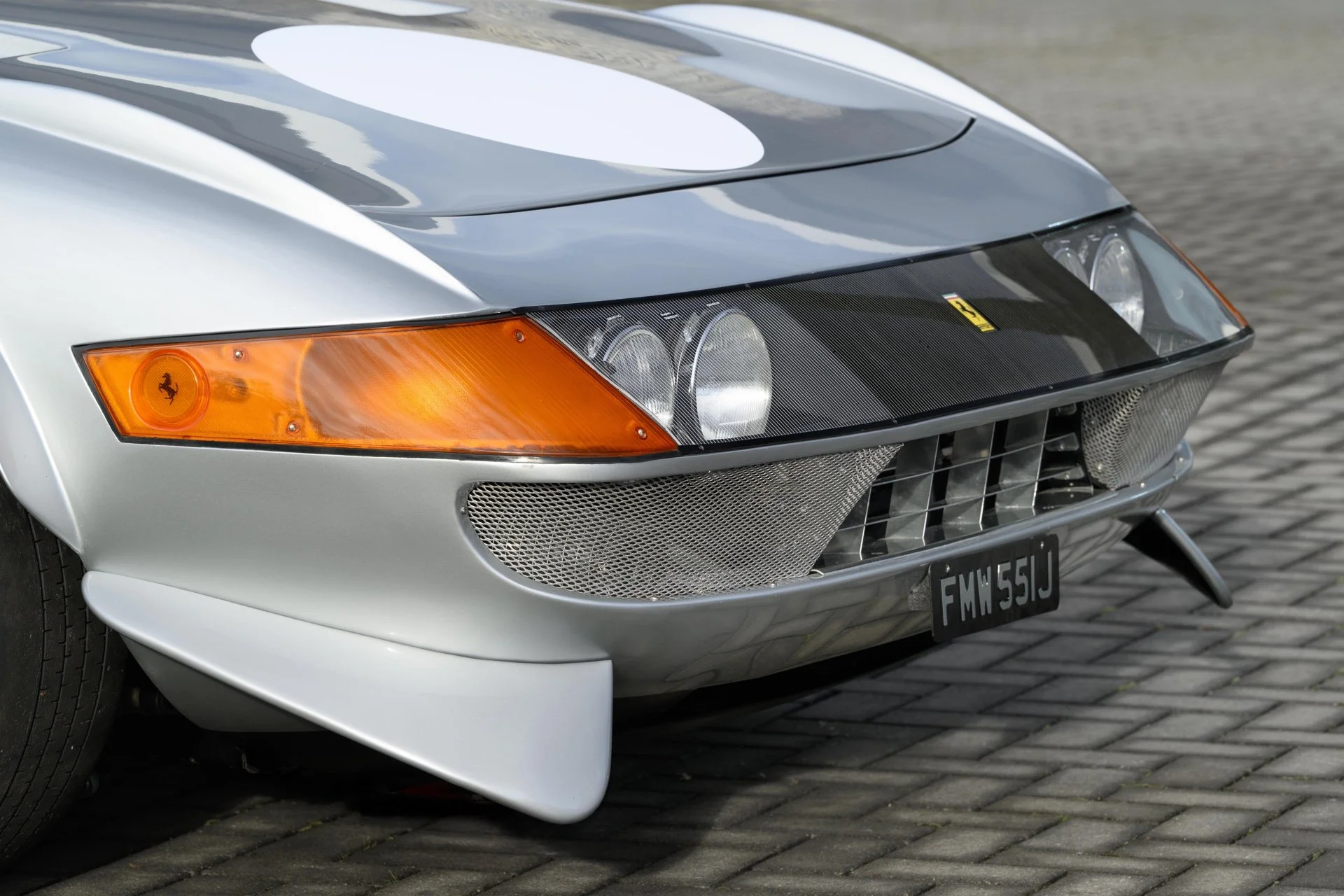
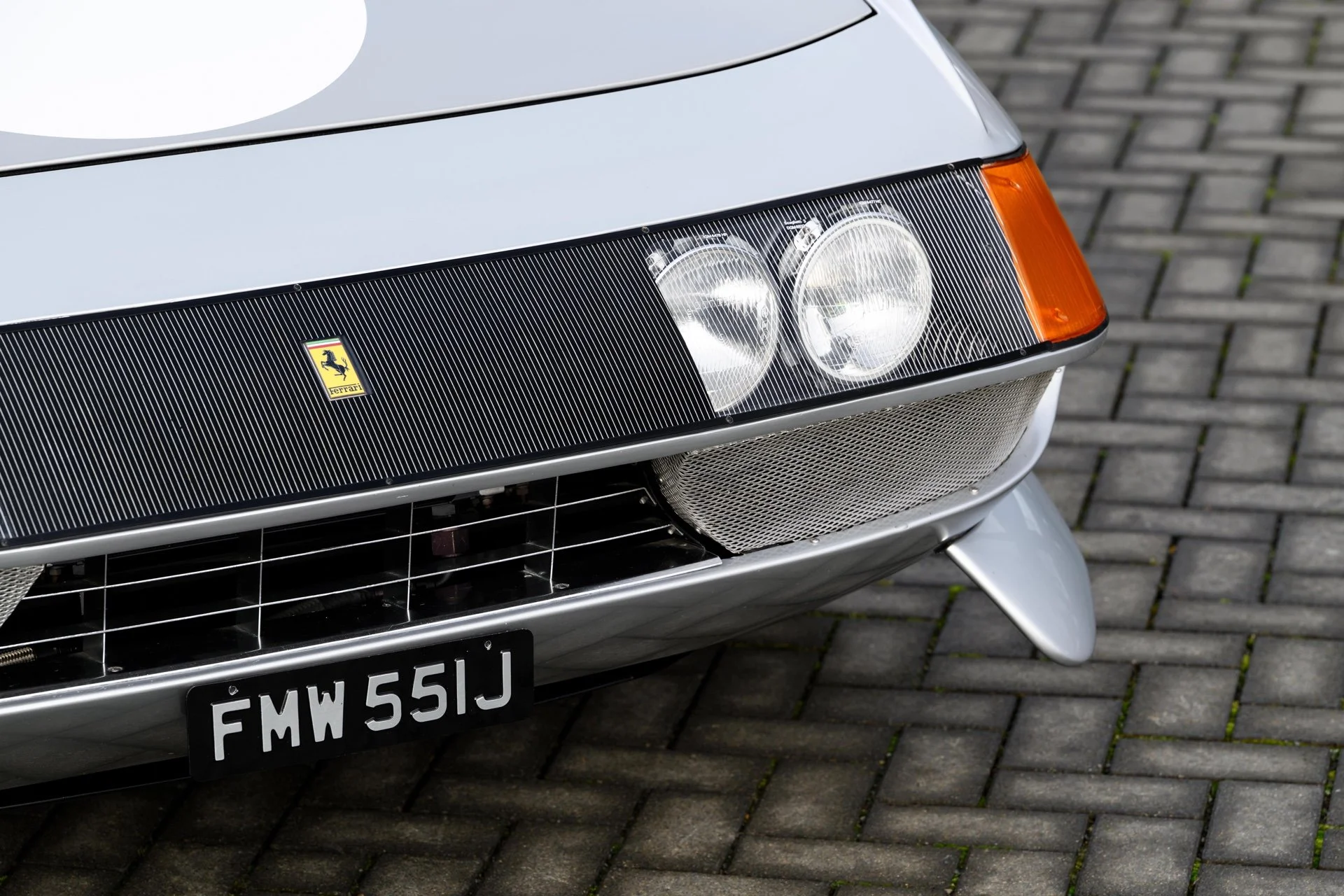
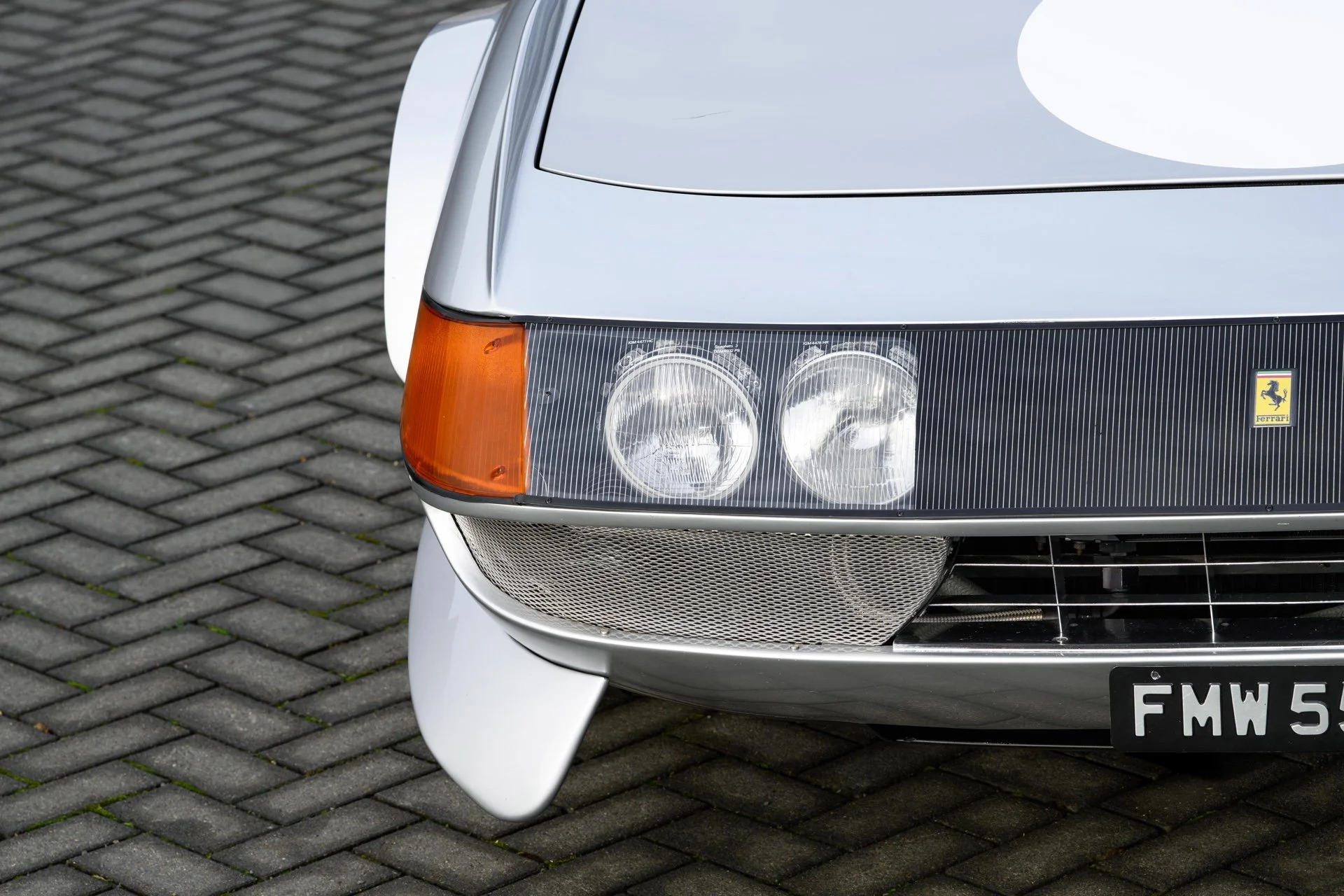
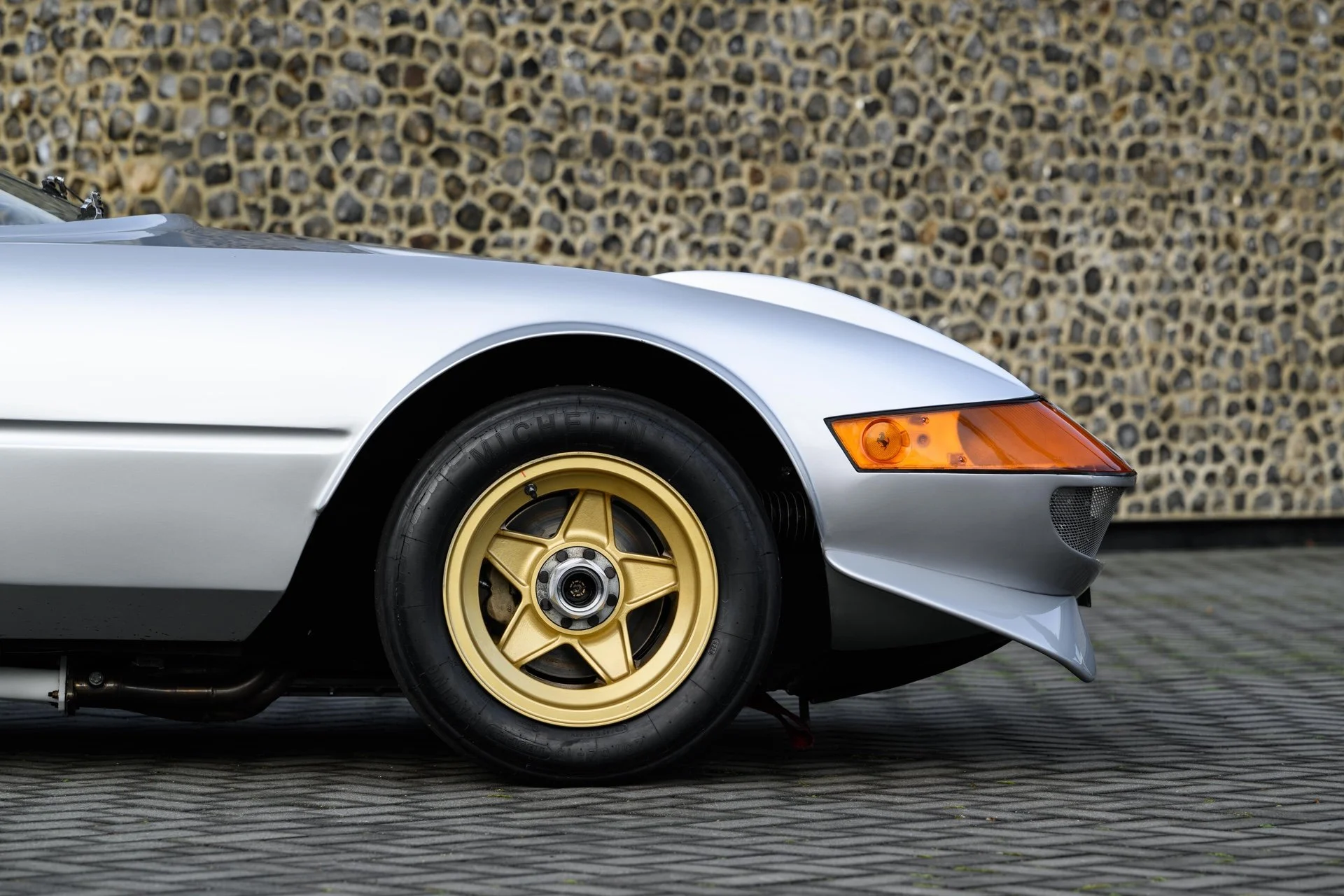
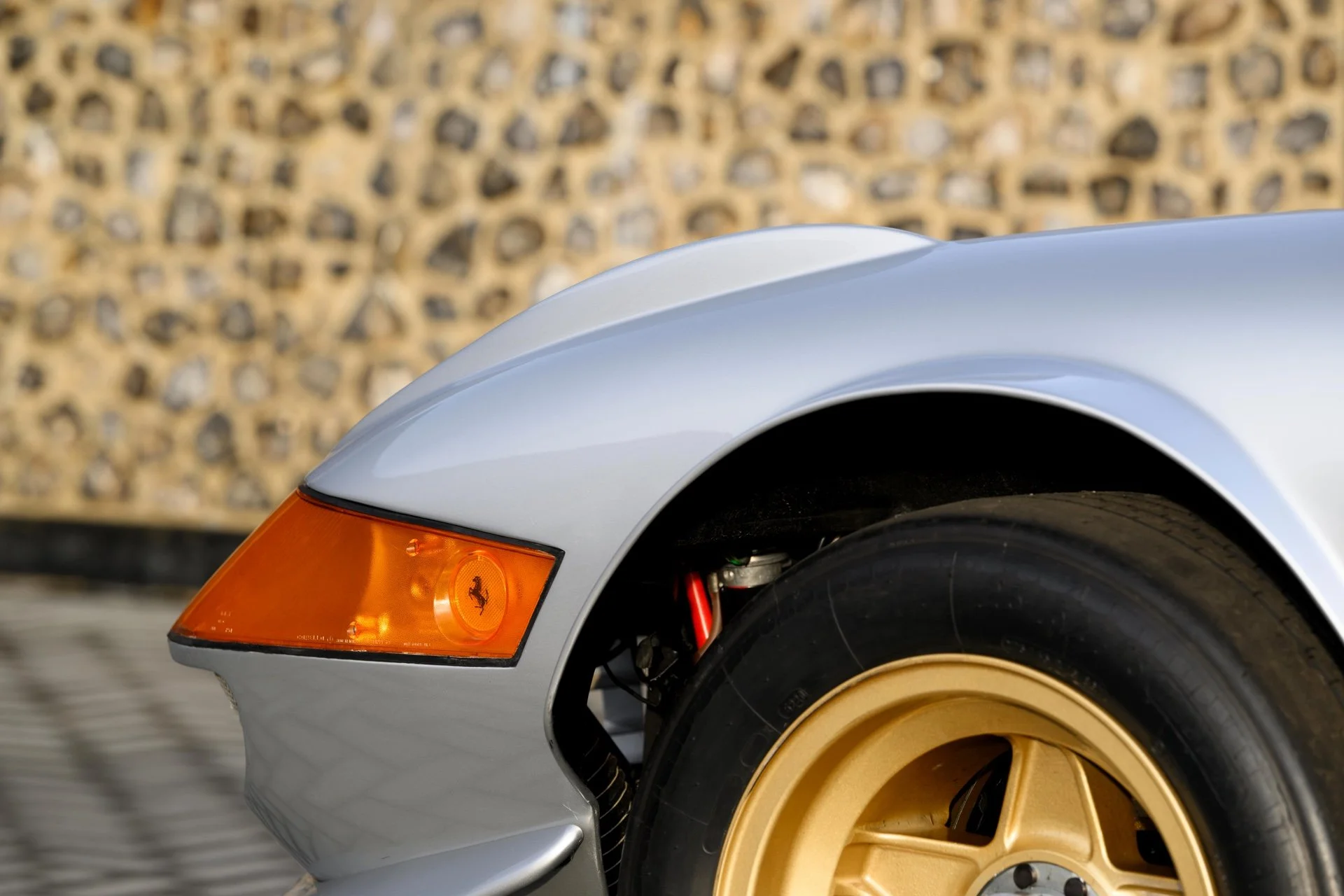
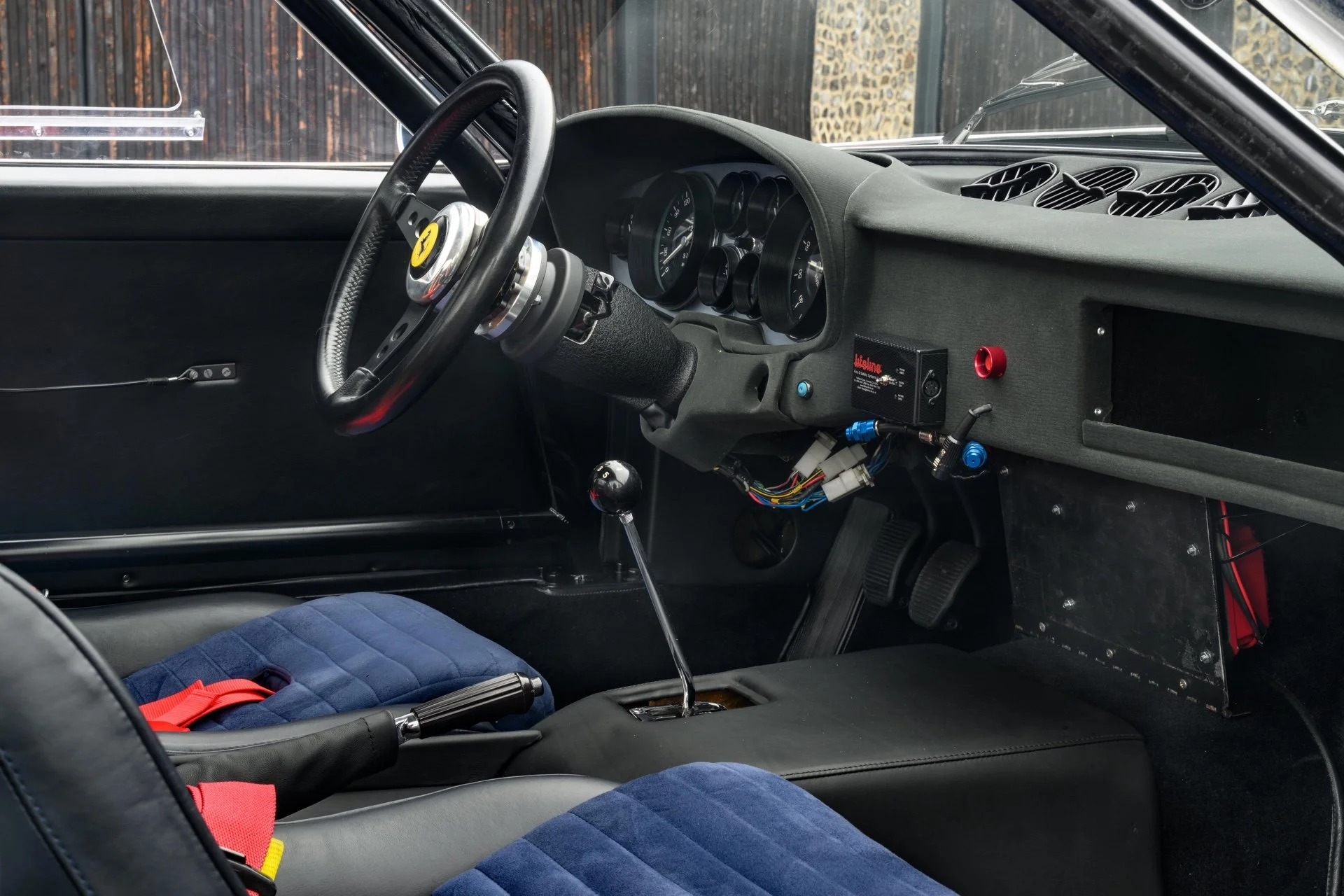
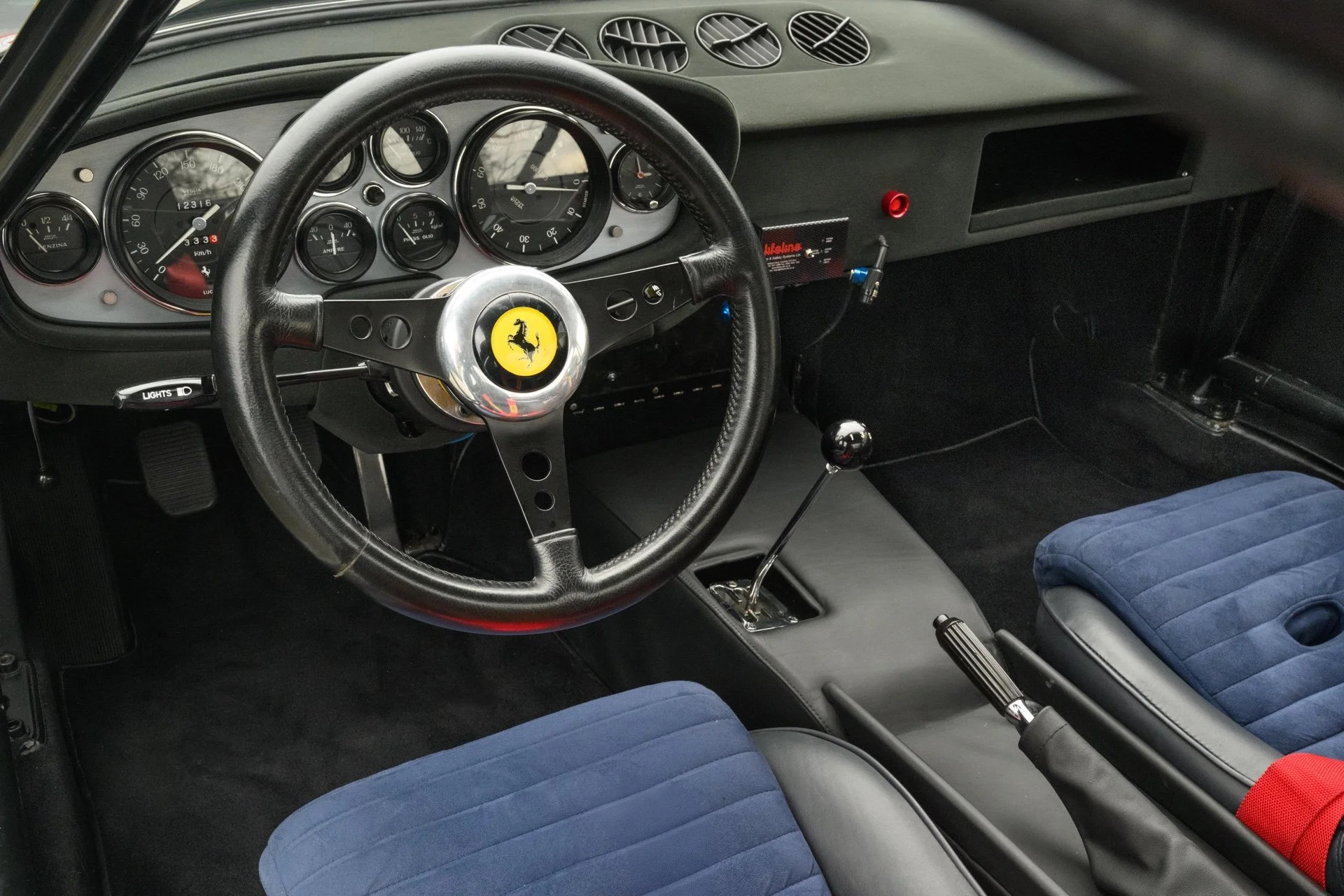
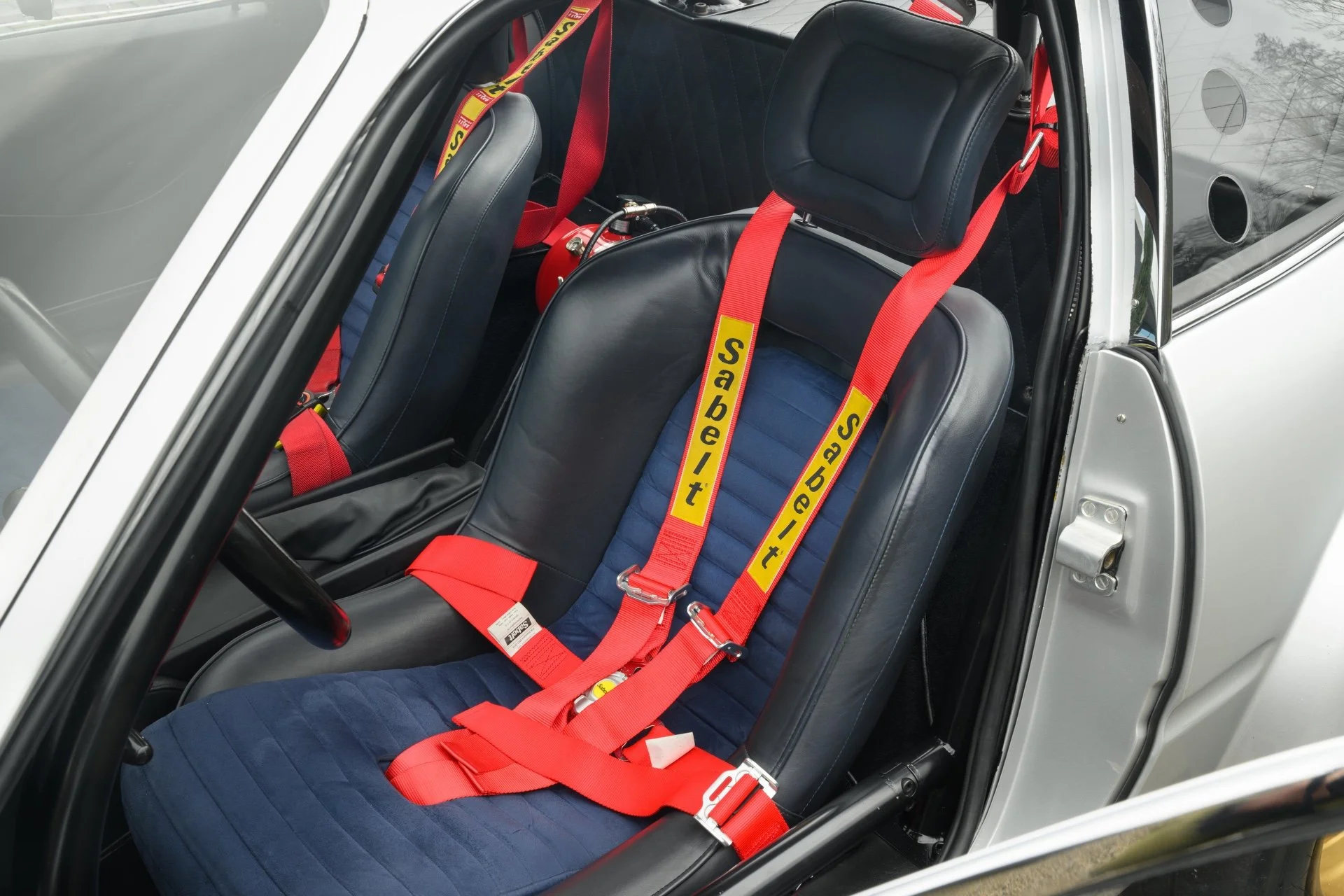
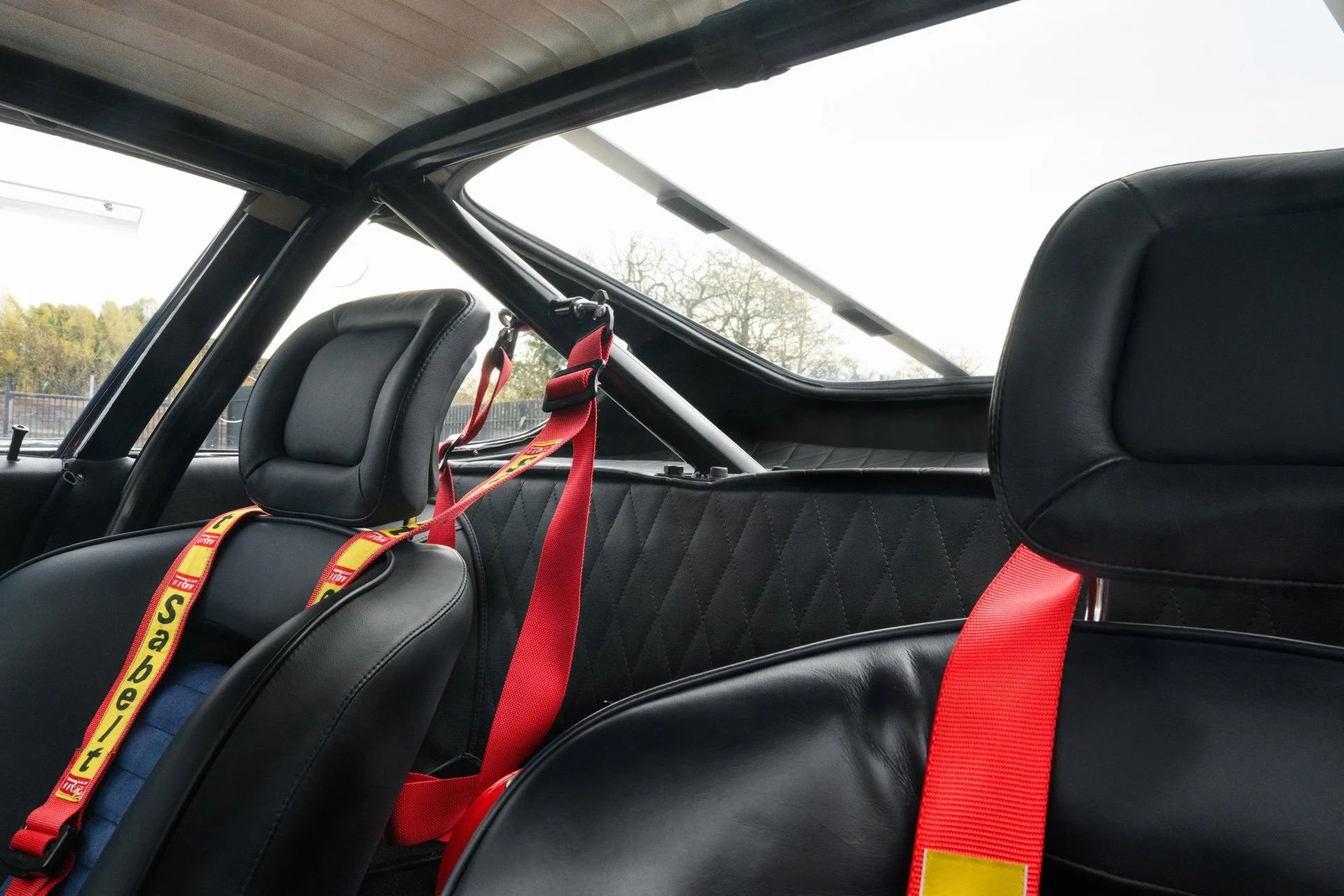
A significant rule change ahead of the 1972 season sparked even more interest in a 'Group 4' 365 GTB/4. Ferrari could no longer resist and had five examples specifically prepared for racing by the Assistenza Clienti, or client service centre, for the plausible deniability of direct factory involvement. Built during the second half of 1971, all five were sold to long-time Ferrari customers and distributors like Chinetti but also Charles Pozzi in France and Scuderia Filipinetti in Switzerland. They featured further developed engines, good for at least 430 bhp, stripped down interiors, modified bodywork to house wider wheels and tyres, and subtle aerodynamic aids like front spoilers and 'fences' on the front fenders. All these modifications only enhanced the aggressive design of the 'Daytona'.
These five cars were followed by a further run of ten cars built in 1972 and 1973, while the Ferrari customer service department also made parts available to their distributors to have existing cars upgraded to Group 4 specification. Over the next decade, the instincts that Luigi Chinetti and Charles Pozzi initially had would prove correct. The Ferrari 365 GTB/4 ‘Daytona’ Competizione would go on to claim three consecutive class wins at the 24 Hours of Le Mans, as well as a 2nd overall at the 1978 24 Hours of Daytona. Away from circuit racing, the Competizione would continue to be successful, with a Charles Pozzi entered 365 GTB/4 also won the Tour de France rally outright.
A competition prepared Ferrari 365 GTB/4 'Daytona' is a sight to behold. Especially when fitted with 'side-pipes' the Group 4 'Daytona' has a soundtrack to match. Today, this model is highly revered in both the Ferrari and collector car communities, becoming highly sought after by the most discerning connoisseurs. Perfectly suited for driving on the road, the V12-engined Ferrari is also very welcome at events like the Le Mans Classic Heritage, Modena Cento Ore, Tour Auto and the Le Mans Classic Series.
-
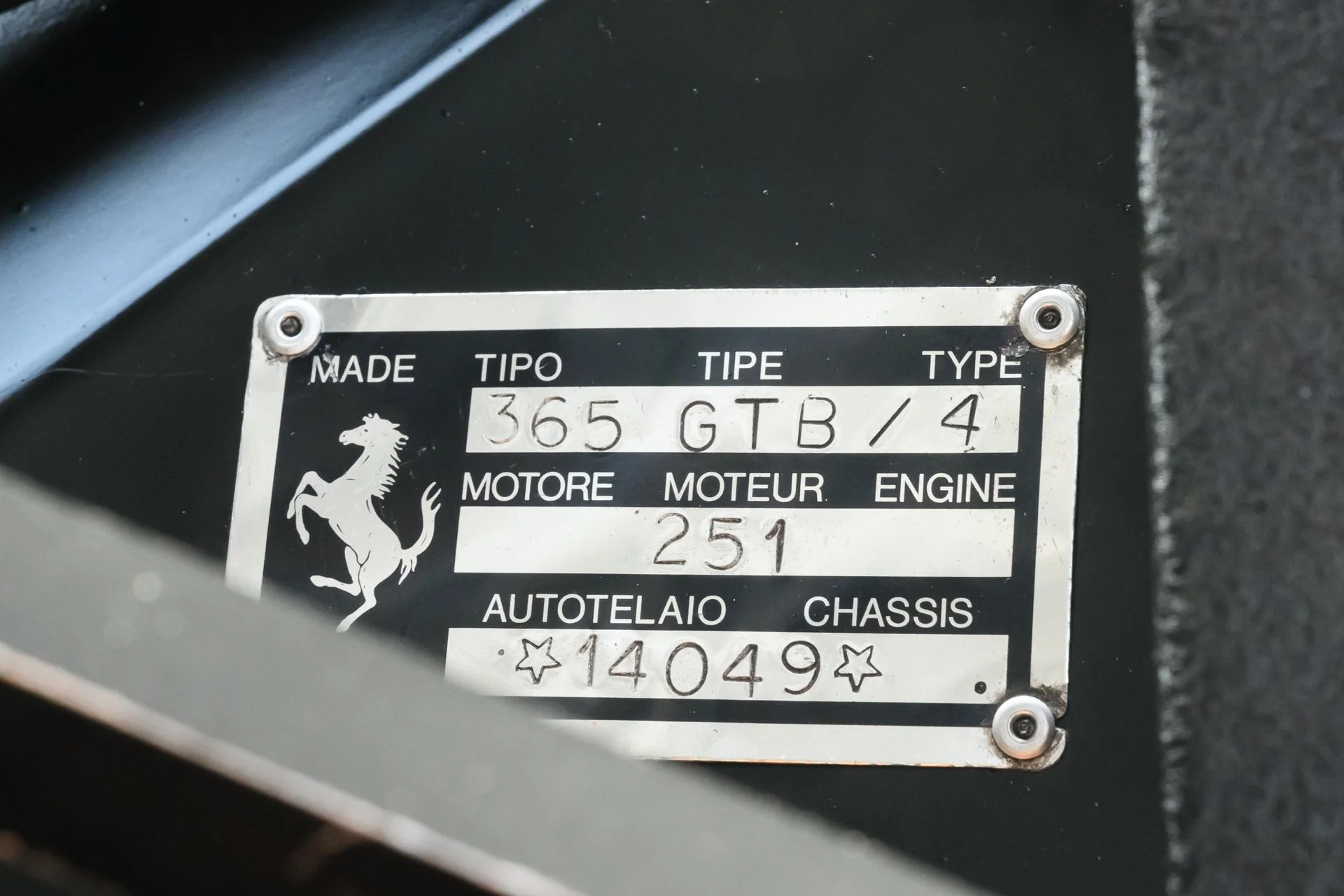
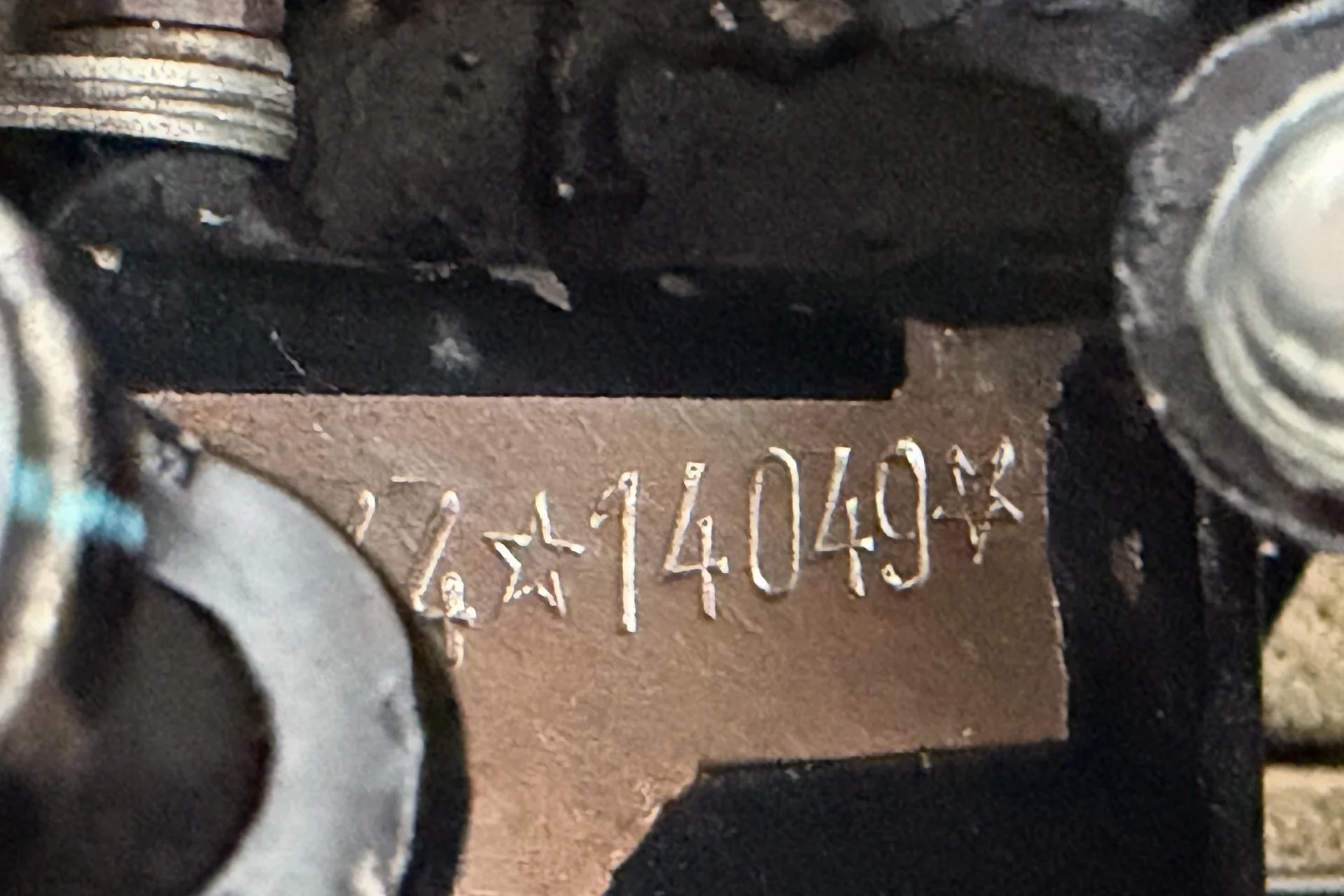
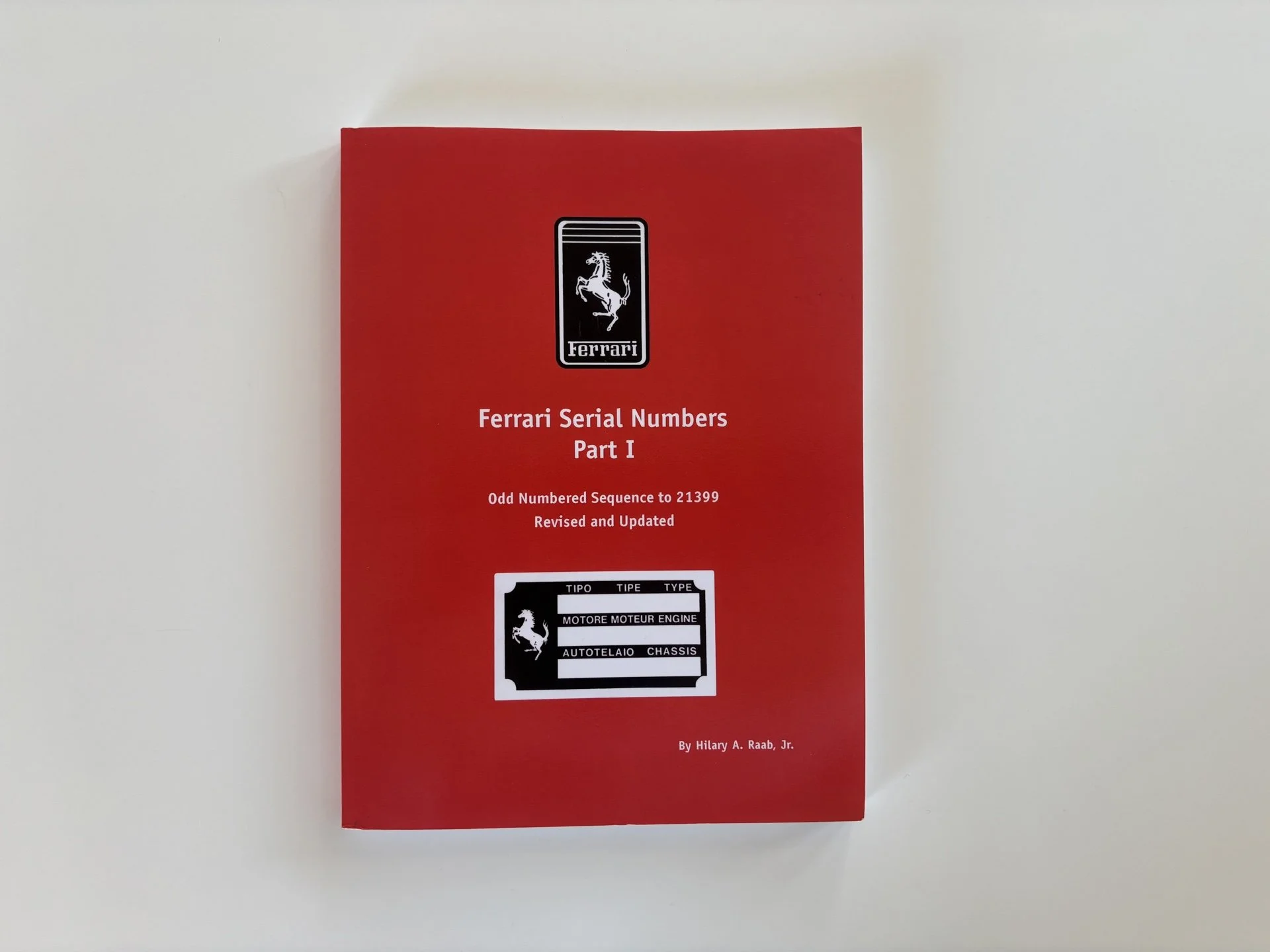
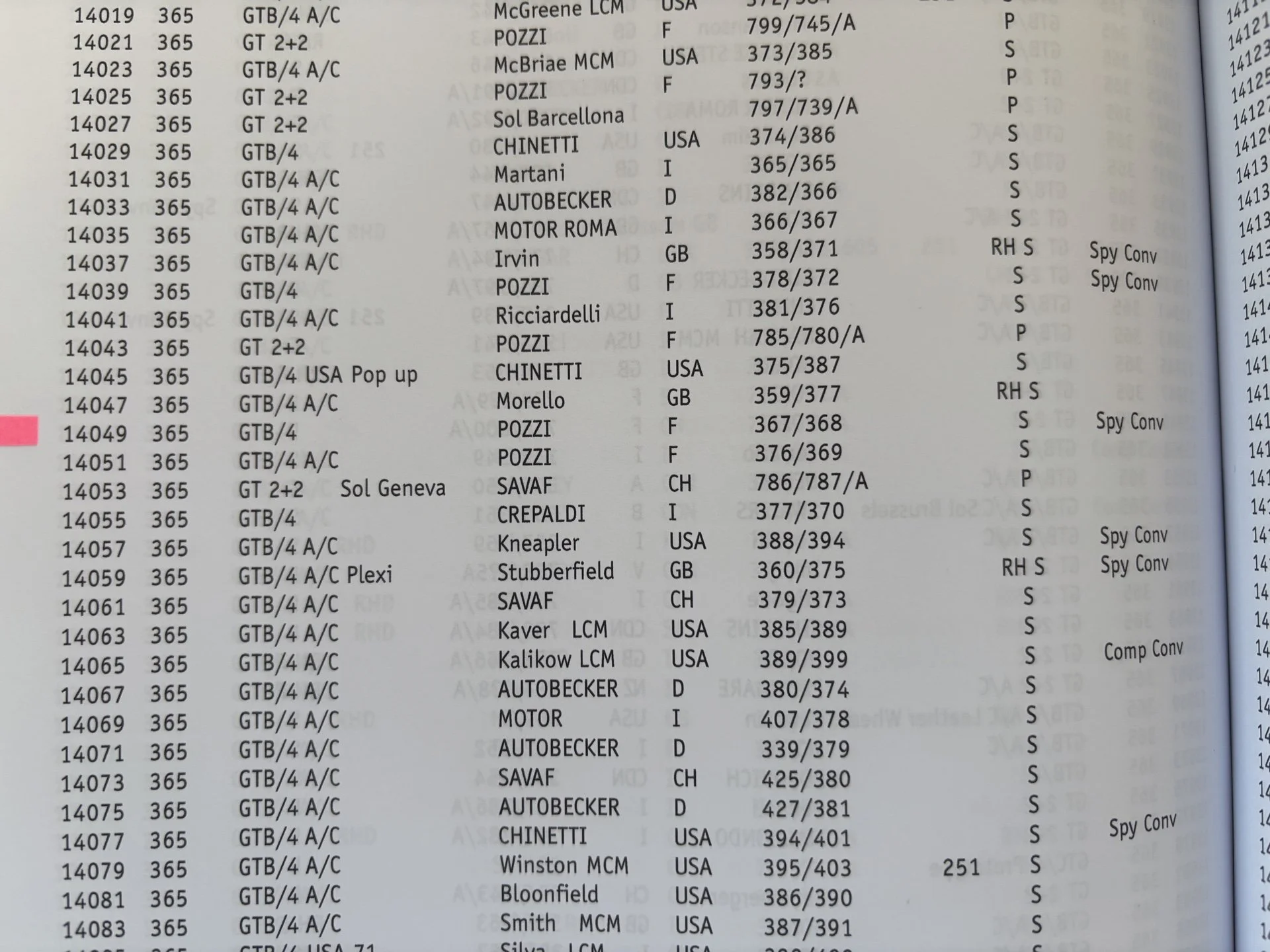
According to the work of marque historian Michael Sheehan and Ferrari historian Keith Blummel, chassis 14049 was built in January 1971, finished in Argento 106-E-1 (silver) with a black leather interior. Through French distributor Charles Pozzi, the car was acquired by its first owner, noted as a Mr Caillas. Mr Caillas’s time with the car is not known and he appears to have only owned the car briefly before it was sold on to fellow Frenchman Philippe Cornet-Epinat. A wealthy enthusiast, Cornet-Epinat had a taste for fast cars, owning an early Lamborghini Miura P400 and a Maserati Ghibli, with factory upgrades.
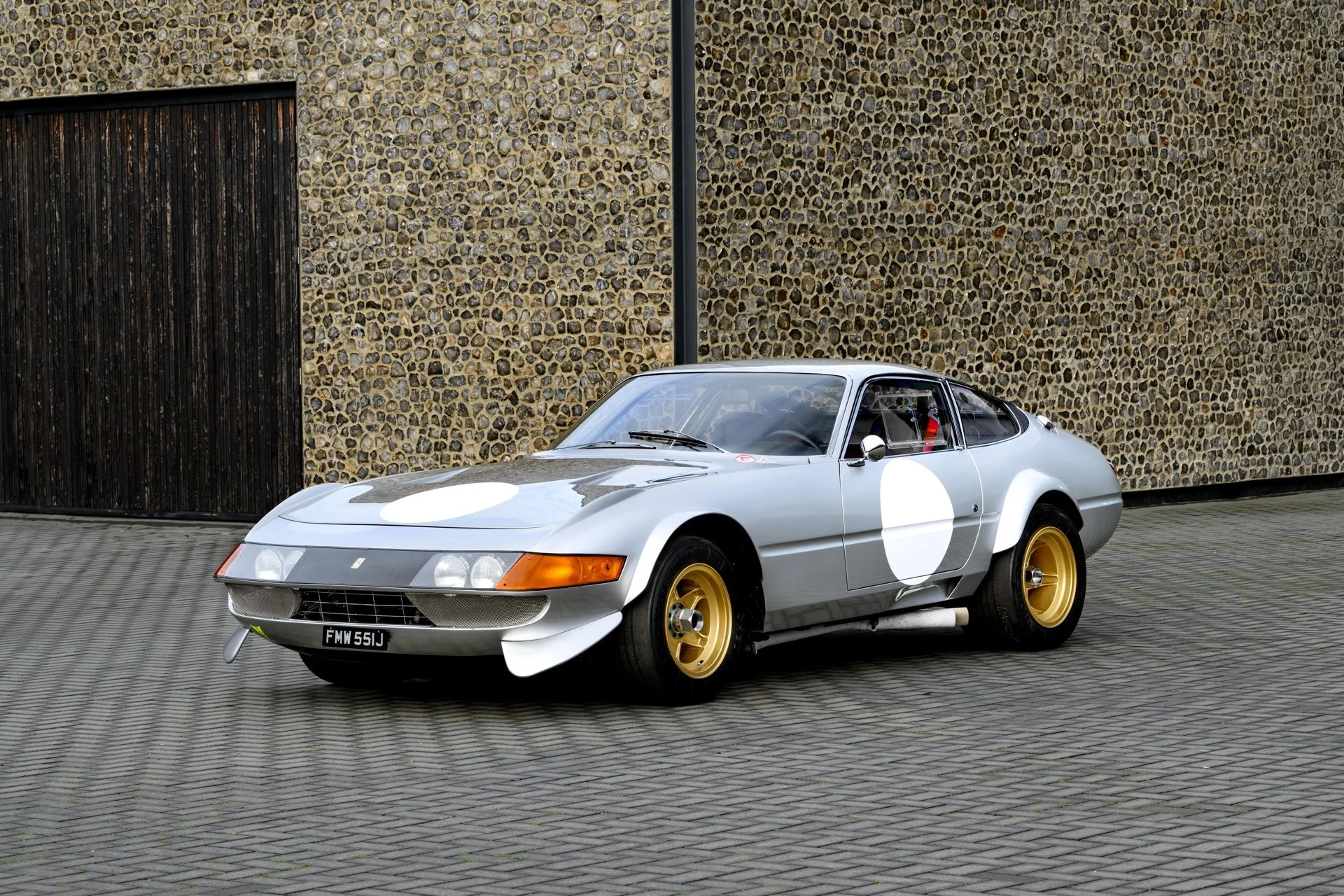
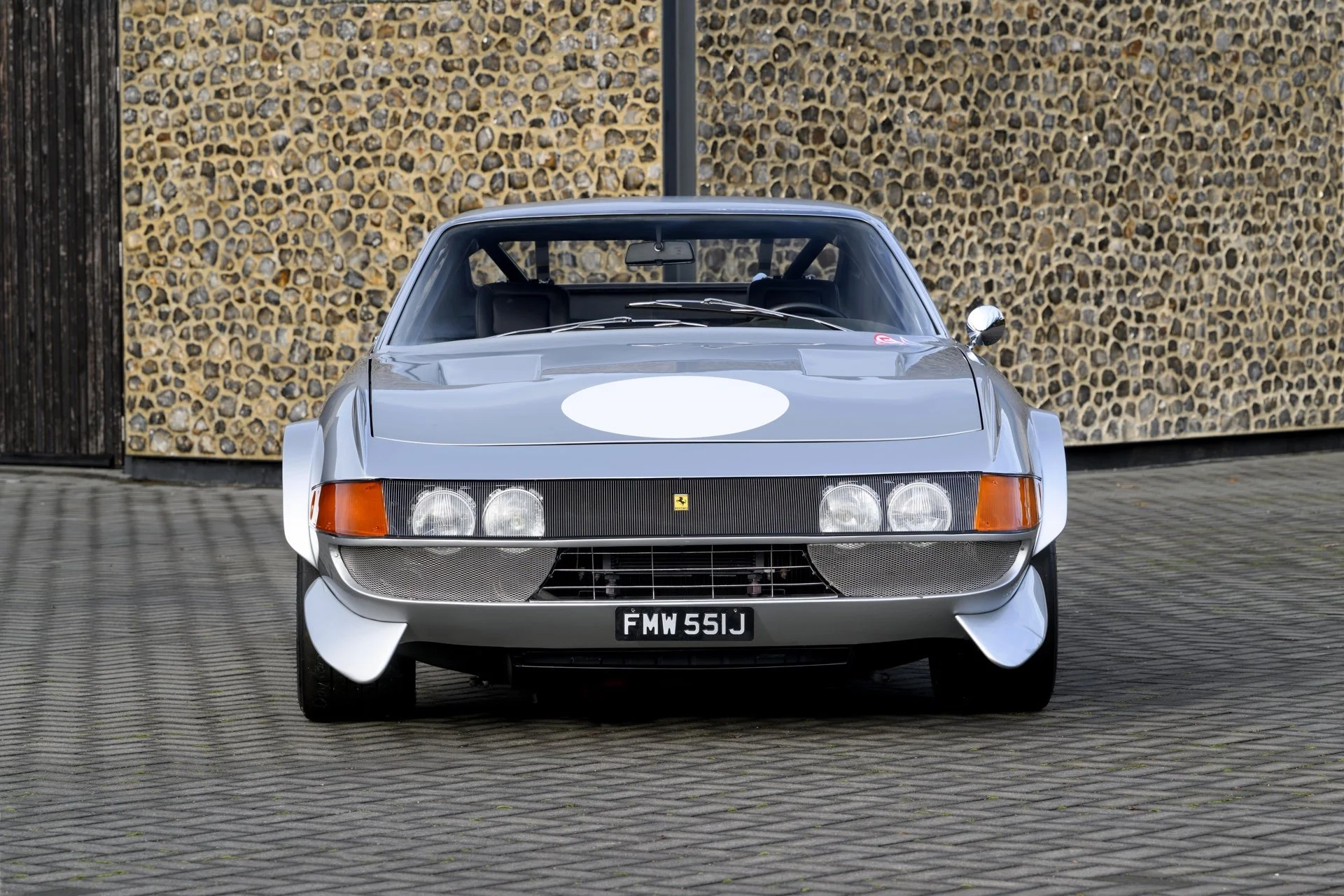
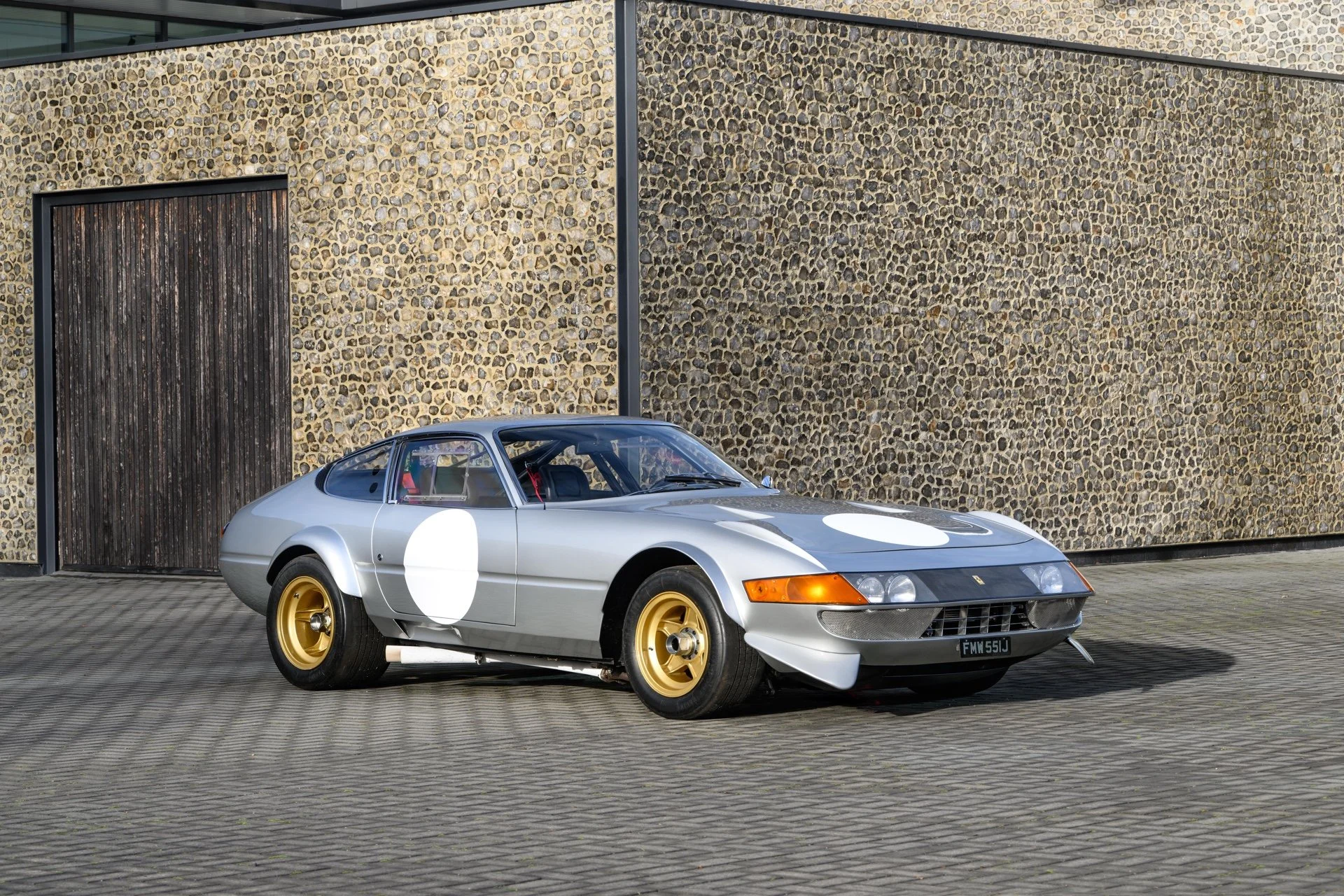
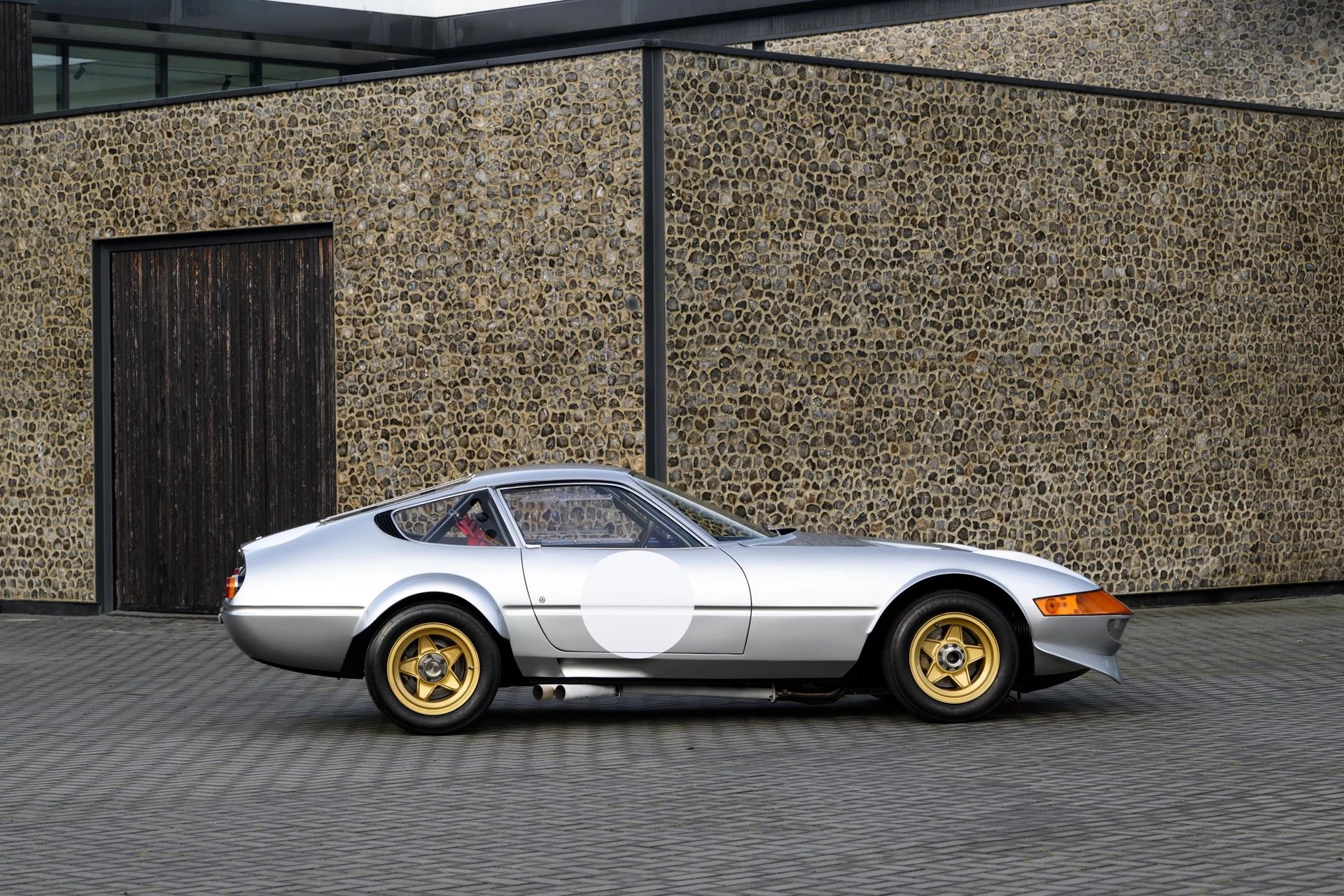
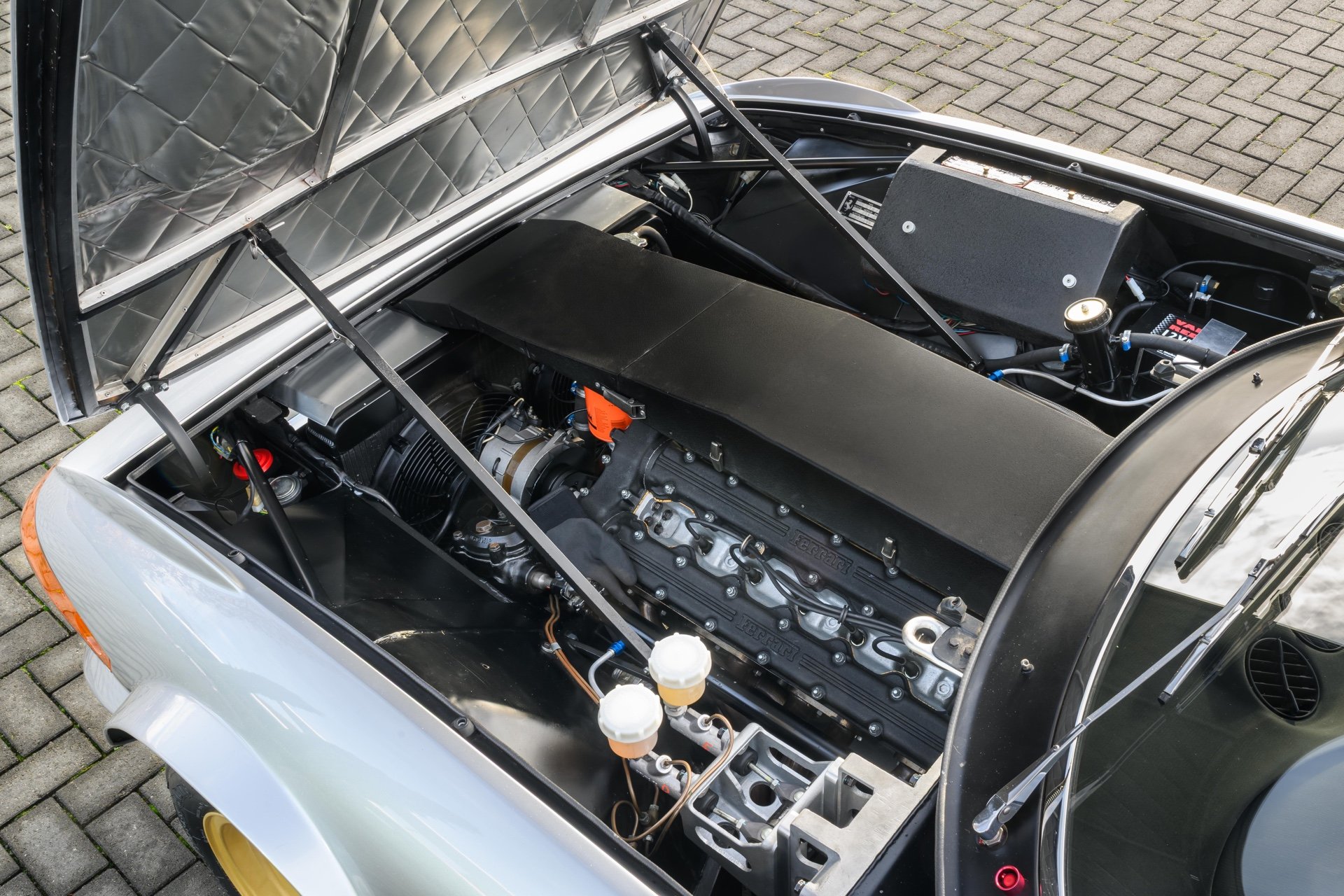
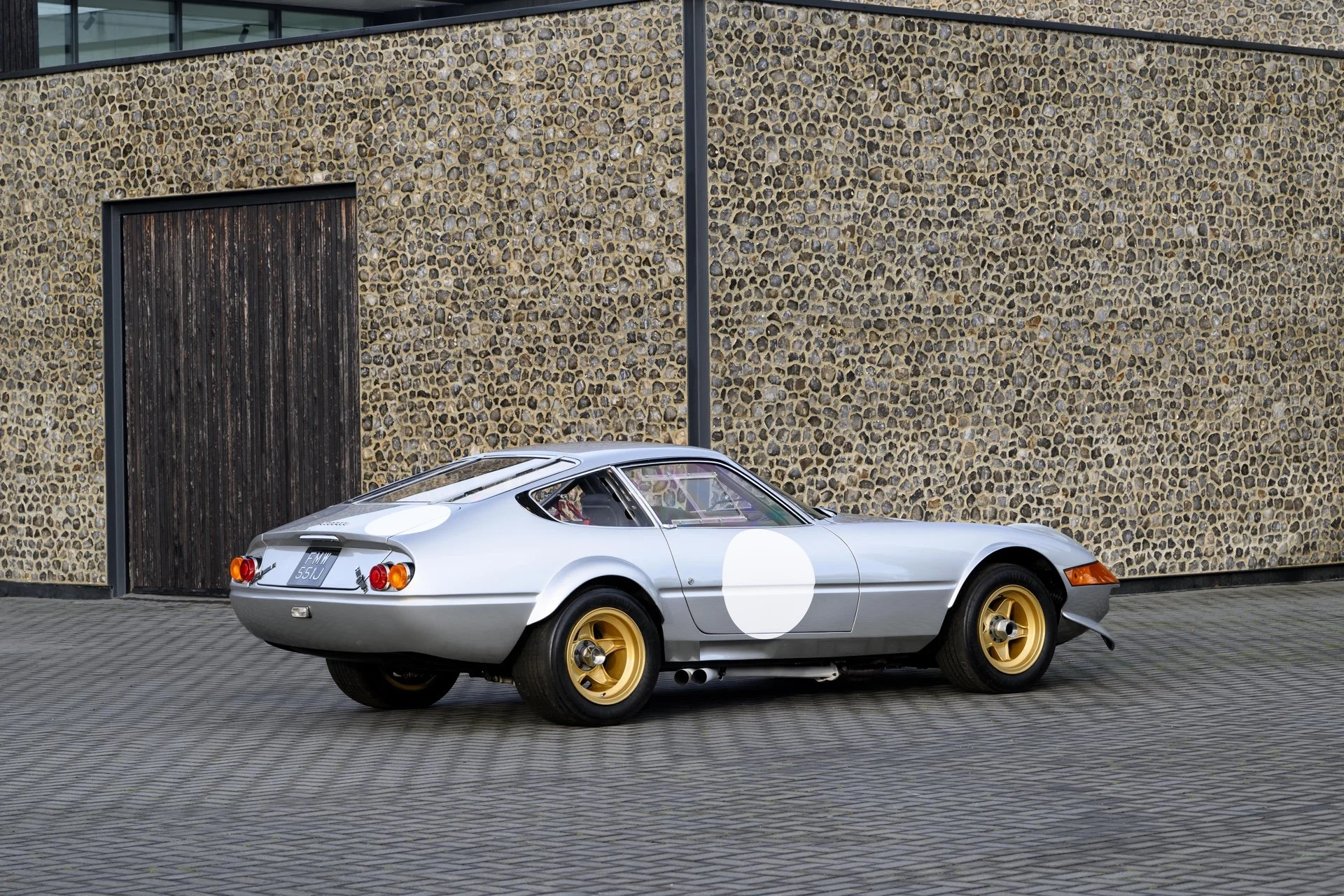
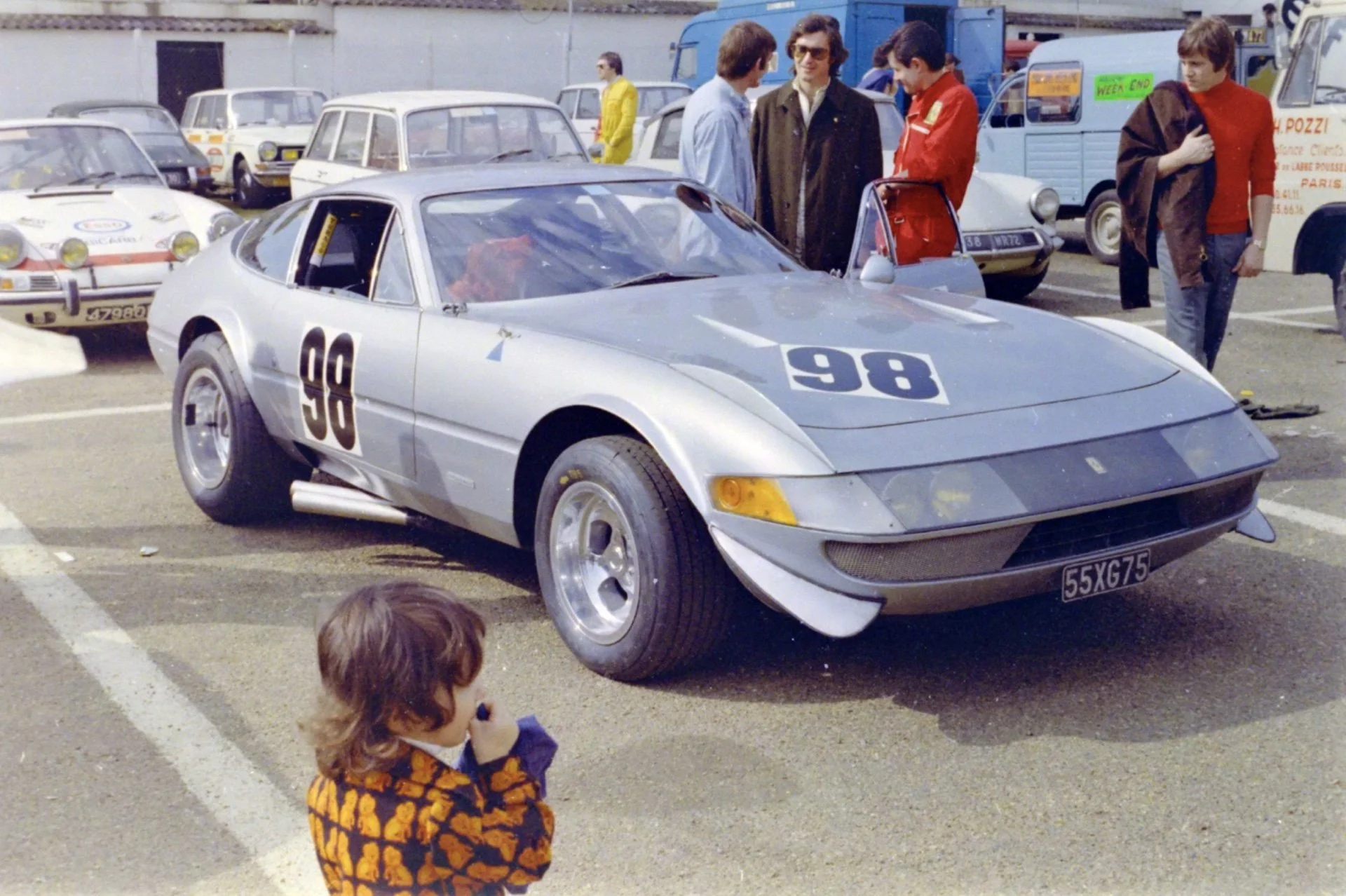
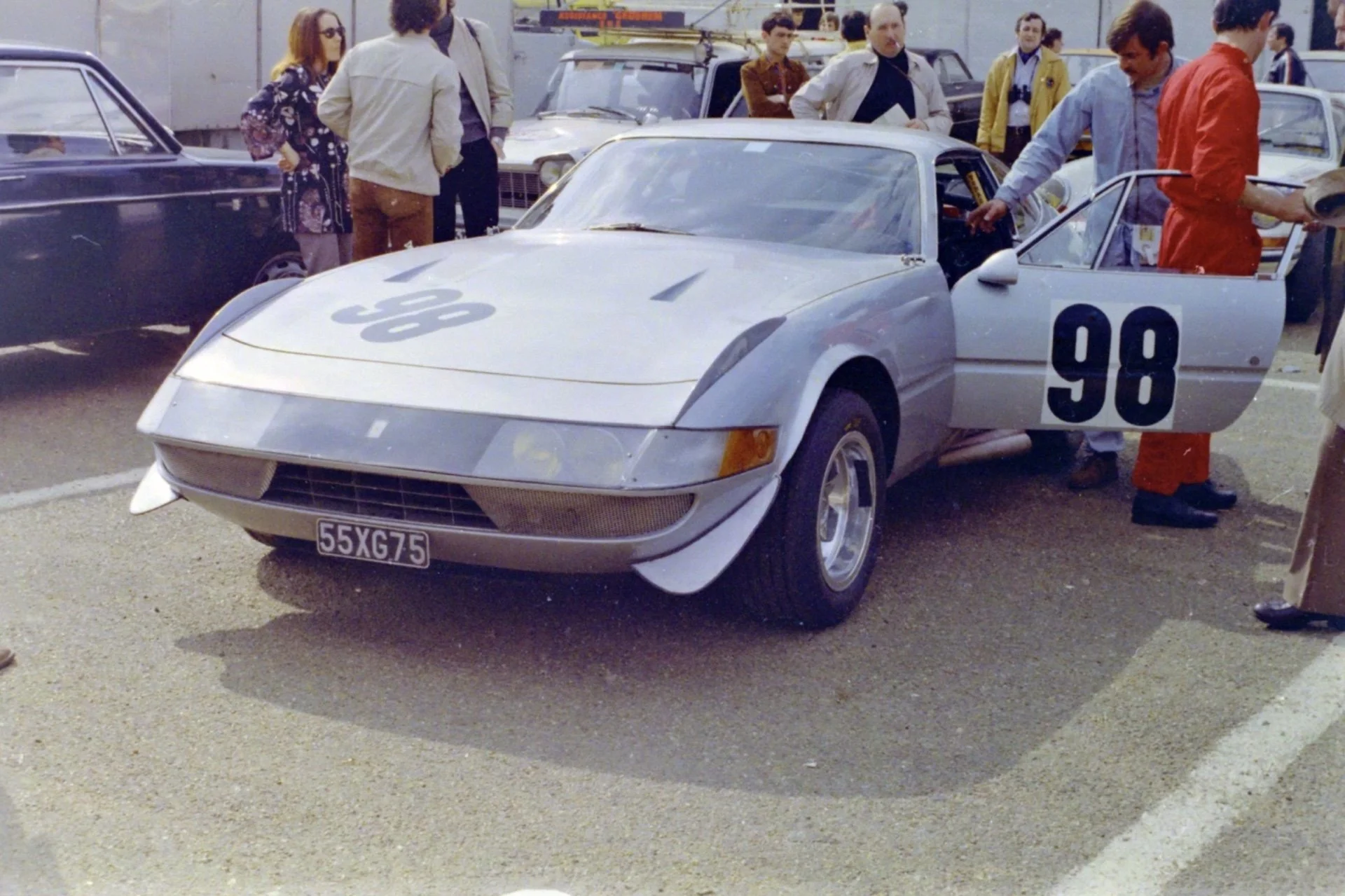
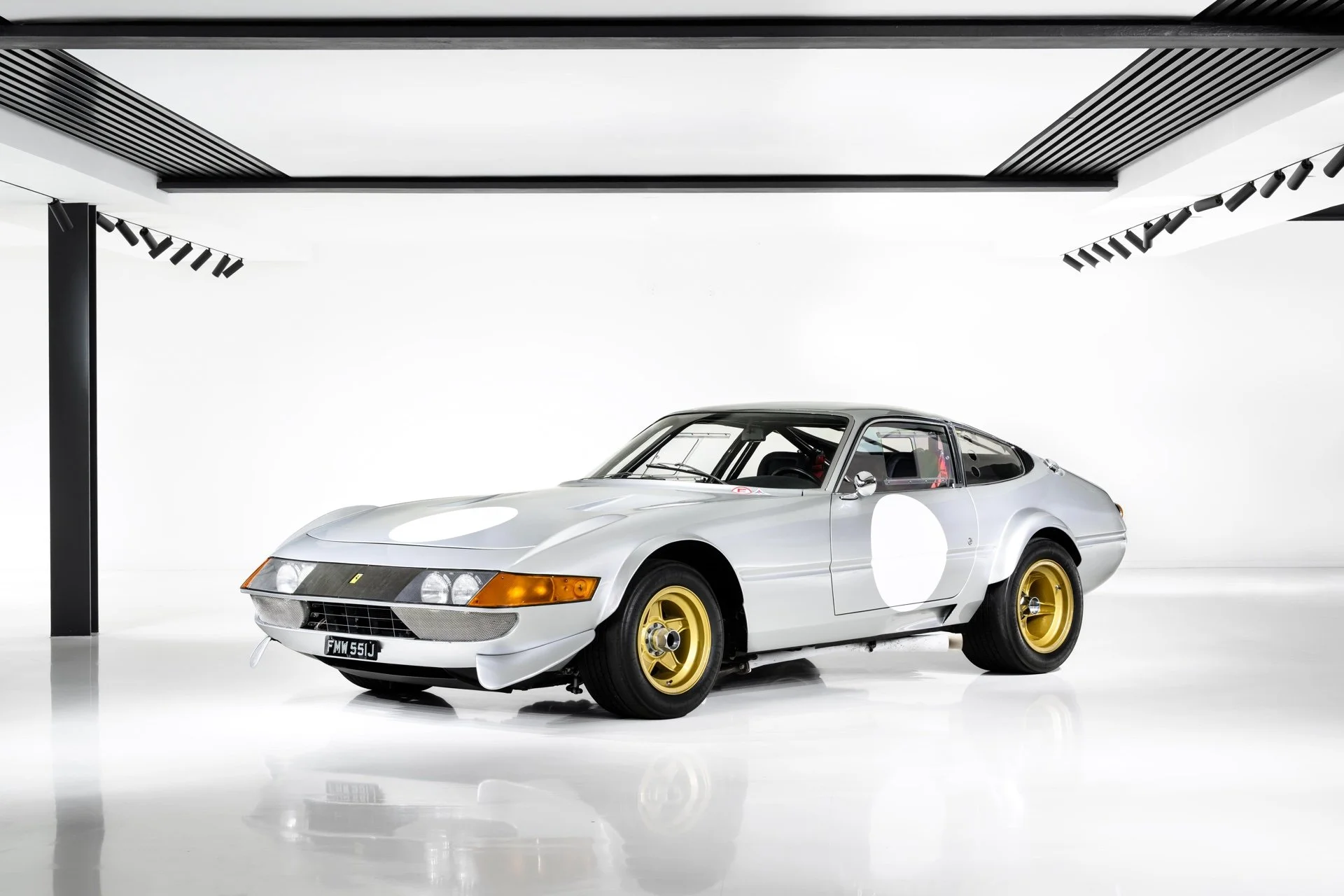
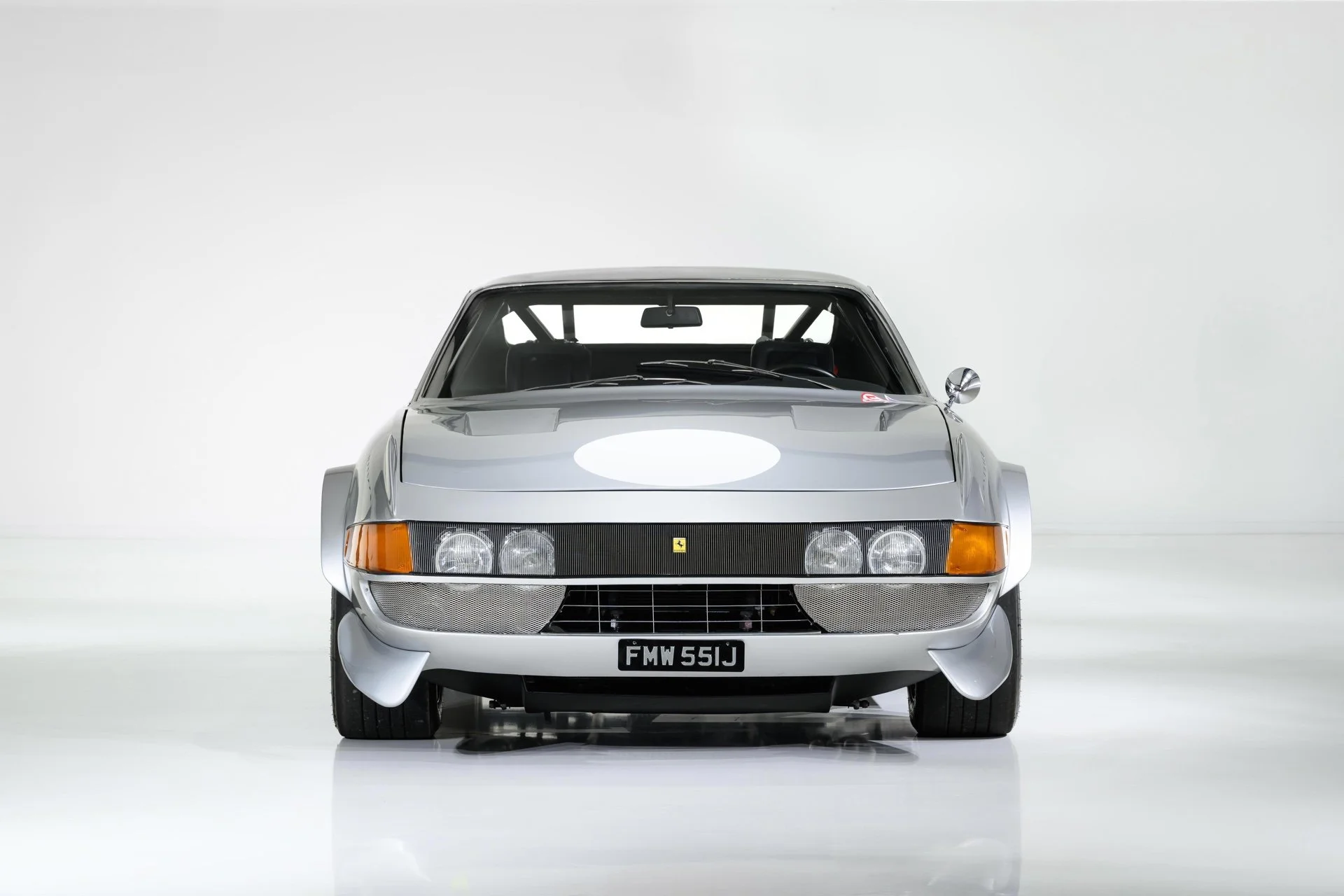
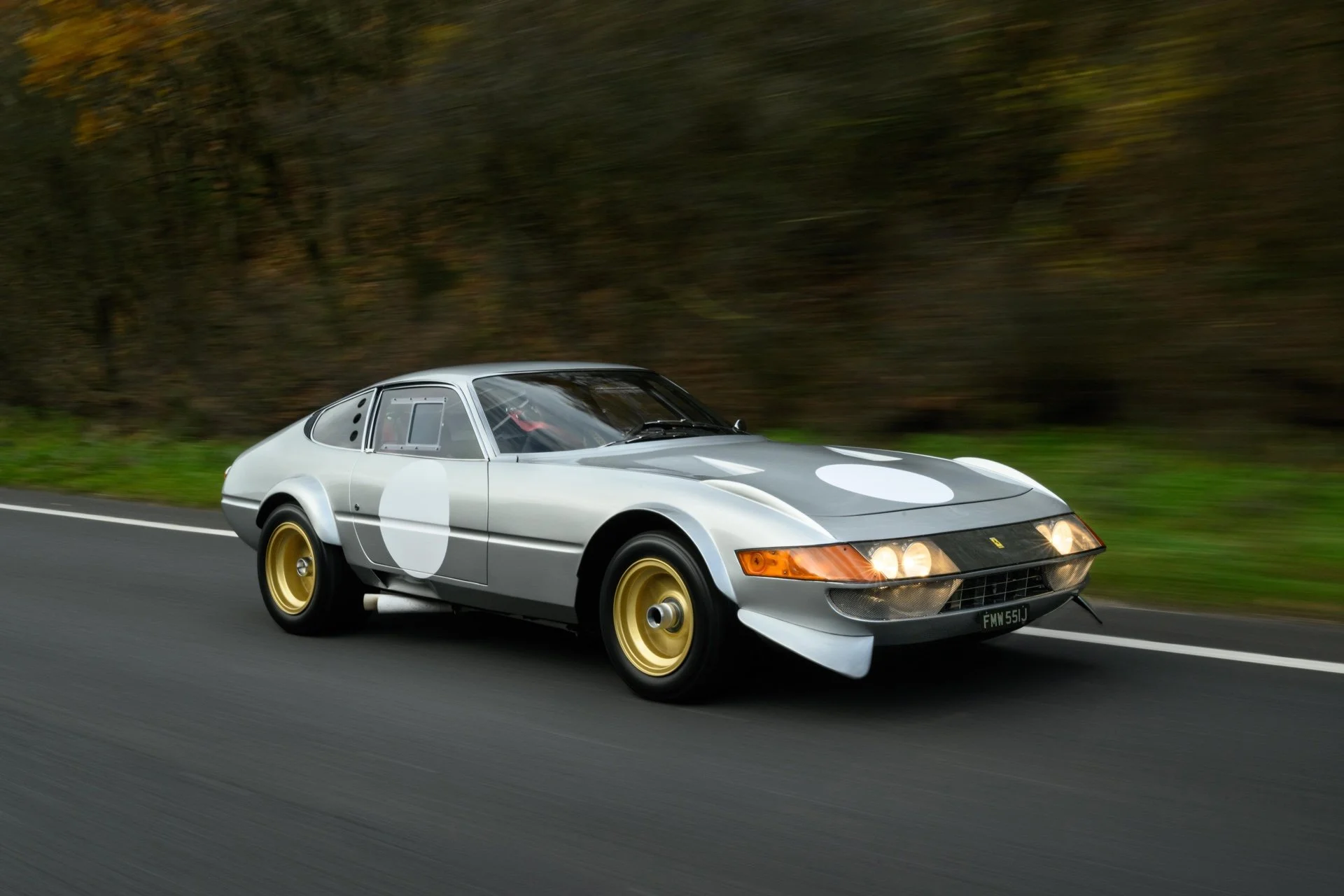
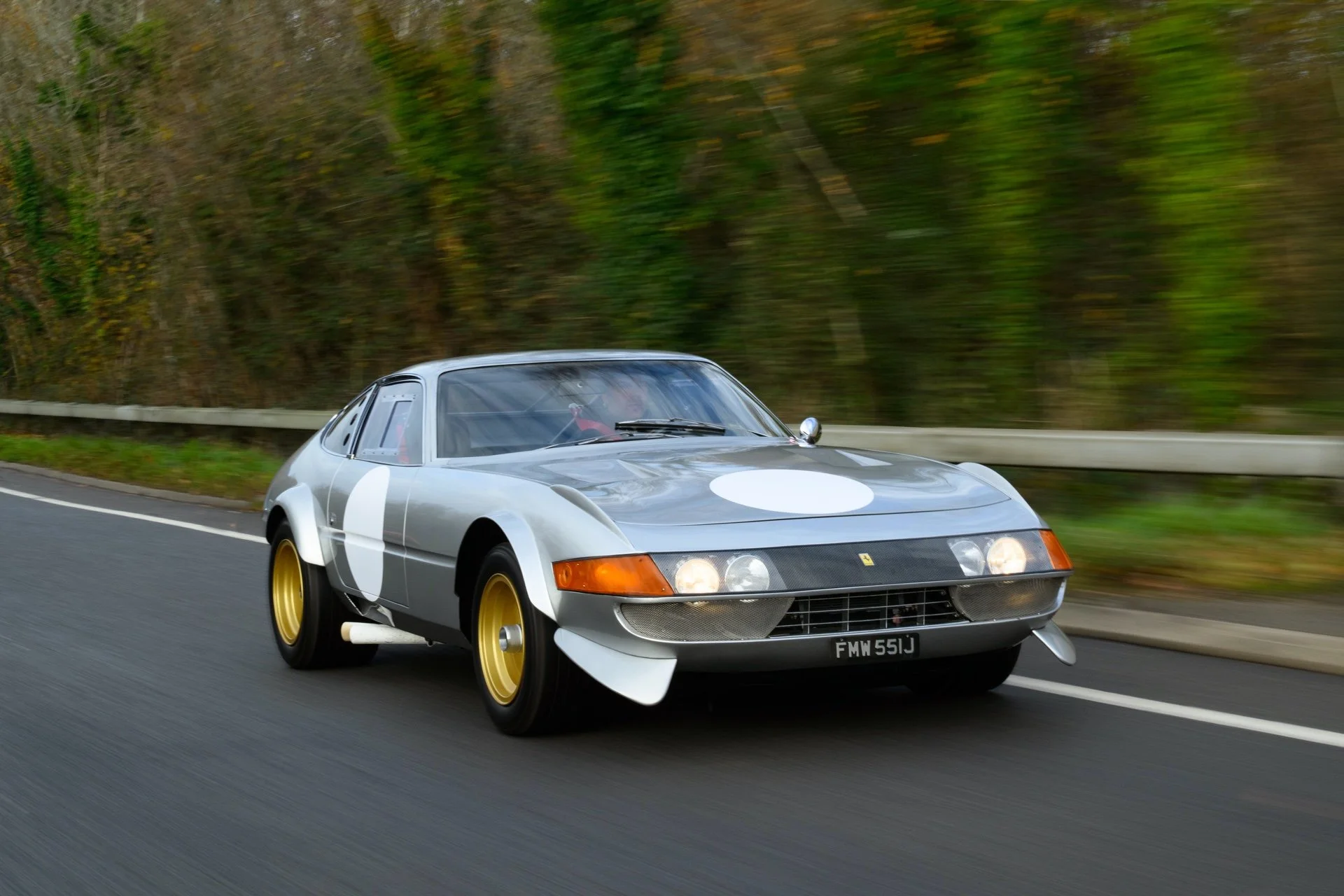
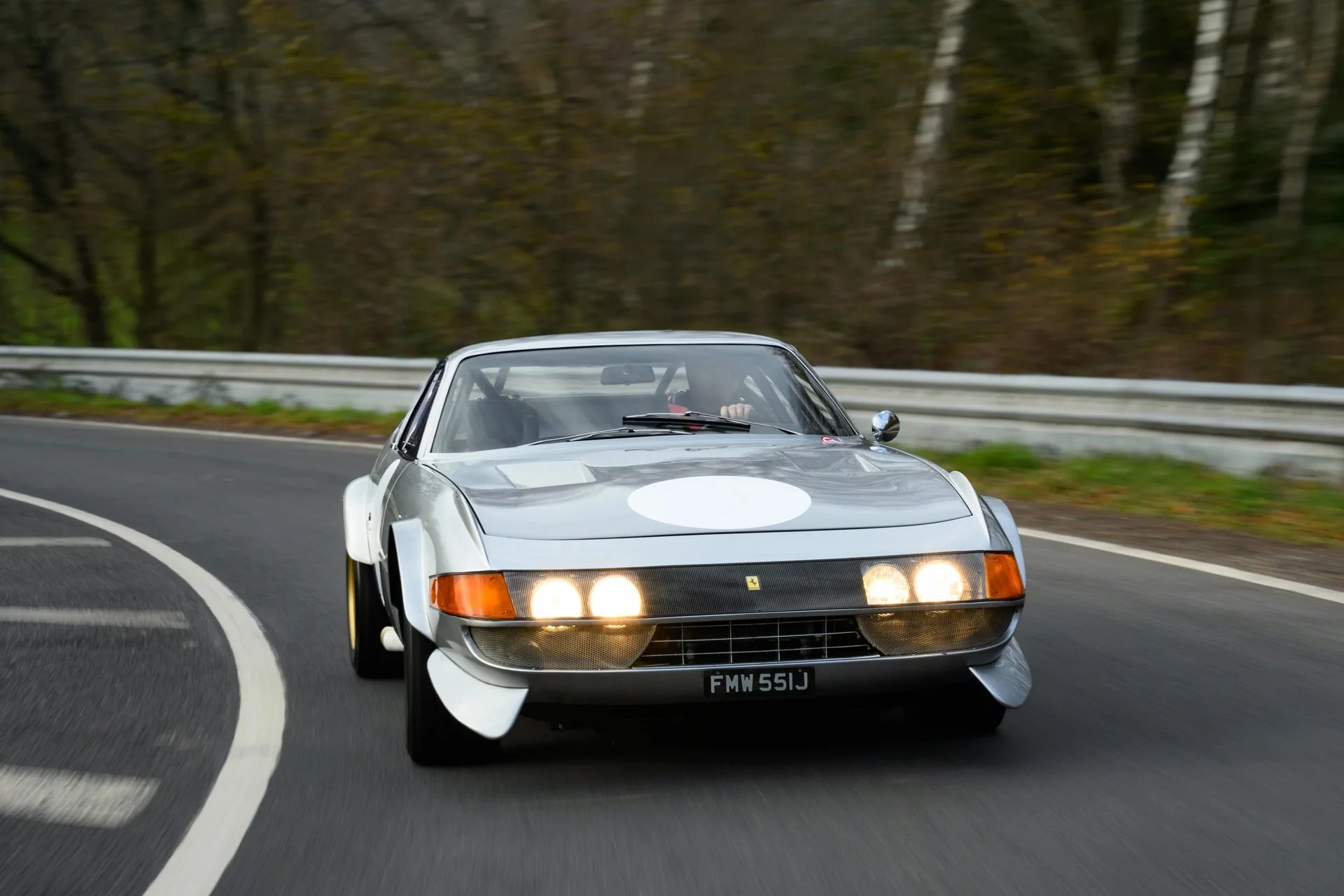
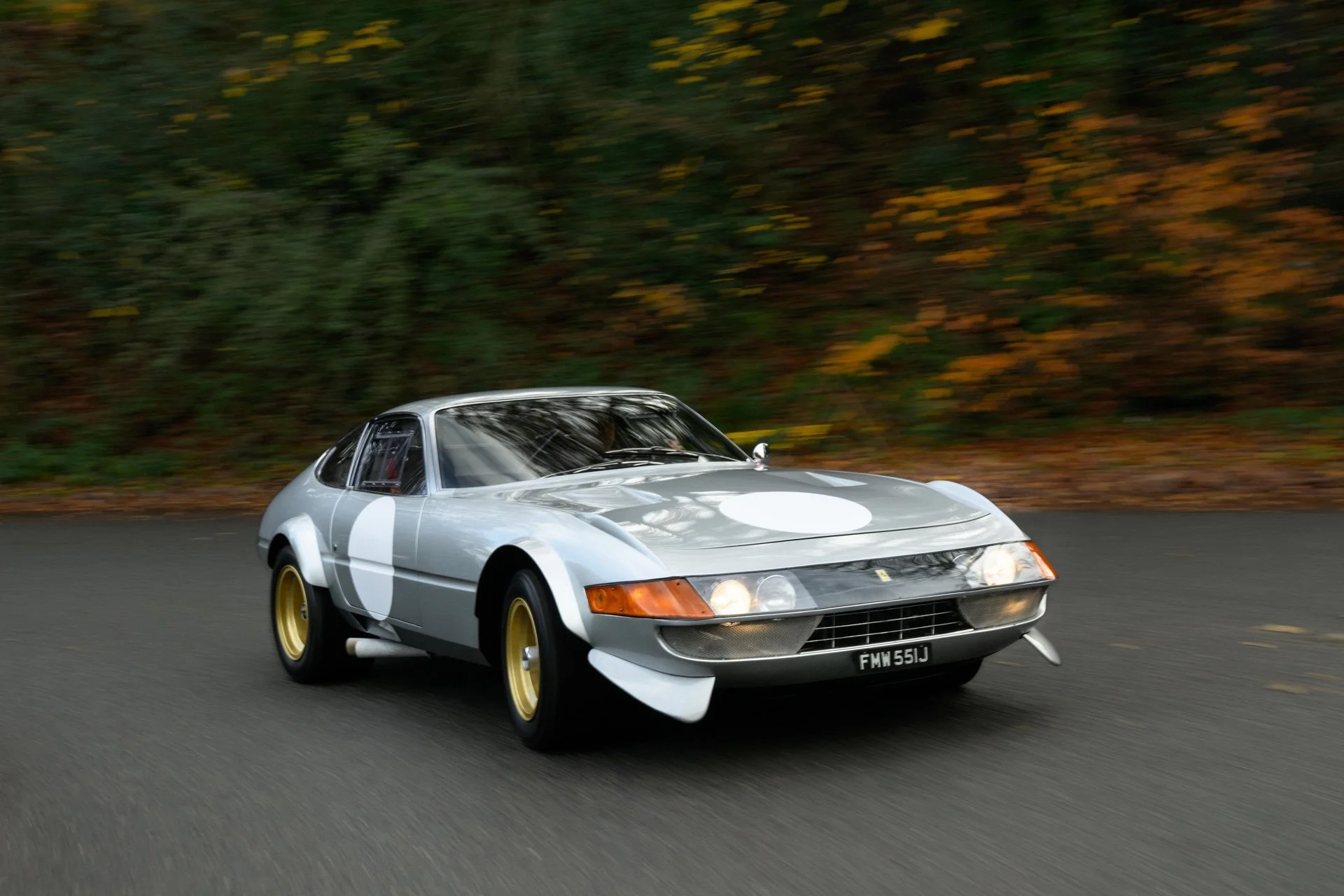
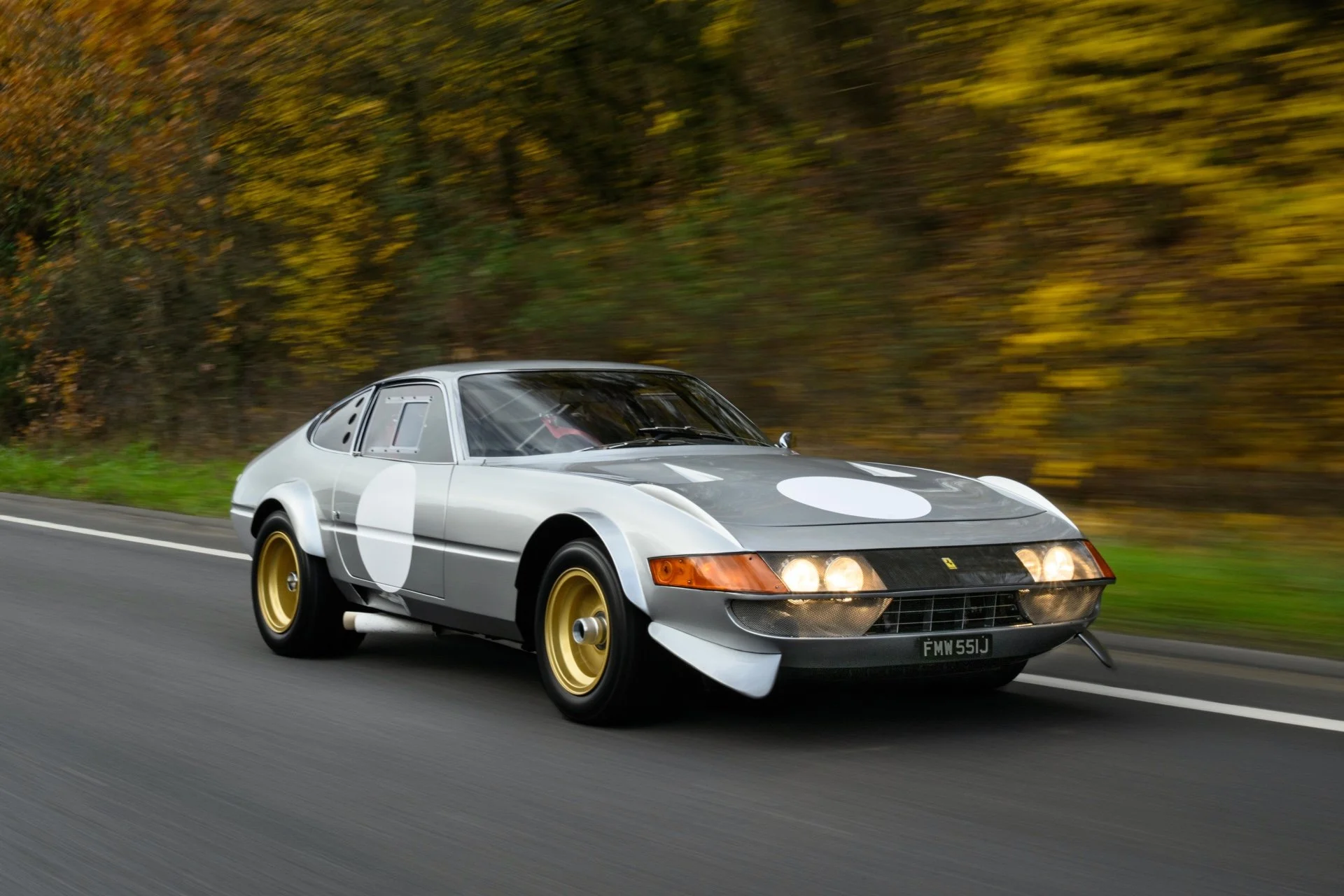
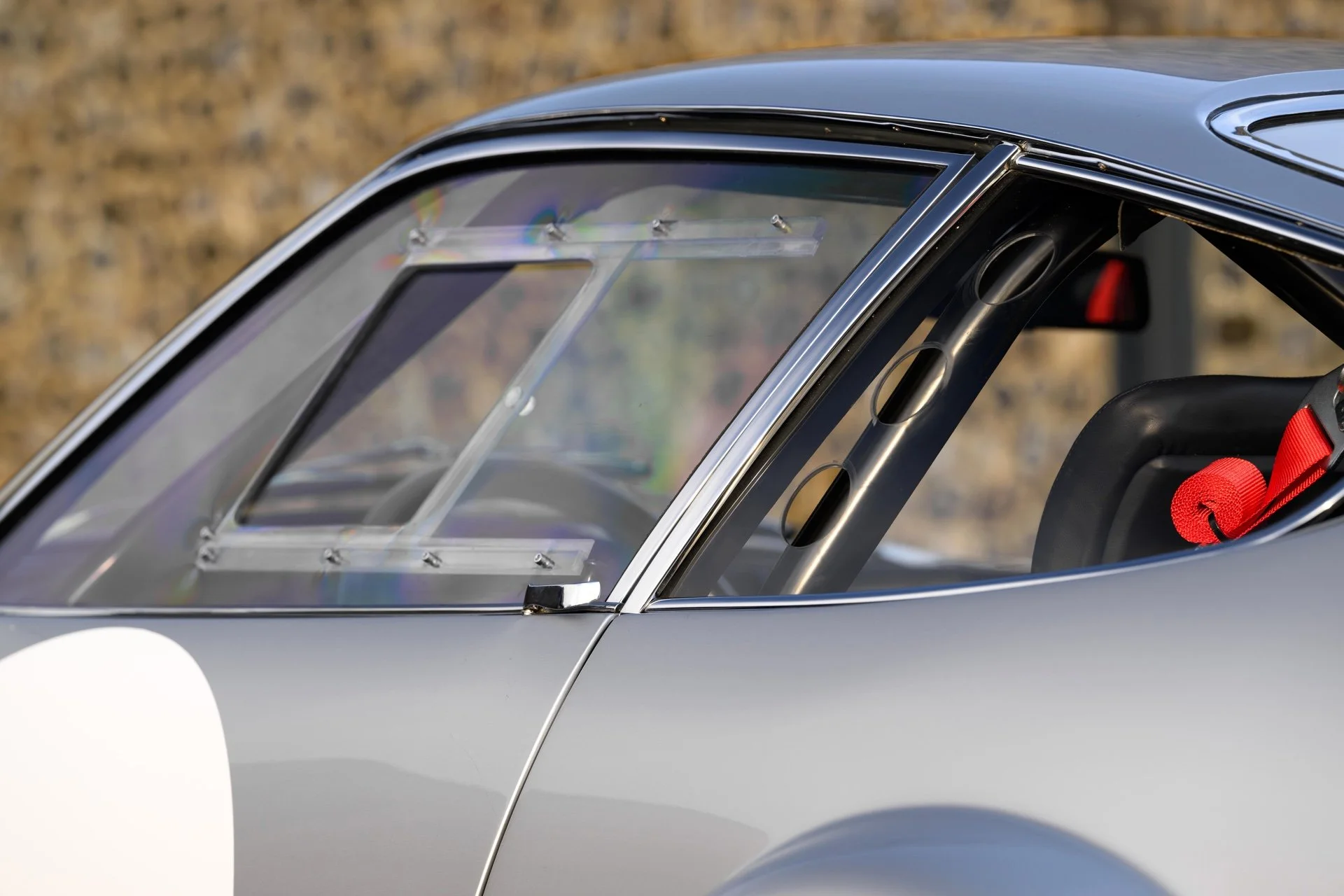
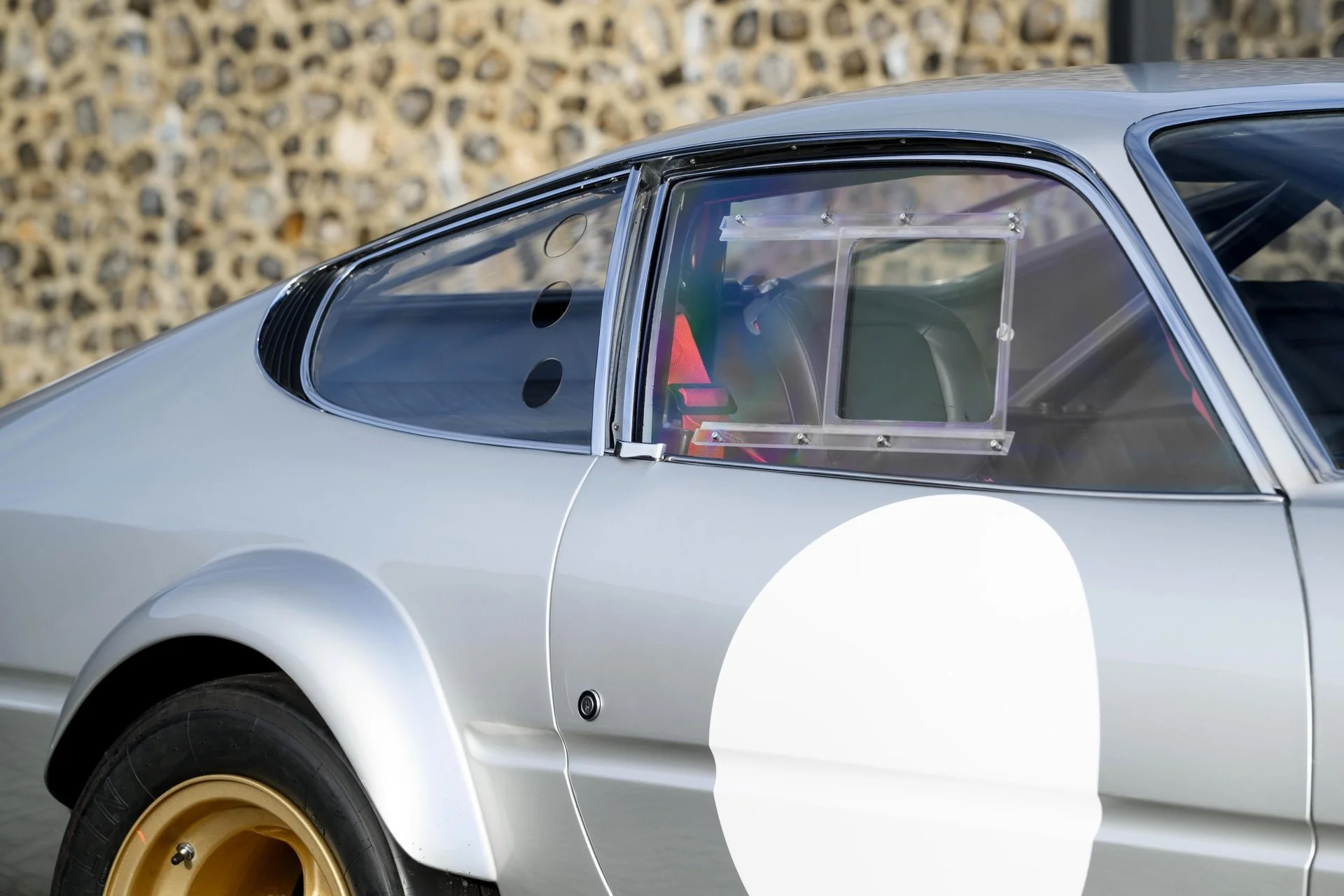
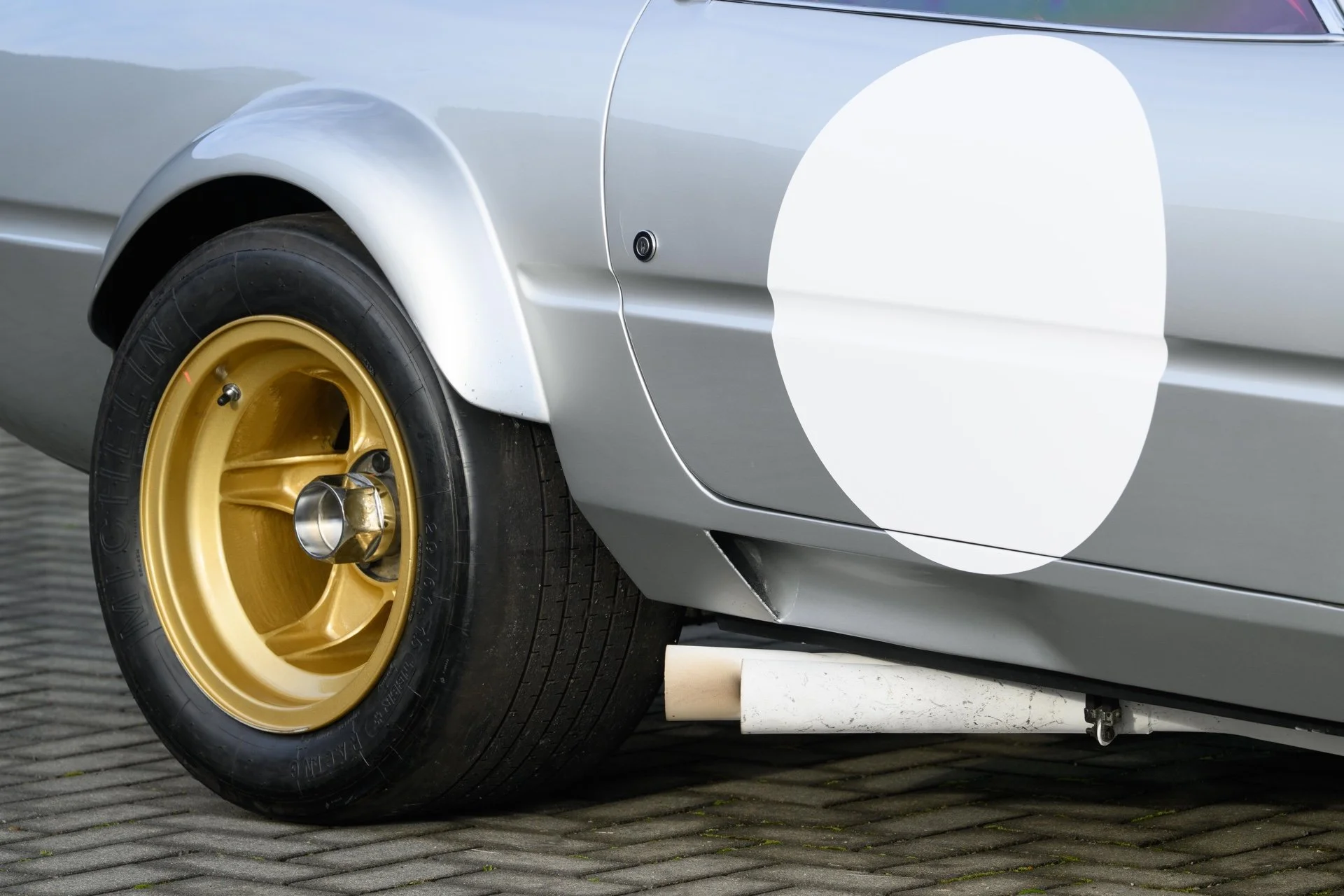
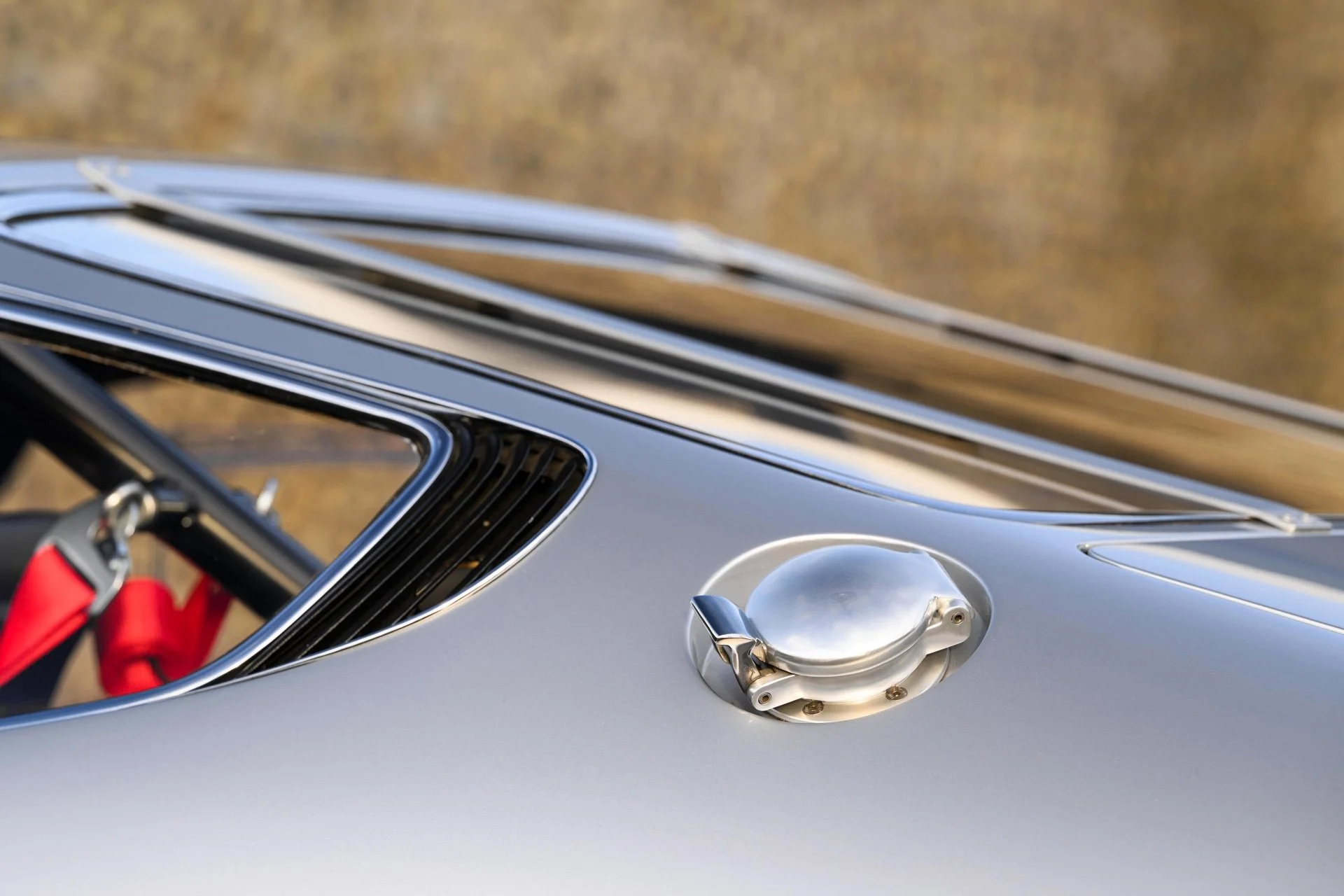
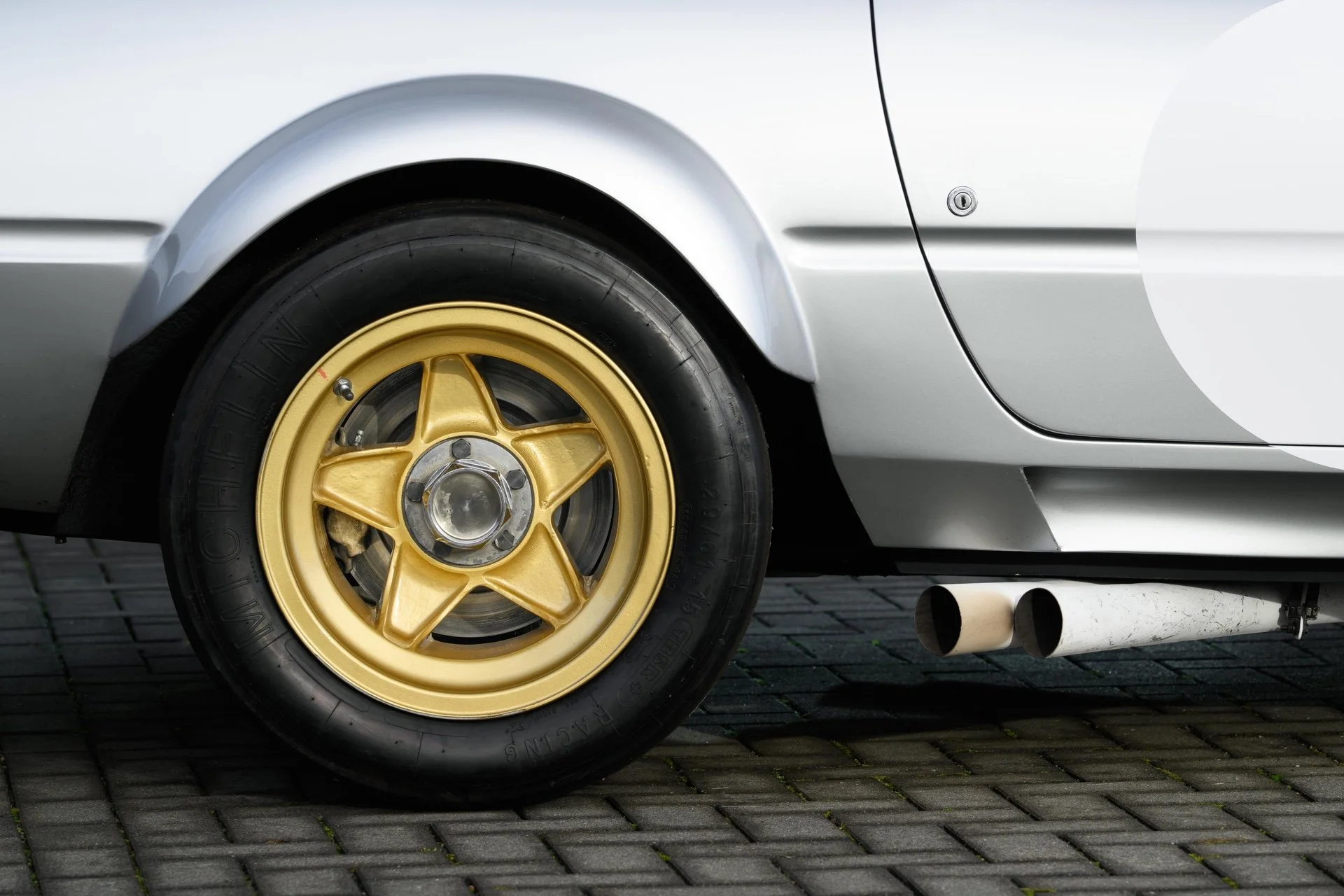
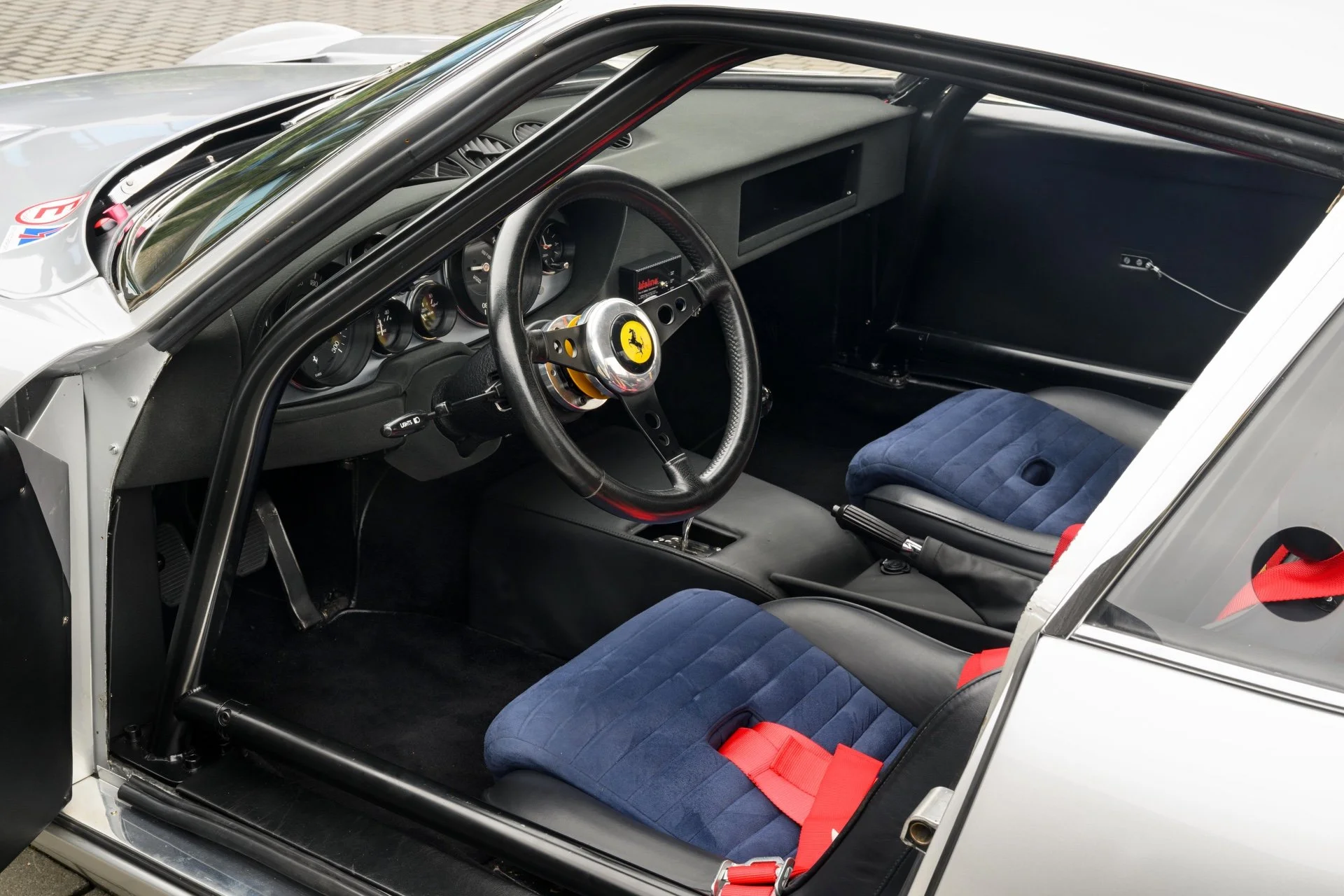
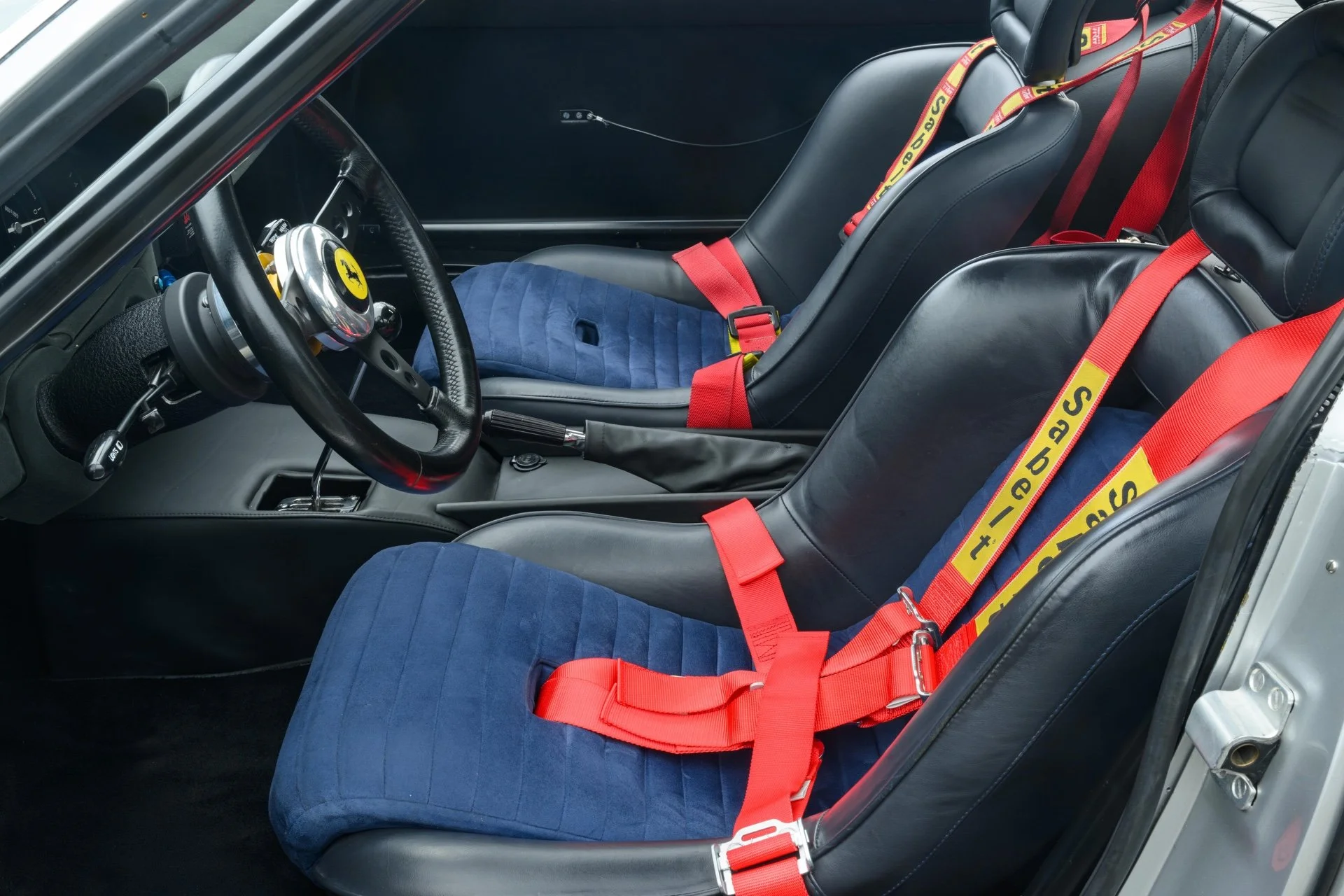
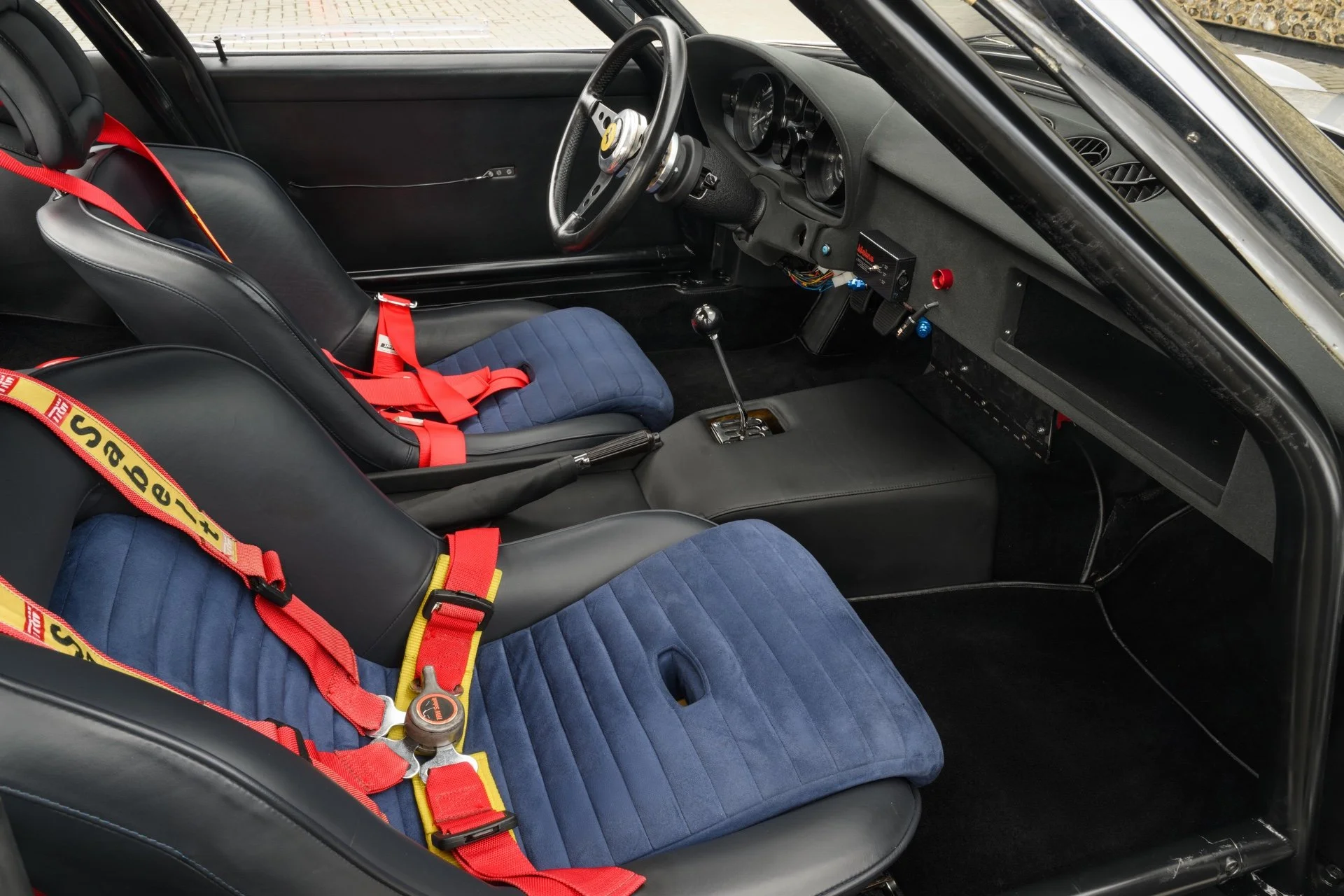
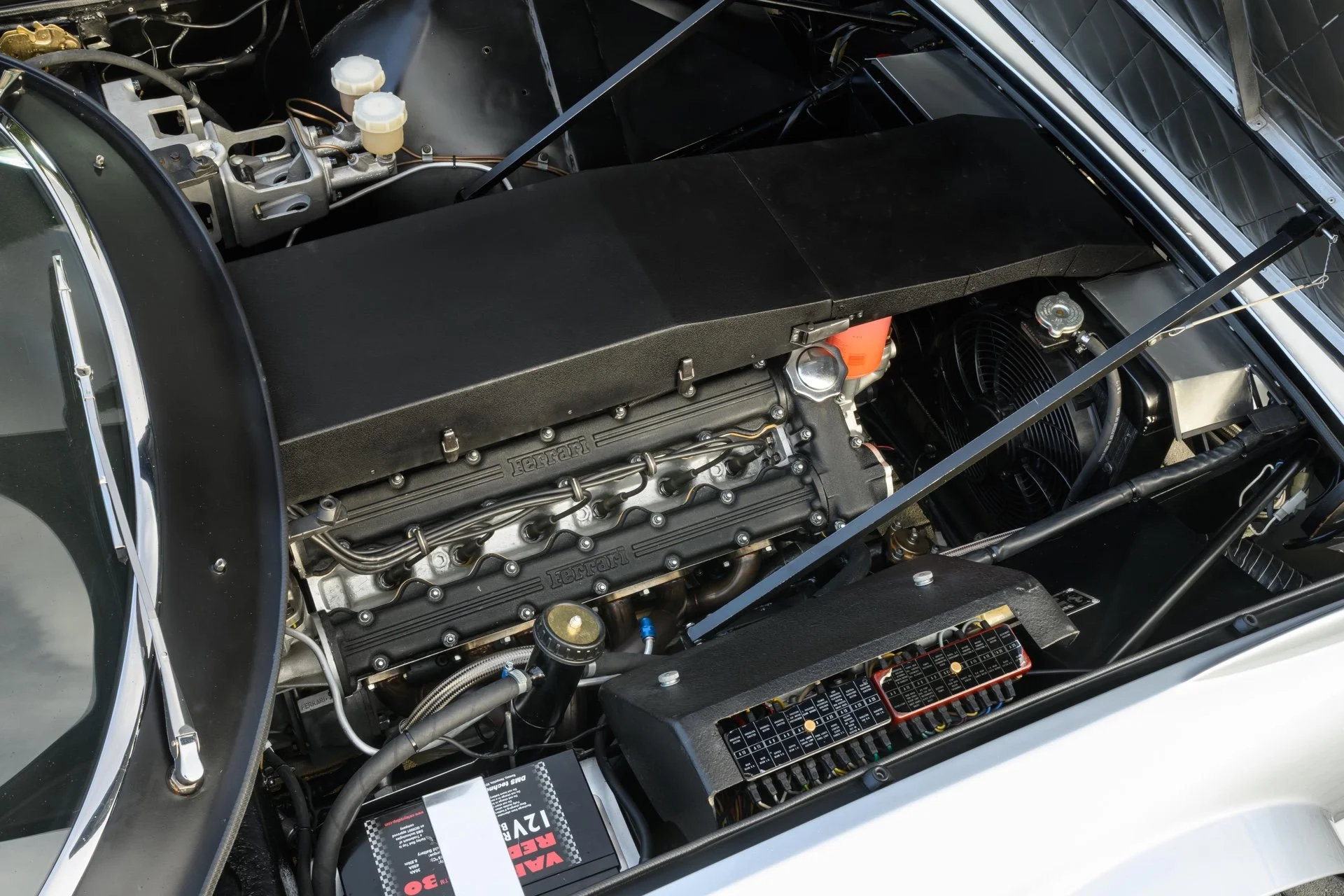
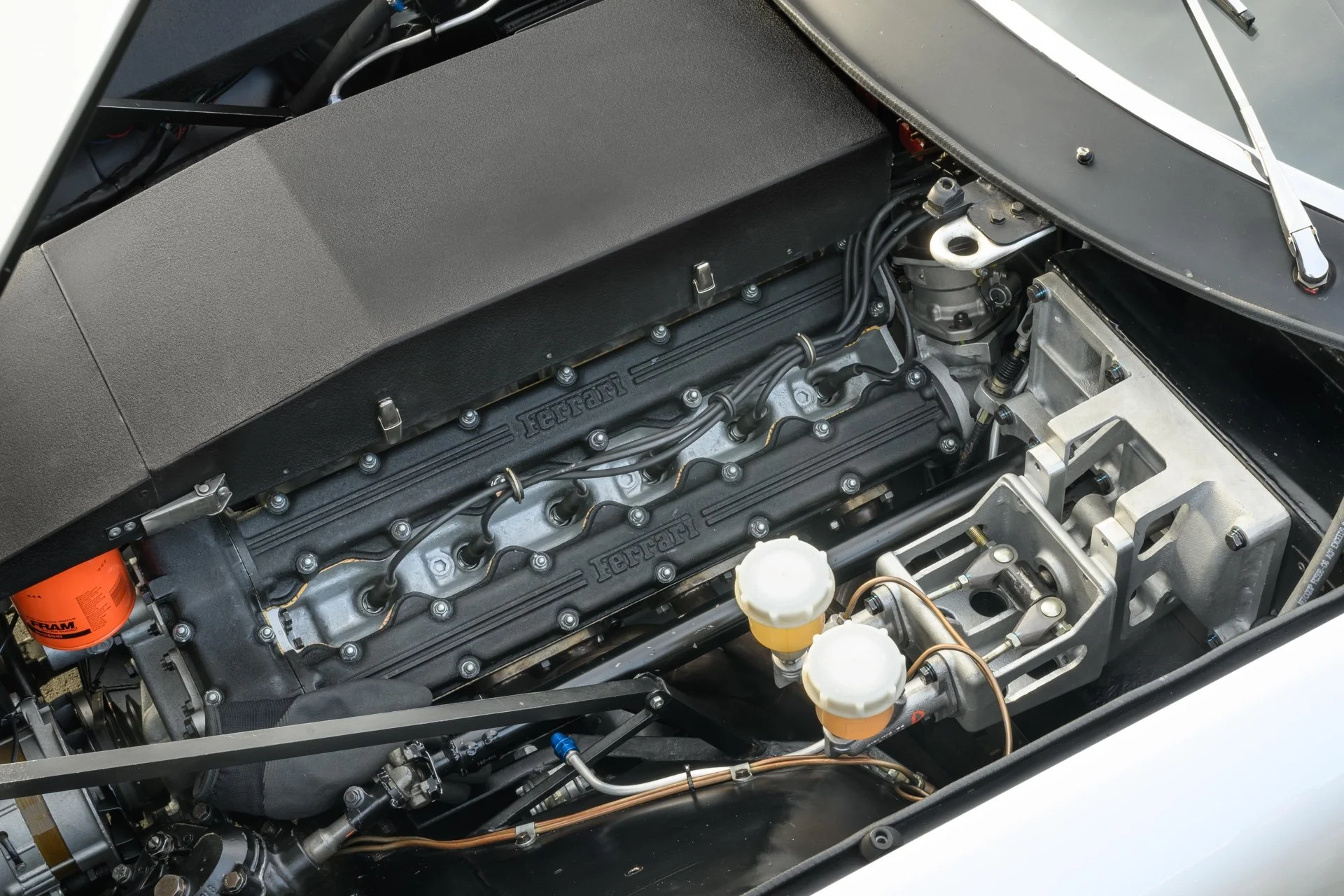
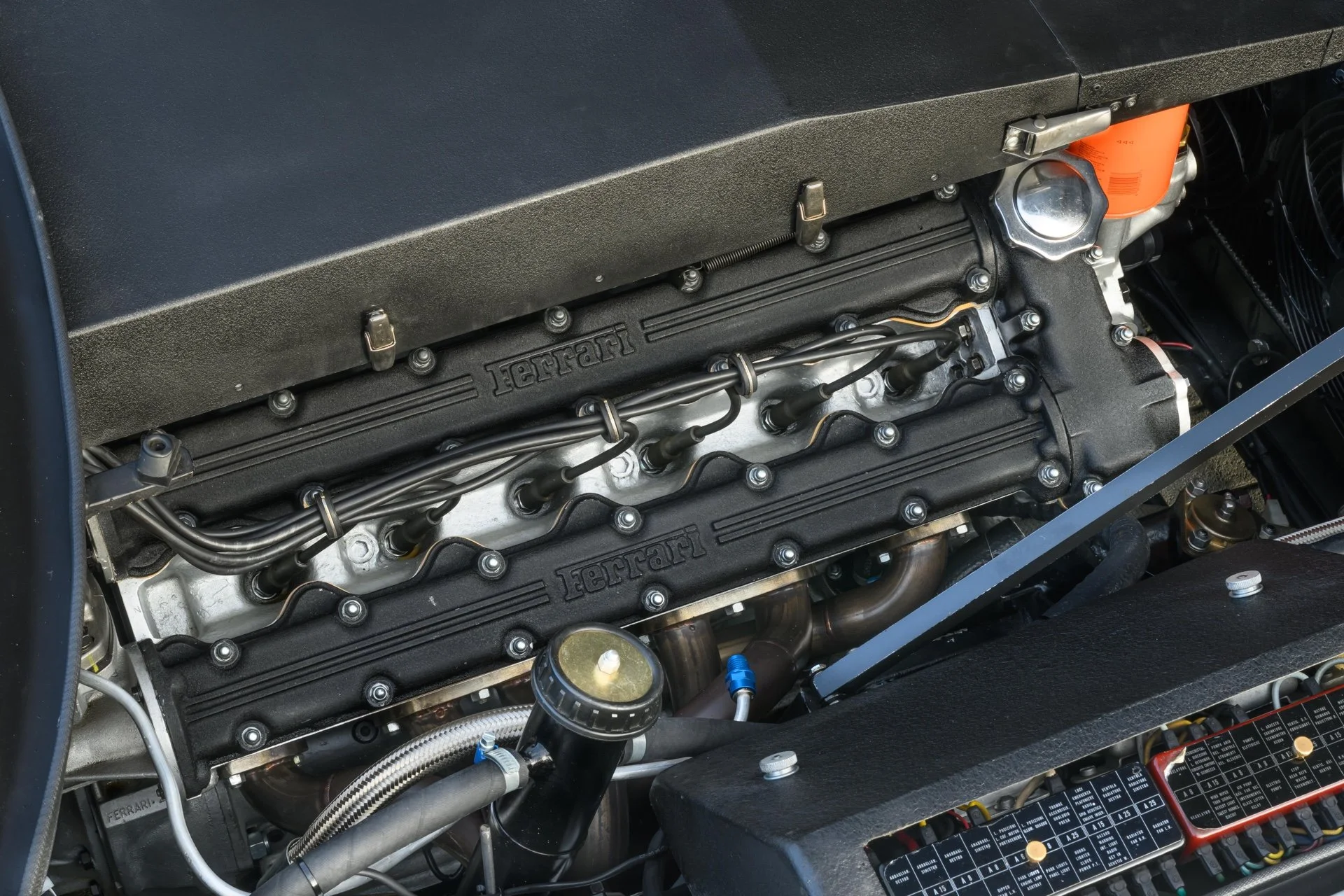
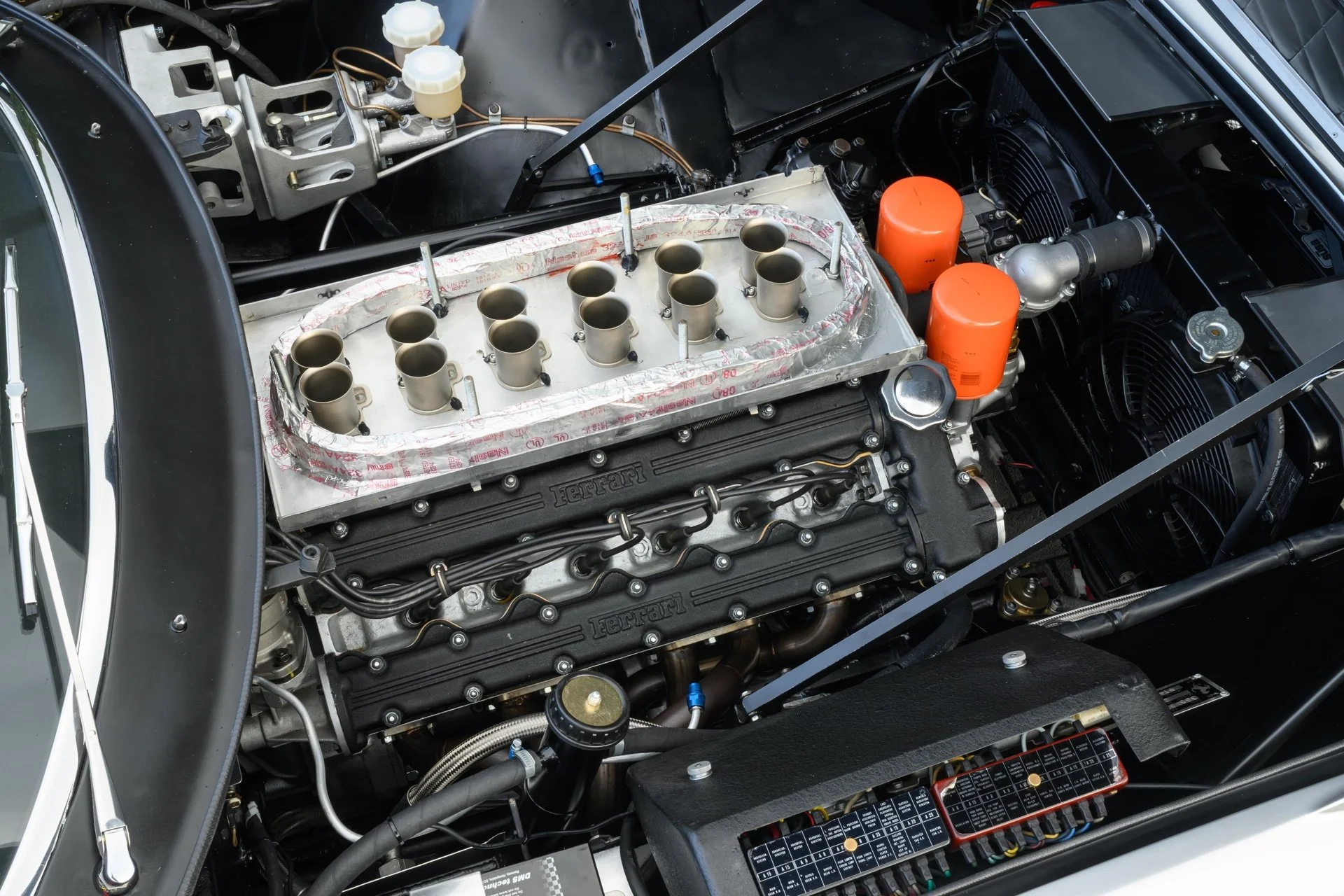
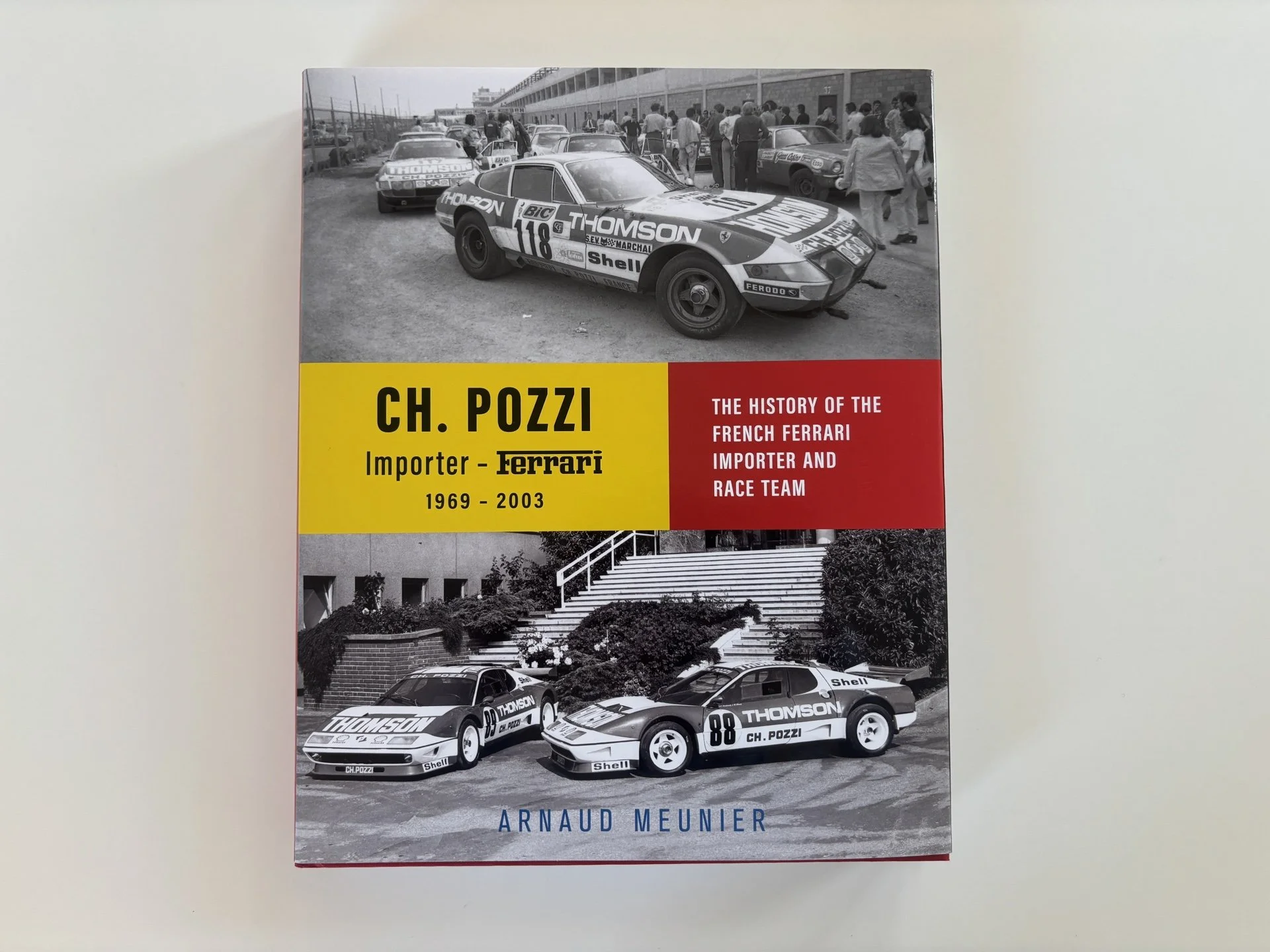
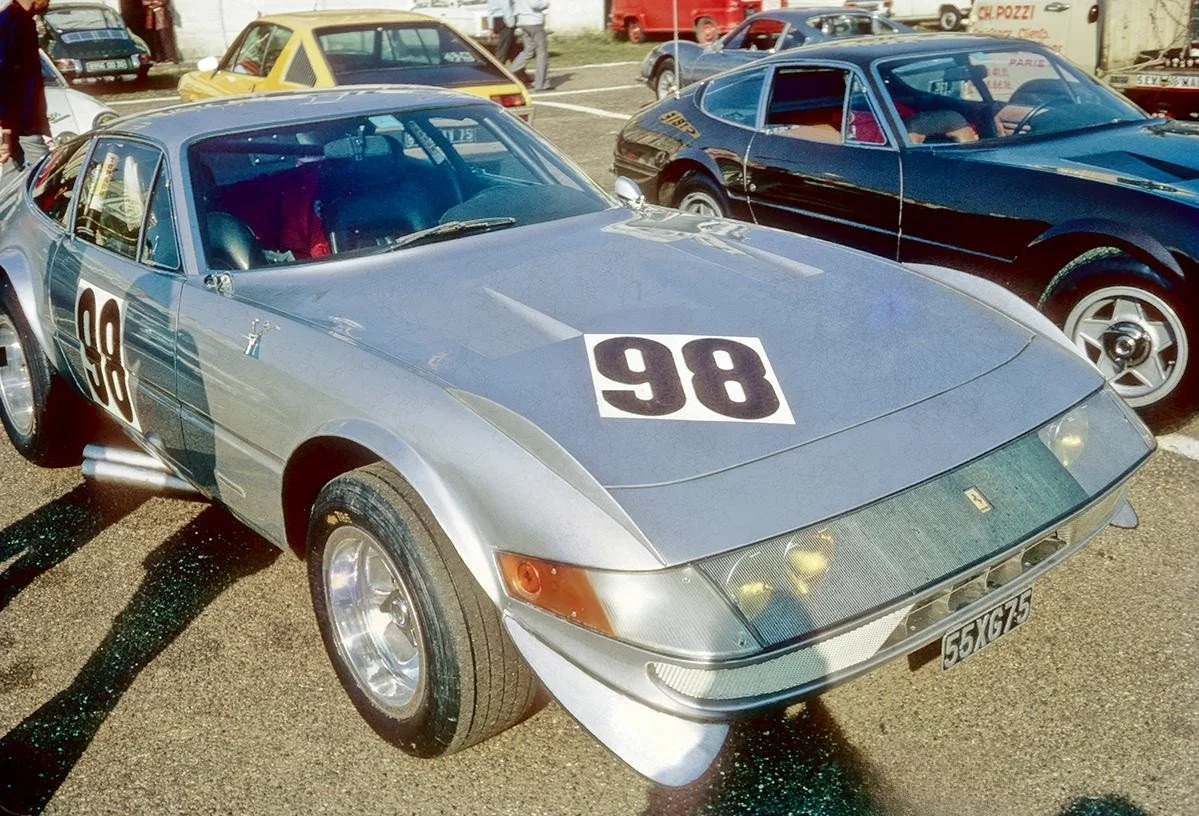
He immediately sent the 'Daytona' back to Pozzi to have it competition prepared. With the Assistenza Clienti built cars available only to major racing teams, this was the only way to go for a privateer to start racing a 'Daytona'. At Pozzi's garage in Levallois-Perret, near Paris, chassis 14049 was meticulously prepared to the latest competition specifications by mechanic Mr de Coster after hours. The engine was fully rebuilt and blue-printed, and fitted with high compression pistons, more aggressive 'P6' competition camshafts and re-tuned Weber carburettors to race at Le Mans. The V12's performance was further improved by the addition of two pairs of white, Zircotec ceramic coated 'side-pipes'. Dive planes were fitted to the nose as well as aerodynamic 'fences' on either side of the engine cover. To clear the wide 9-inch front- and 11-inch rear wheels, the fenders were flared. An external fuel filler, rear brake scoops, an anti-roll bar and a roll cage were also fitted.
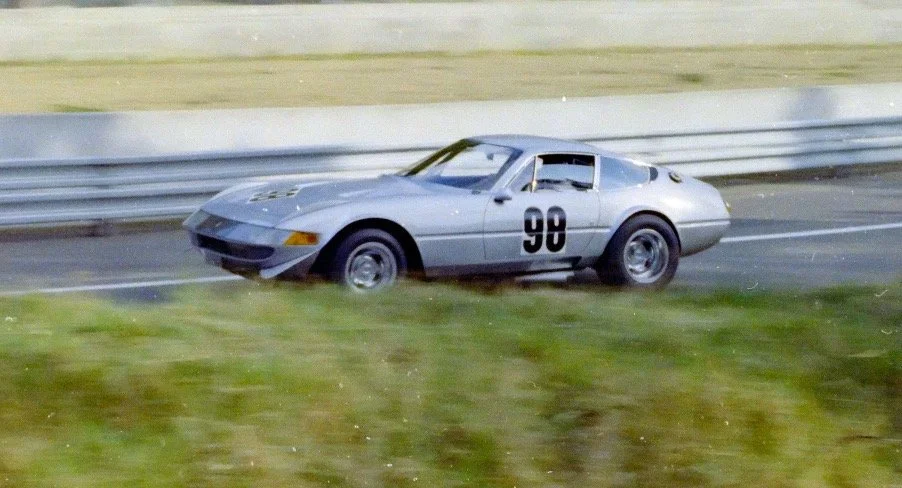
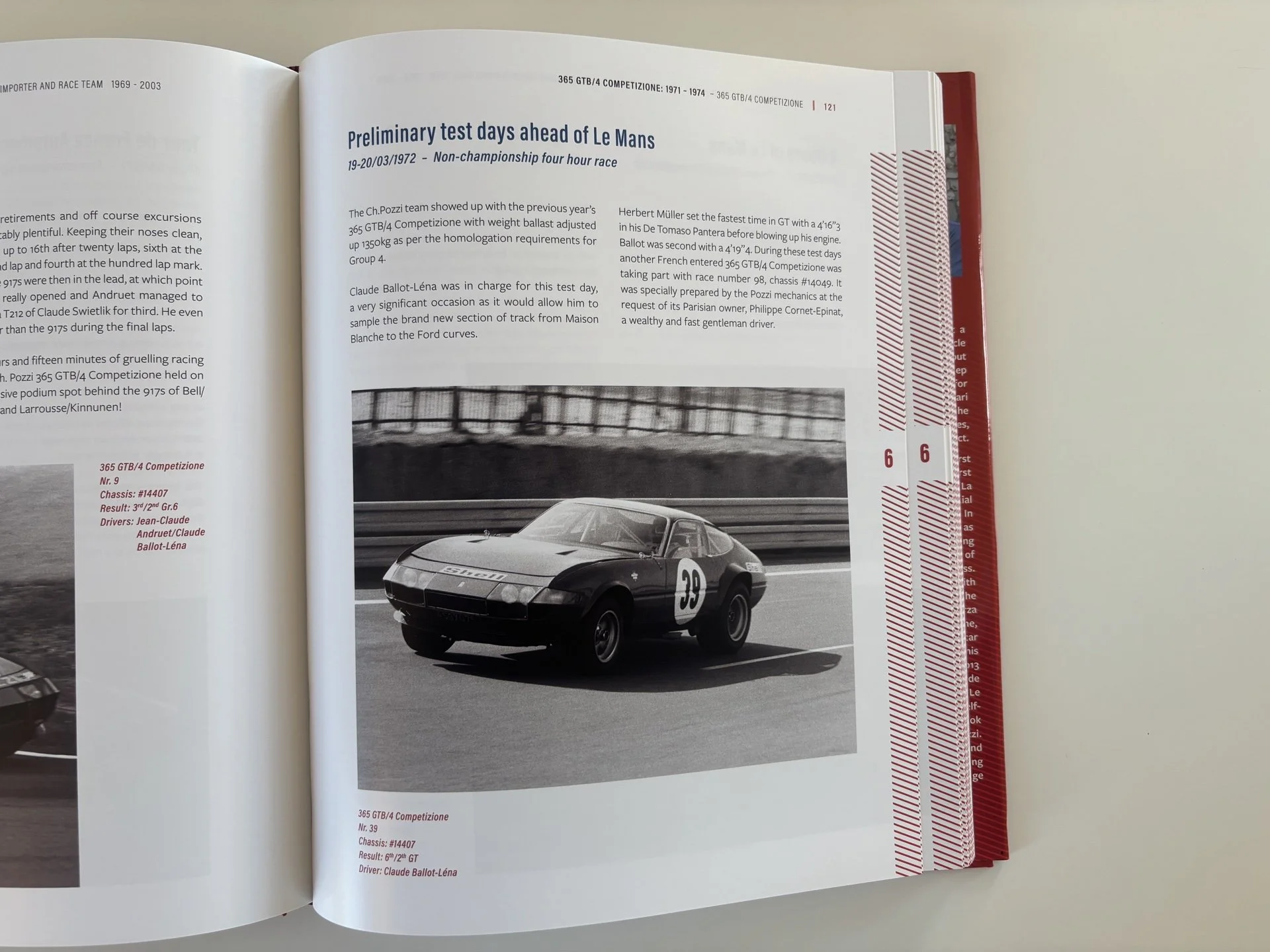
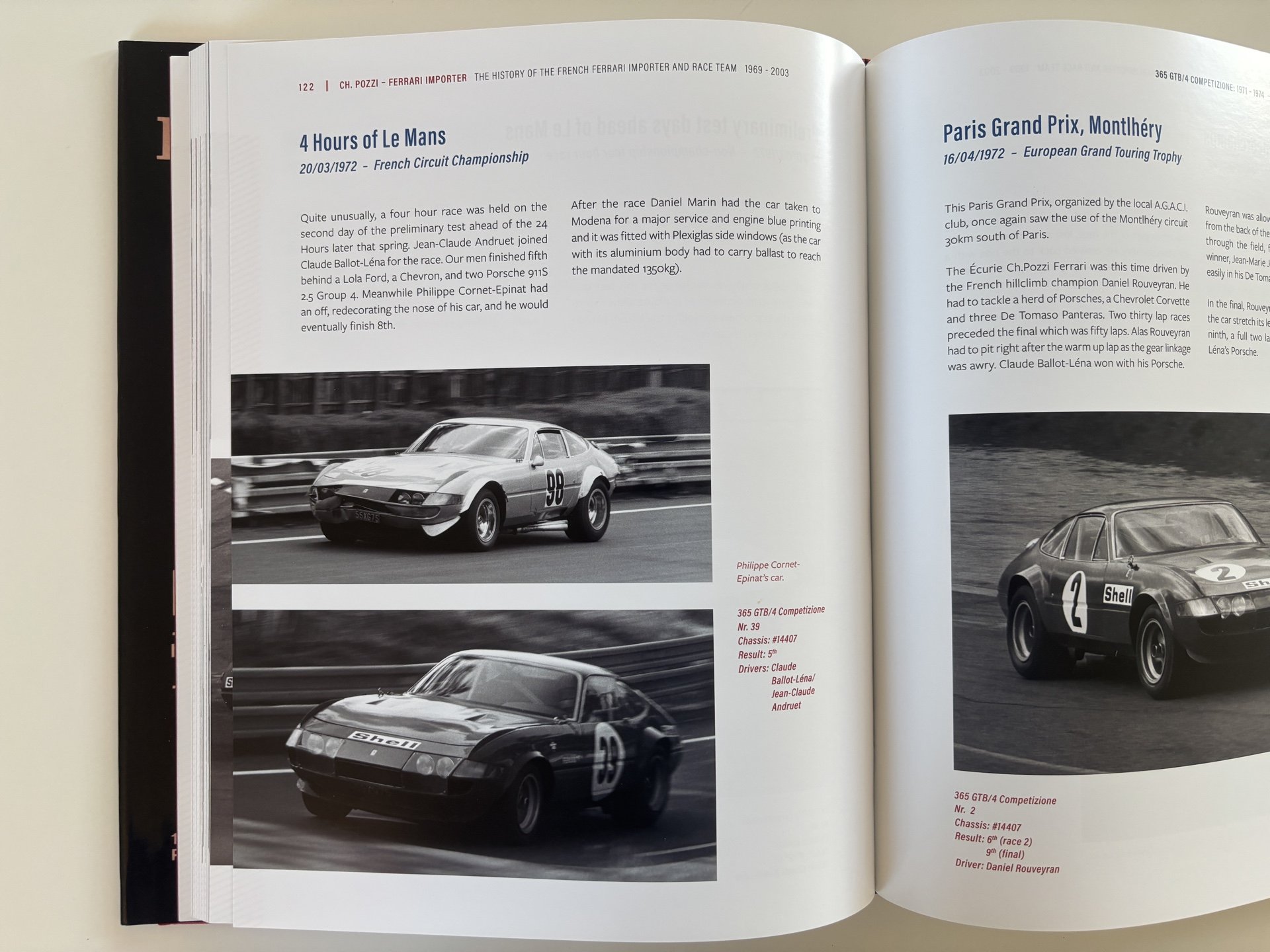
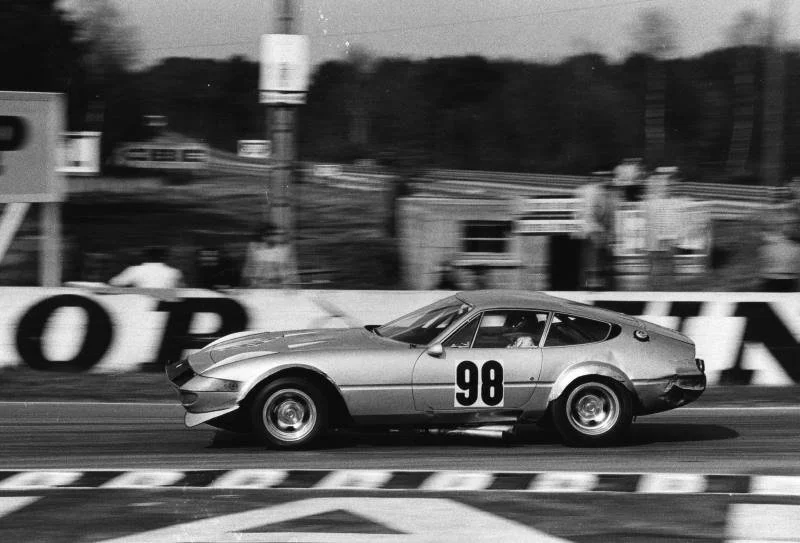
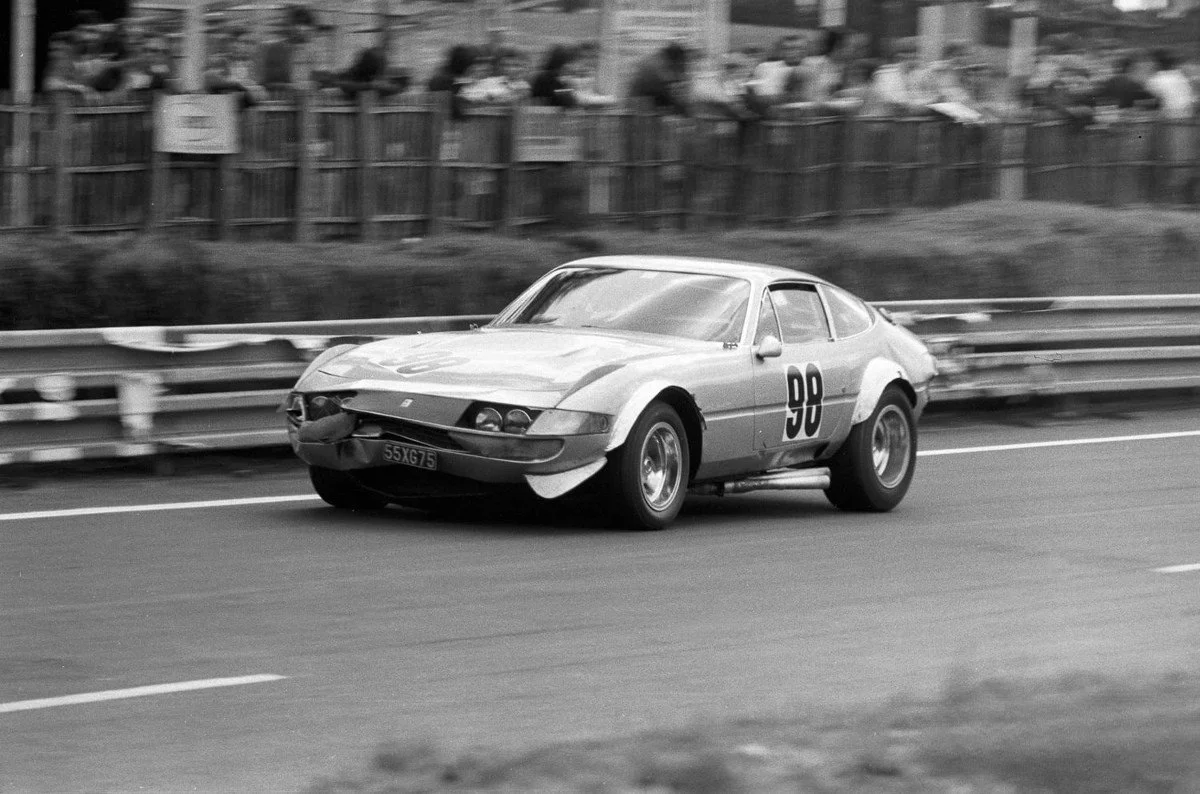
Finished in the original silver paint and sporting #98, chassis 14049 was entered for the first time by Cornet-Epinat in the 1972 4 Hours of Le Mans. This race was held on the same day as the official test and, crucially, on the full length Circuit de La Sarthe. Driving solo, Cornet-Epinat lined up 29th on the grid for what would be his first international race. He did not get off to the best of starts as he was involved in an accident on the very first lap. Despite suffering damage to the nose of his Group 4 'Daytona', Cornet-Epinat carried on valiantly. He finished an impressive 8th overall and 5th in class.
Cornet-Epinat did not race the 'Daytona' again, or compete in another international race for that matter. He sold the Ferrari to compatriot Richard Chanfray. He was a notorious public figure in France and the self-proclaimed Comte de Saint Germain. This title was adopted by Chanfray from the historic 18th century figure, who, like Chanfray, claimed he could turn lead into gold. During Chanfray's ownership, the 'Daytona' was returned to road-going trim before it was sold to British gentleman racer Digby Martland during the mid-1970s.
Most likely unaware of the car's competition history, Martland sent the 'Daytona' to Sport Auto in Italy for a 'Spider conversion.' Now known as Bacchelli & Villa, this is a renowned restoration shop, specialising in Ferraris. The Spider conversion of 14049 was conducted by the same Scaglietti personnel who had built the 122 originals just a few years earlier. As a result, every detail was correct, making it one of the, if not the very best conversion, indistinguishable from an original. At some point during Martland's ownership, the car was repainted red and upholstered with a cream leather interior as well.
Martland would go on to own the Ferrari 365 GTB/4 Spider through to the end of the 1980s. The next long term custodian Abdul-Azziz Al-Hasawi, who was the owner of the Fawaz Refrigeration company. The car remained on the British Isles and was fastidiously maintained by specialists Modena Engineering. Offered for sale in 2004, it moved to Texas before it was acquired from Don Davis by John Roxas of Hinsdale, Illinois. A few months later, it was acquired by noted Ferrari dealer Mike Sheehan in a complicated multi-car trade.
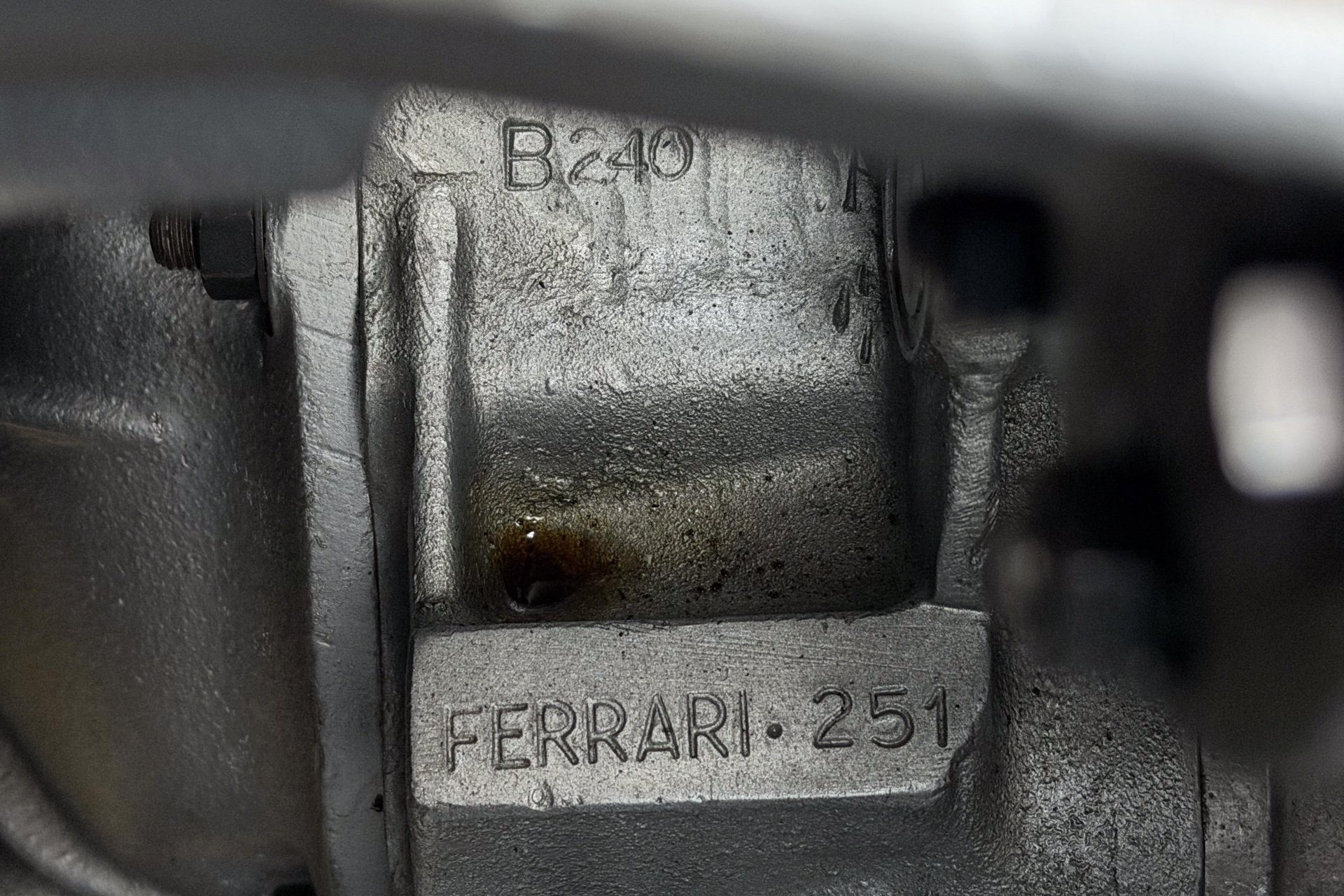
A 'Daytona' expert and a racing driver himself, Sheehan made the difficult but wholly understandable decision to revert the near-perfect Spider conversion to its 1972 Le Mans configuration and specification. The work was done by Wayne Obry's Motion Products, which is one of America's leading Ferrari restoration shops, with numerous awards to show for it. At this time, it was determined that the car was fitted with engine number B240, which had originally been fitted to chassis 12983.
At Motion Products, the 'Daytona' was meticulously restored regardless of cost. As part of this process, it was fitted with a Roelofs Engineering suspension system, which included dampers, springs and anti-roll bars. The car was also repainted back to its original colour of Argento. The work was completed several years later and by February of 2014, the car was acquired by prominent Ferrari collector Chuck Wegner. Back in its original silver and with the #98 on its doors and engine cover, chassis 14049 was shown and raced during the 2015 Cavallino Classic, and again in 2017. Later that year, it was repatriated to Europe and registered for the road in the UK.
The next custodian was a French enthusiast who acquired the car in the early 2020s. In February 2023, under his custodianship, the engine was comprehensively rebuilt by WDB Engineering, as well as the gearbox, with invoices totalling €28,000 for this work. Shortly thereafter, the ‘Daytona’ was shown at the start of the Tour Auto. Early in 2025, it was acquired by our vendor.
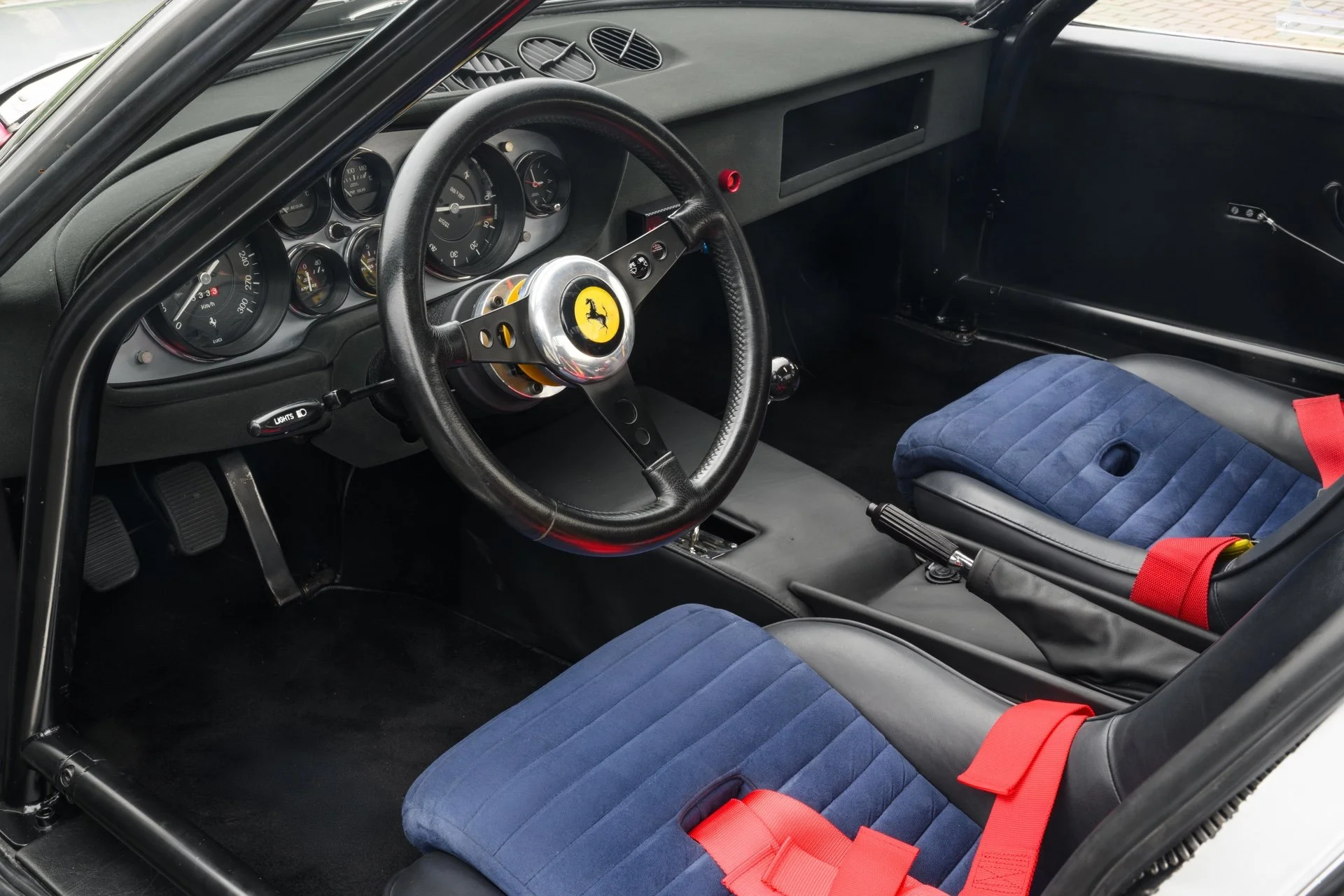
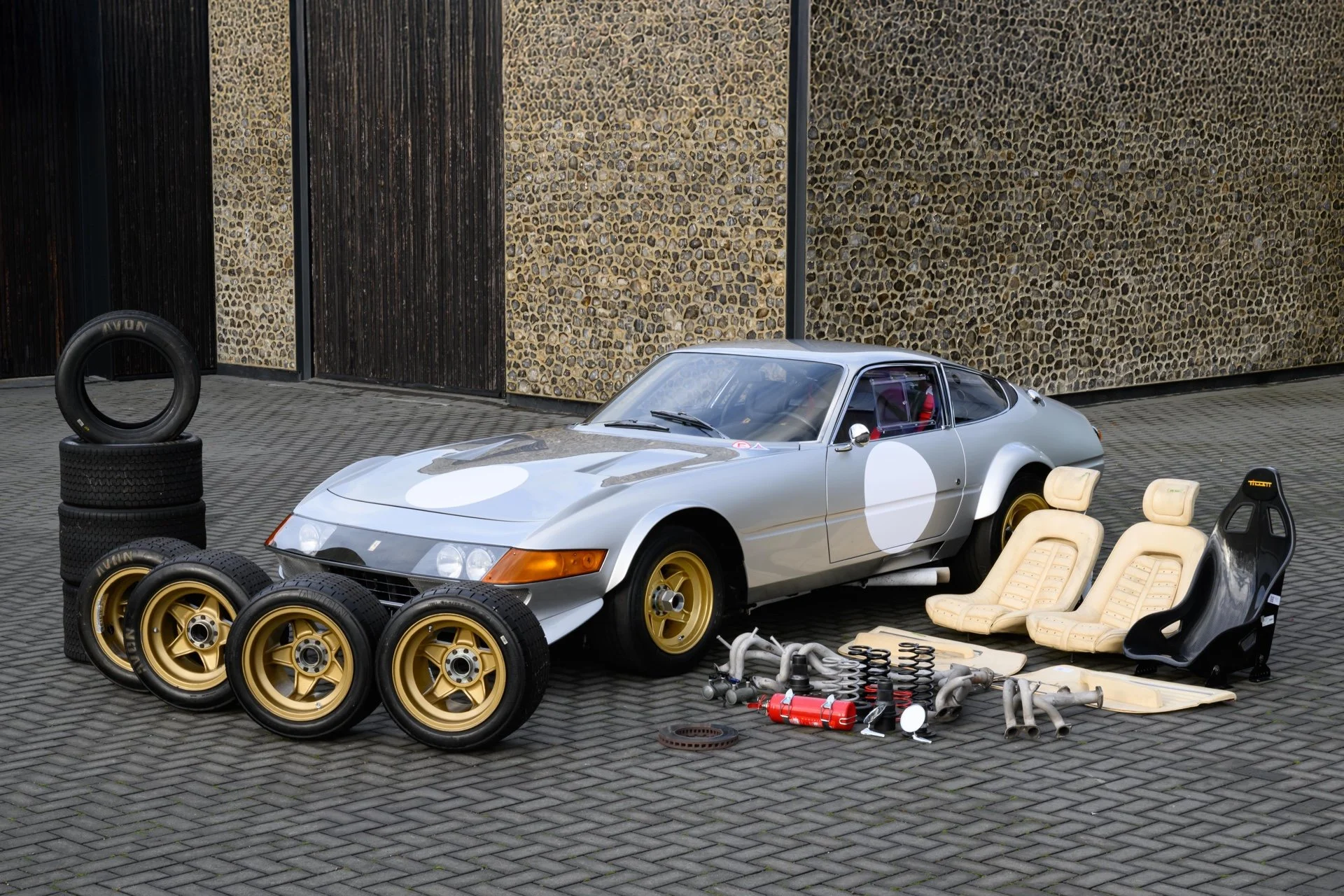
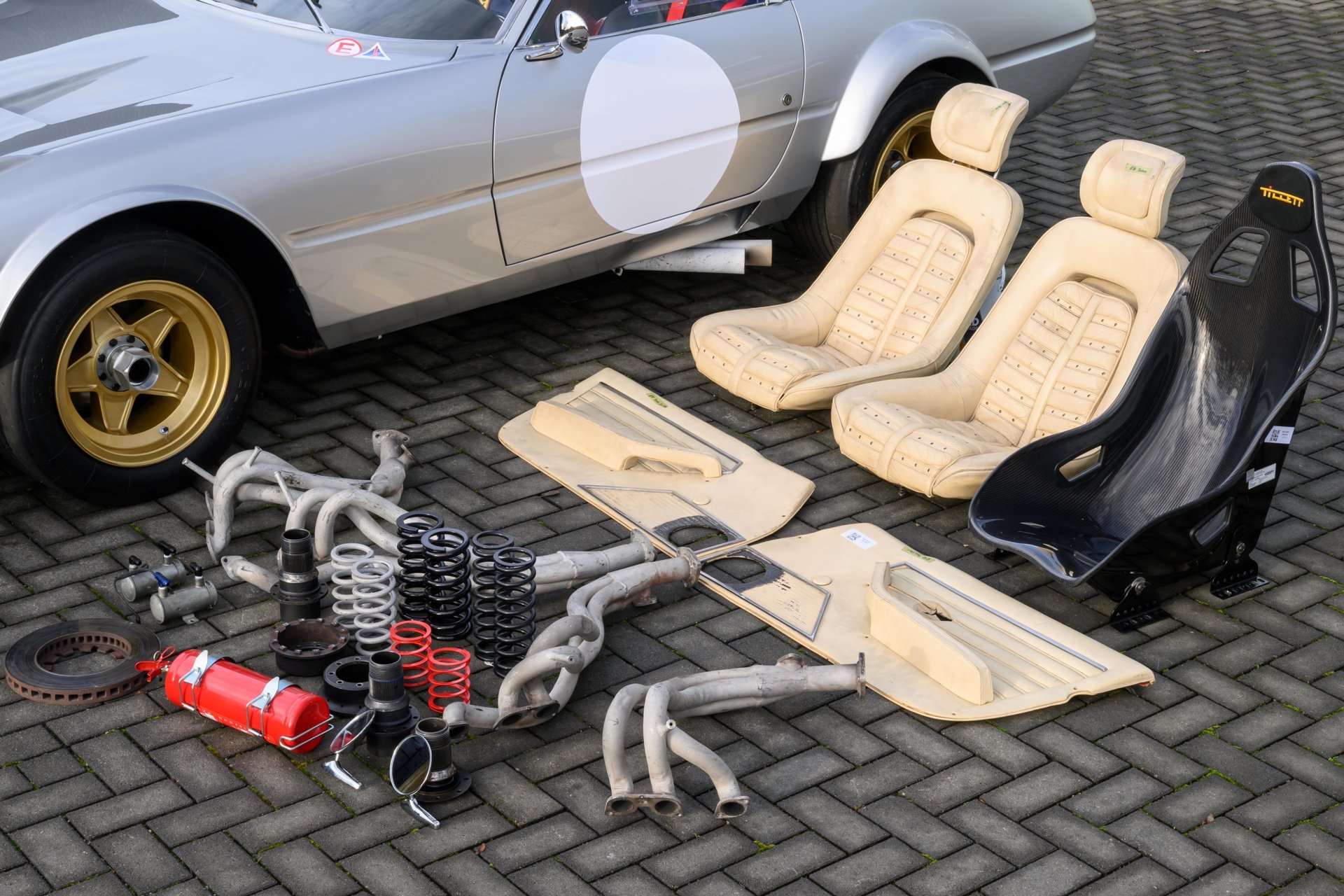
Entrusted to leading historic racing team, ERA Motorsport, it was prepared for the 2025 Spa Classic and the Grand Prix de l'Age d'Or a few weeks later. During this process, the engine was submitted to a leak down test, and it was also successfully run on the dyno. Crack testing was completed and brand-new front hubs, discs, bells and wheel nuts were fitted, as well as a fresh radiator. Among the spares included are a set of wheels and tyres, interior trim: including 2 front seats and a Tillet carbon race seat, and exhaust manifolds.
Currently road registered and taxed in the United Kingdom, and with HTP papers currently in the process of being applied for, this Ferrari 365 GTB/4 'Daytona' Group 4 with period racing history is a sight to behold and an ideal entrant for the Modena Cento Ore, Le Mans Classic, Tour Auto, Daytona and Sebring retrospectives, and the Le Mans Classic Series Classic Endurance Racing 1 grid, plus much more.
-
Technical Passport:
Currently under application
Crack Testing:
Last Date Completed: May 2025
Engine Life:
Last rebuild: February 2023 by WDB Engineering in Magny-Cours, France
Current Engine Mileage: Estimated mileage to be between 1-2 hours
Recommended Engine Rebuild Interval: 35-40 hours recommended by Pastorelli Classic Cars
Remaining Mileage Available: Between 33 hours and 38 hours
Gearbox:
Last opened up in February 2023 by WDB Engineering in Magny-Cours, France. Work included the change of the ring and pinion gear, as well as bearings and seals, as well as further checks and tests
Fuel Cell Certification:
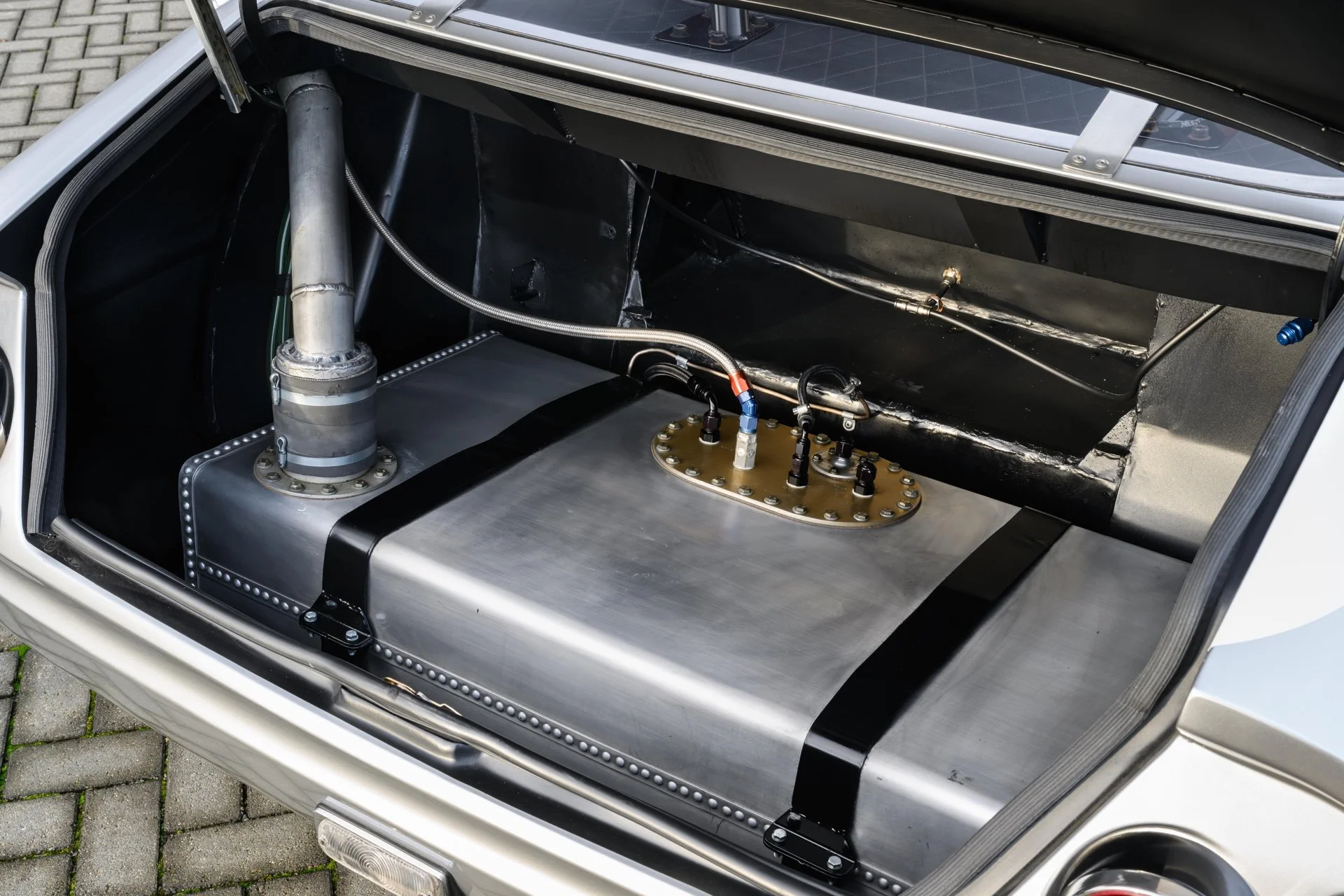
Not applicable
-
Category: Group 4
Chassis: Steel tubular frame
Engine: 4,400cc, Ferrari Tipo 251 naturally-aspirated V12
Gearbox: Ferrari five-speed manual transmission
Front suspension: Independent, unequal-length wishbones, coil springs, telescopic shock absorbers, anti-roll bar
Rear suspension: Independent, unequal-length wishbones, coil springs, telescopic shock absorbers, anti-roll bar
Brakes: Ventilated steel discs
Weight: TBC
Tyres: Michelin/Avon racing slicks/wets
-
Le Mans Classic Heritage
Newly announced, Le Mans Classic Heritage will alternate with Le Mans Classic Legend each year, focusing on cars that competed between 1923 and 1975. The first edition is to take place in 2027 and is set to carry on the legacy of one of historic racing’s most prestigious events.
Peter Auto – Classic Endurance Racing 1
For Le Mans Prototypes and GT cars, which competed in major endurance championships between 1966 and 1971 (1975 for GTs), Peter Auto’s CER1 holds a full annual calendar of events in Europe and the Middle East. These events take place at some iconic circuits, including Spa, Imola and Paul Ricard.
Tour Auto
The annual Tour Auto is one of the most prestigious rallies in Europe. It is held over six days, with the rally travelling from Paris to Nice and is for models, which competed in the Tour de France between 1951 and 1983. The next running of the Tour Auto is set to take place between May 3rd and 9th, 2026.
Modena Cento Ore
The annual Modena Cento Ore is one of Europe’s most popular rallies. Held over a week in October, with the rally travelling from Modena to Rome and is for cars constructed between 1919 and 1981, which hold a valid HTP. The next running of the Modena Cento Ore is set to take place between October 6th and 11th, 2025.
HSR Group 8 - Including Daytona and Sebring Classics
For Post-Historic FIA Grp 4/5/6 and IMSA GTs, HSR’s Group 8 holds a number of events in the United States. Among these events are two of the premier events for historic endurance competition, which are HSR Classic Daytona in November and HSR Classic Sebring 12 Hour in December.
Monterey Motorsports Reunion – Pedro Rodriguez Trophy
This annual event takes place during the iconic Monterey car week at the world-renowned Laguna Seca circuit. This event holds a variety of races, including the Pedro Rodriguez Trophy for cars which competed in the FIA Manufacturers Championship between 1961 and 1975. The next event takes place in August 2026.
Masters Sports Car Legends
For prototypes, sportscars and GT cars which competed in major endurance races between 1962 and 1976, Masters Sports Car Legends holds an annual calendar of event in the UK and Europe. These events take place at some iconic circuits including Brands Hatch, Zandvoort and Monza.
-
The car is accompanied by a useful spares package, including a set of wheels and an extra set of tyres, carbon race seat, two original front seats, leather interior pieces and exhaust manifolds
-
Car Location: this car is located at our Petersfield showrooms in Hampshire, United Kingdon where viewings are welcome by appointment.
Taxes: UK
Sam Says“ I’ve been fortunate to campaign a Group 4 ‘Daytona’ for several years now, both on the race circuit at Le Mans Classic, and in rallies such as the Tour Auto and Modena Cento Ore. It is in this latter environment that the car absolutely thrives. If you are brave enough to run ‘open pipes’ the sound track is utterly breathtaking - every acceleration a symphony from the V12 gods! And with its torque, impressive handling and roomy interior, it turns out to be the perfect car for such events. ”
GallEry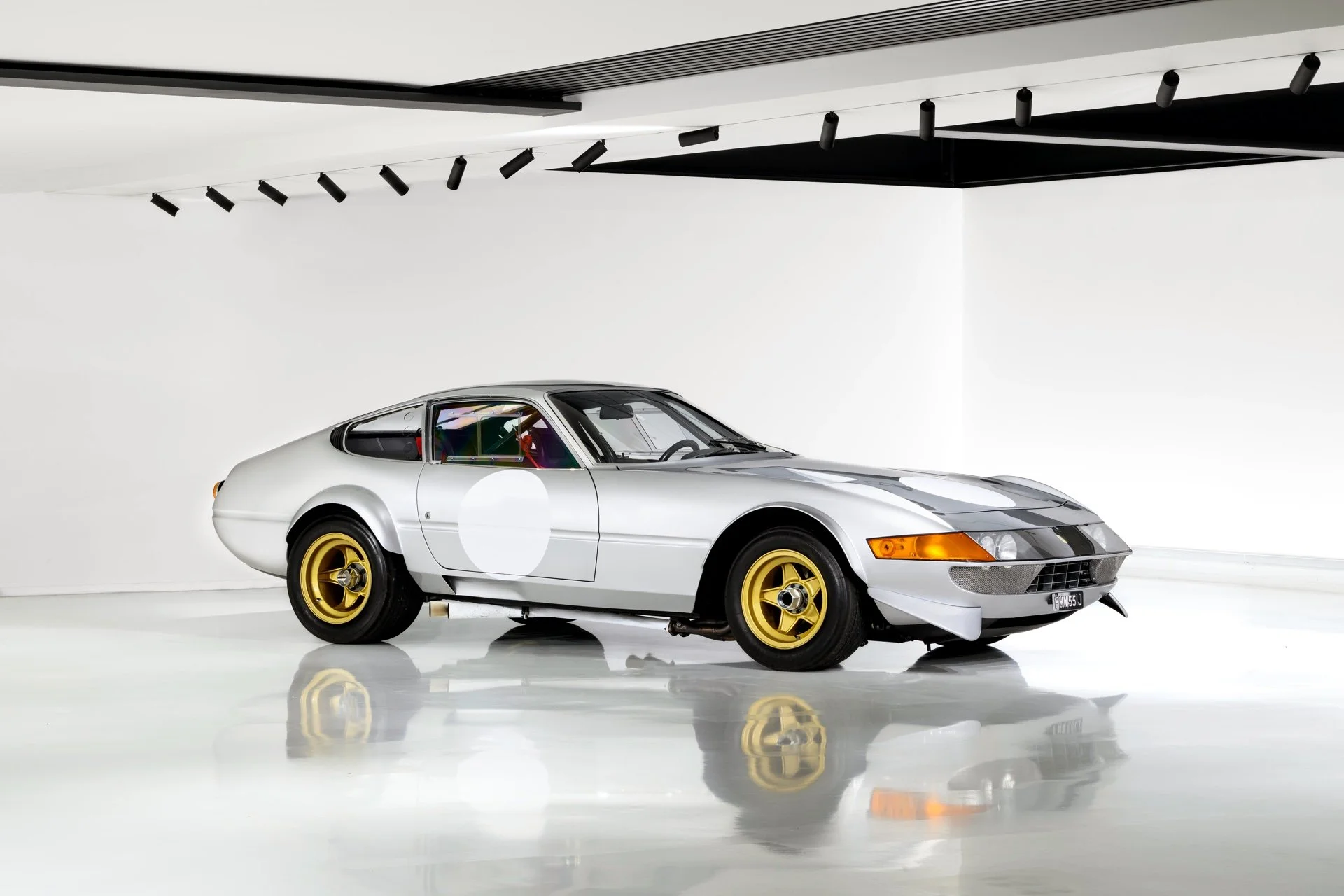
FILMSit back for a few minutes, pour yourself a glass of your favourite aperitif, and revel in un-silenced Columbo V12 symphony…
EnquiriesFor further information, please don’t hesitate to contact us.
ImagesTim Scott