
1980 BMW M1 Procar
price on application
Original BMW M1 Procar with period Sebring and Daytona IMSA history. Race-proven, road-registered, and ideally suited to Tour Auto, Peter Auto CER2, Le Mans Classic, Modena Cento Ore and more.
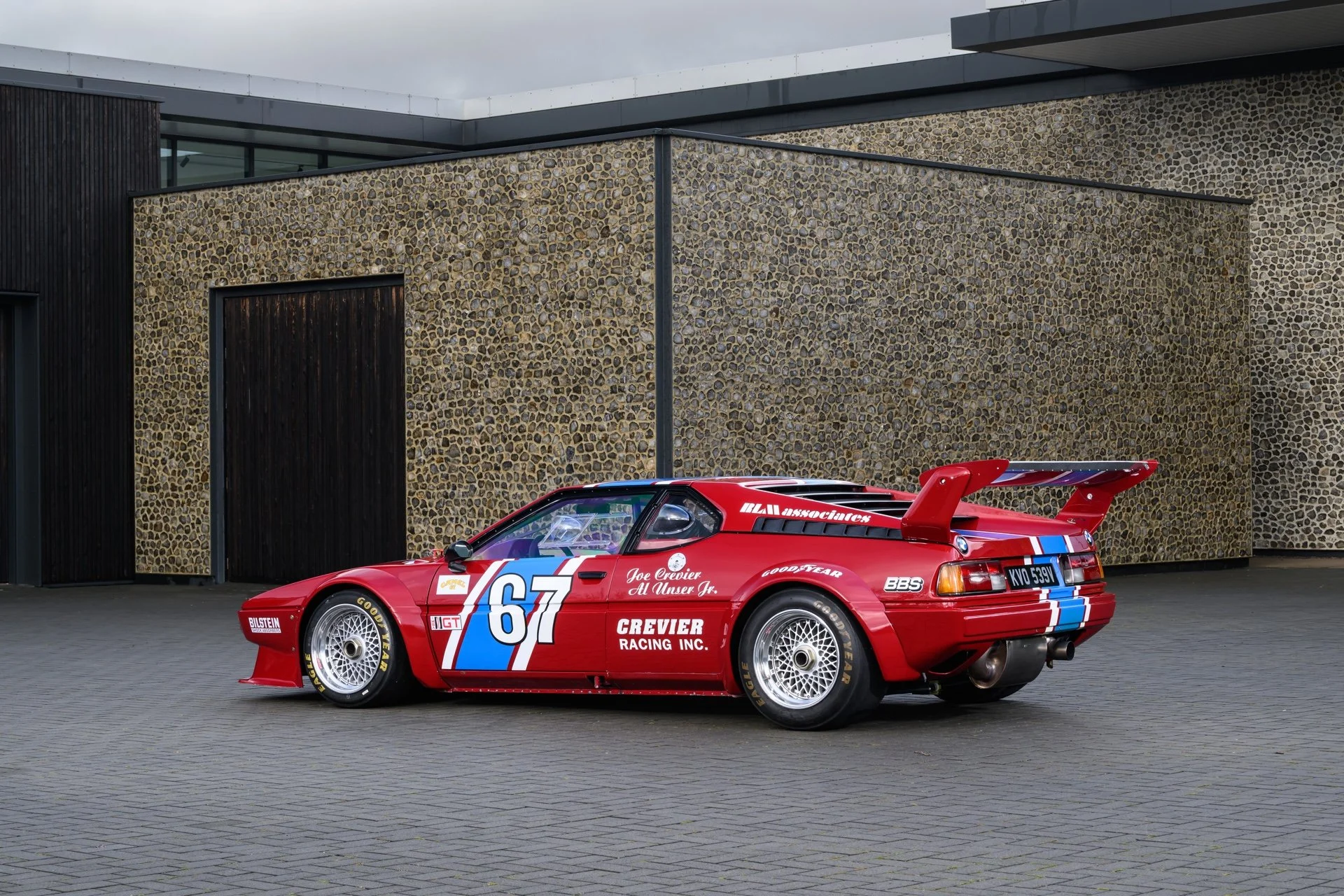
OverviewThe 36th of only 54 BMW M1 Procars produced in period
Extensive period history in the US, including Daytona 24 Hours and Sebring 12 Hours participations
Multiple class podiums in IMSA GT between 1981 and 1982
Raced in period by two-time Indianapolis 500 winner Al Unser Jr
Comprehensively restored in 2009 and maintained since to an exceptional standard, benefiting from significant investment by recent custodians
Extensive development between 2015–2019 by Sam Hancock and Swiss specialists, Graber Sport
Well-established as one of the fastest and most competitive BMW M1 Procars in Peter Auto CER2
1000kg steel tubular chassis by Giampaolo Dallara
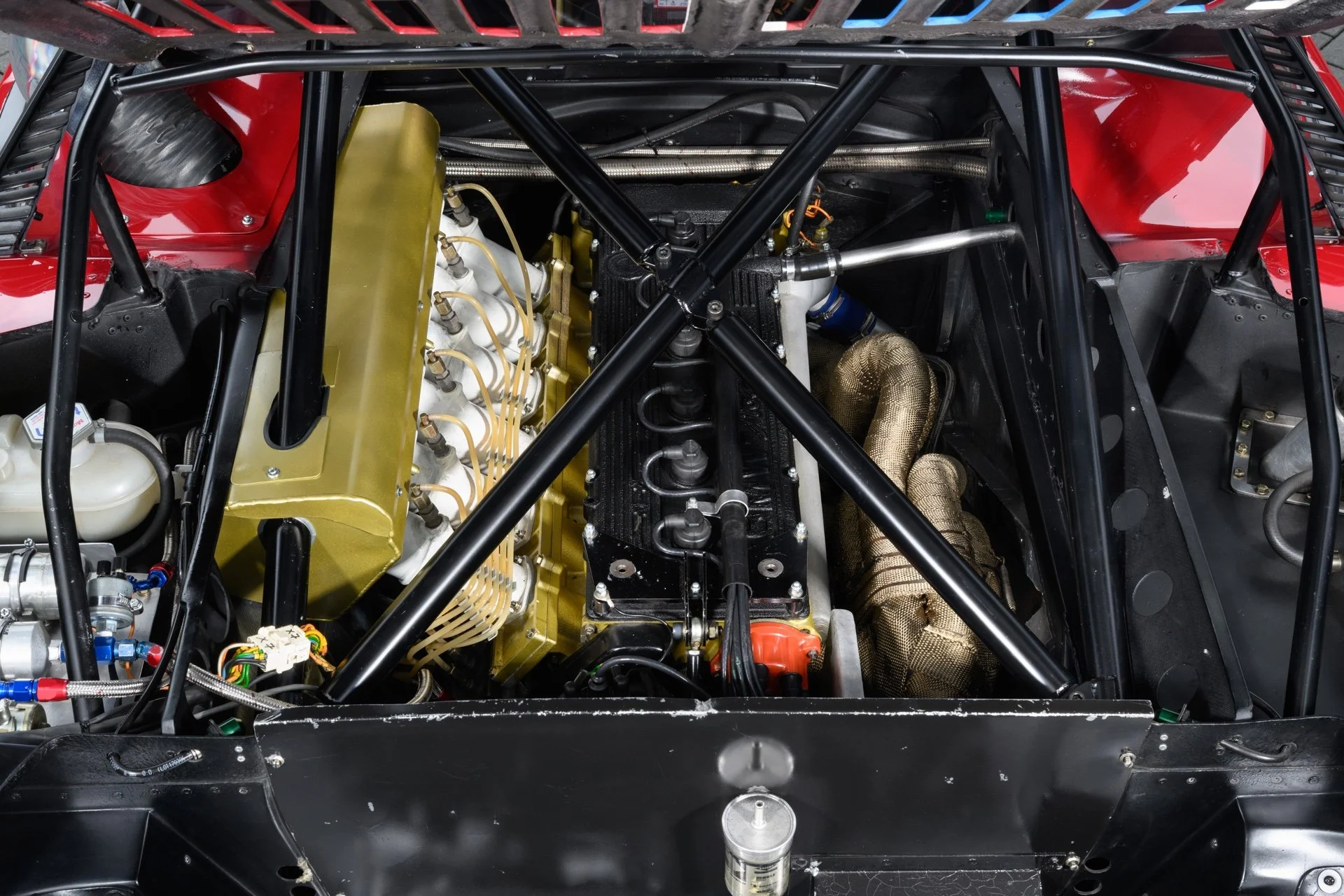
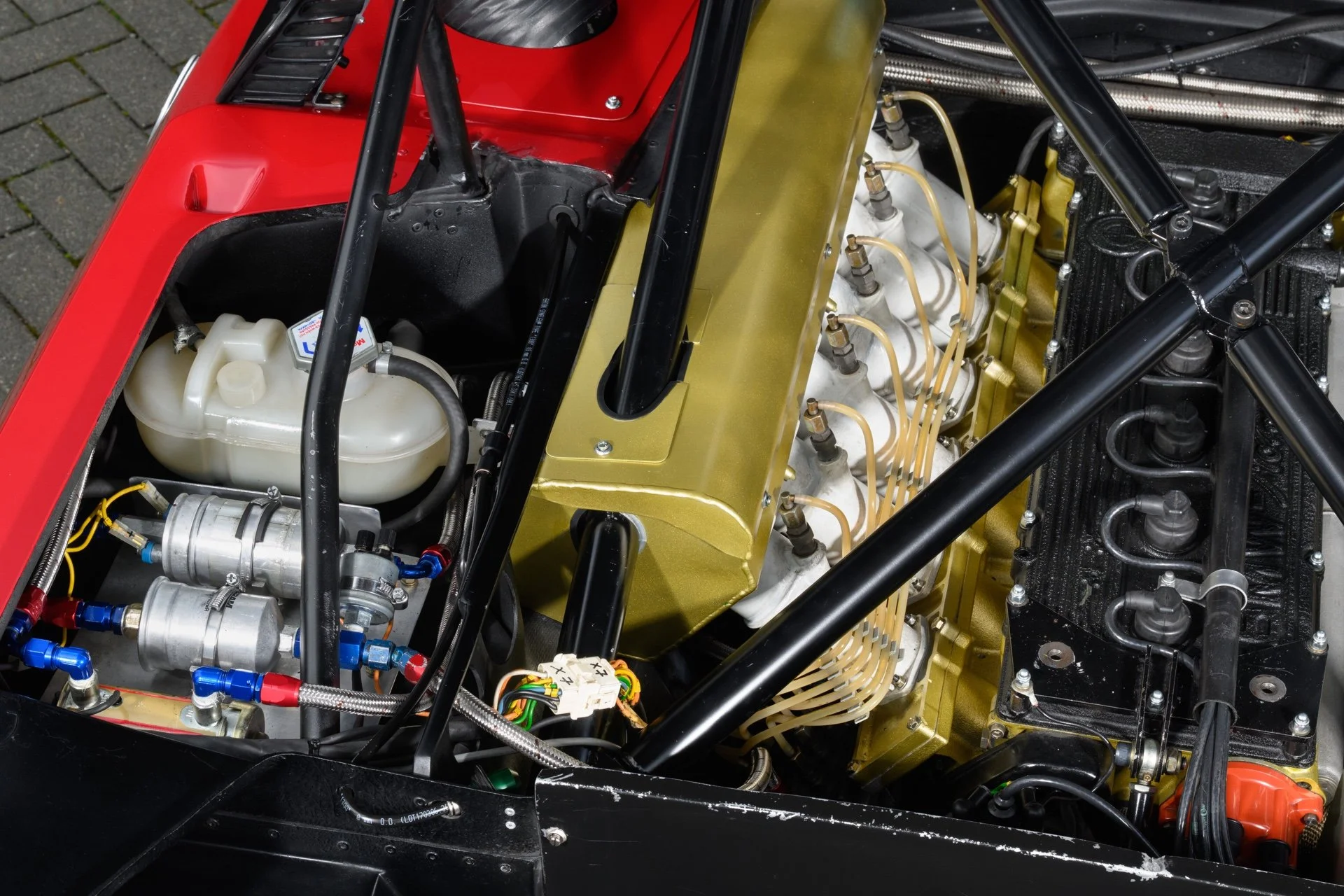
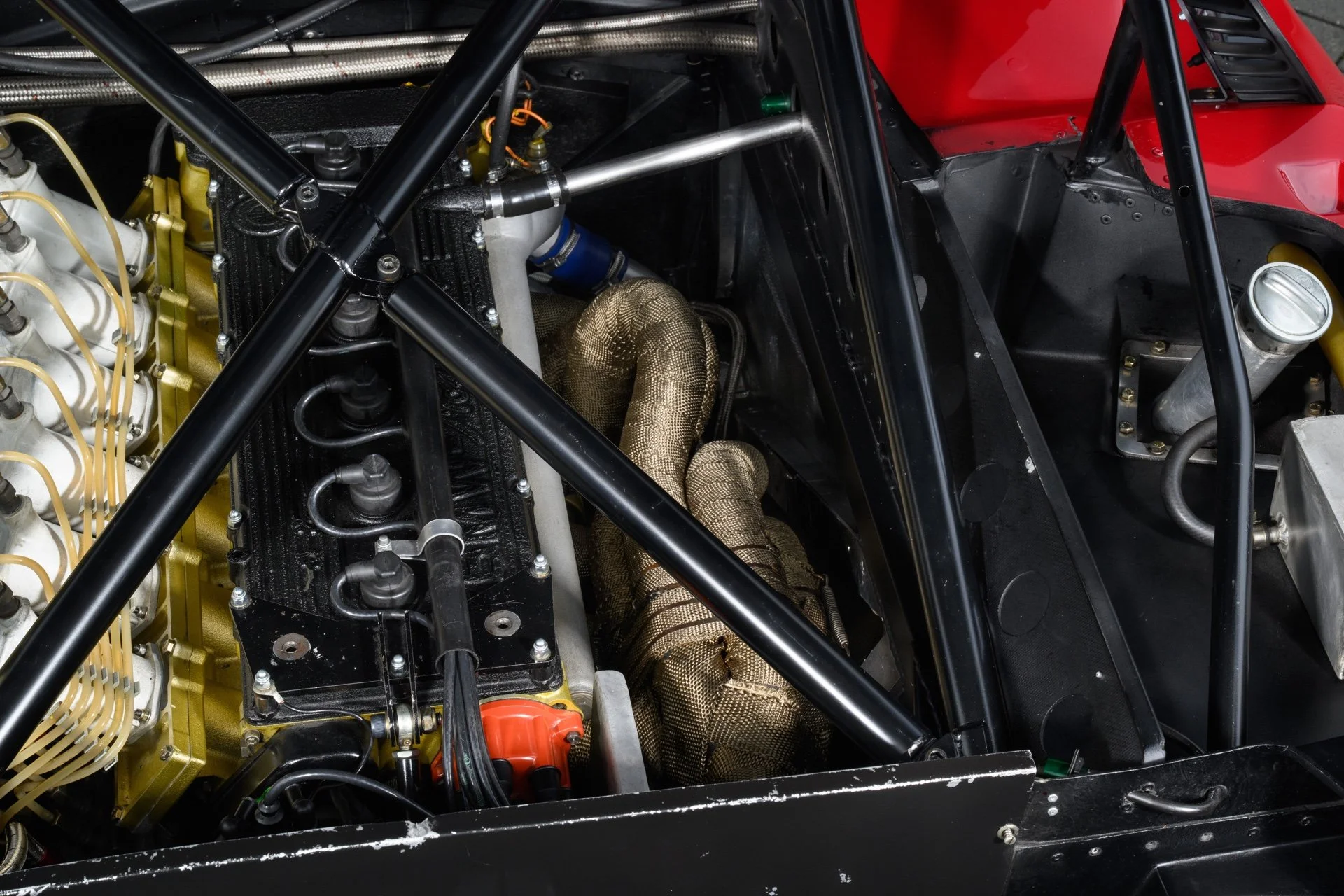
Mid-mounted 3.5-litre straight-six BMW engine producing nearly 500bhp
Ventilated steel brake discs and Goodyear racing slicks (or treaded road tyres)
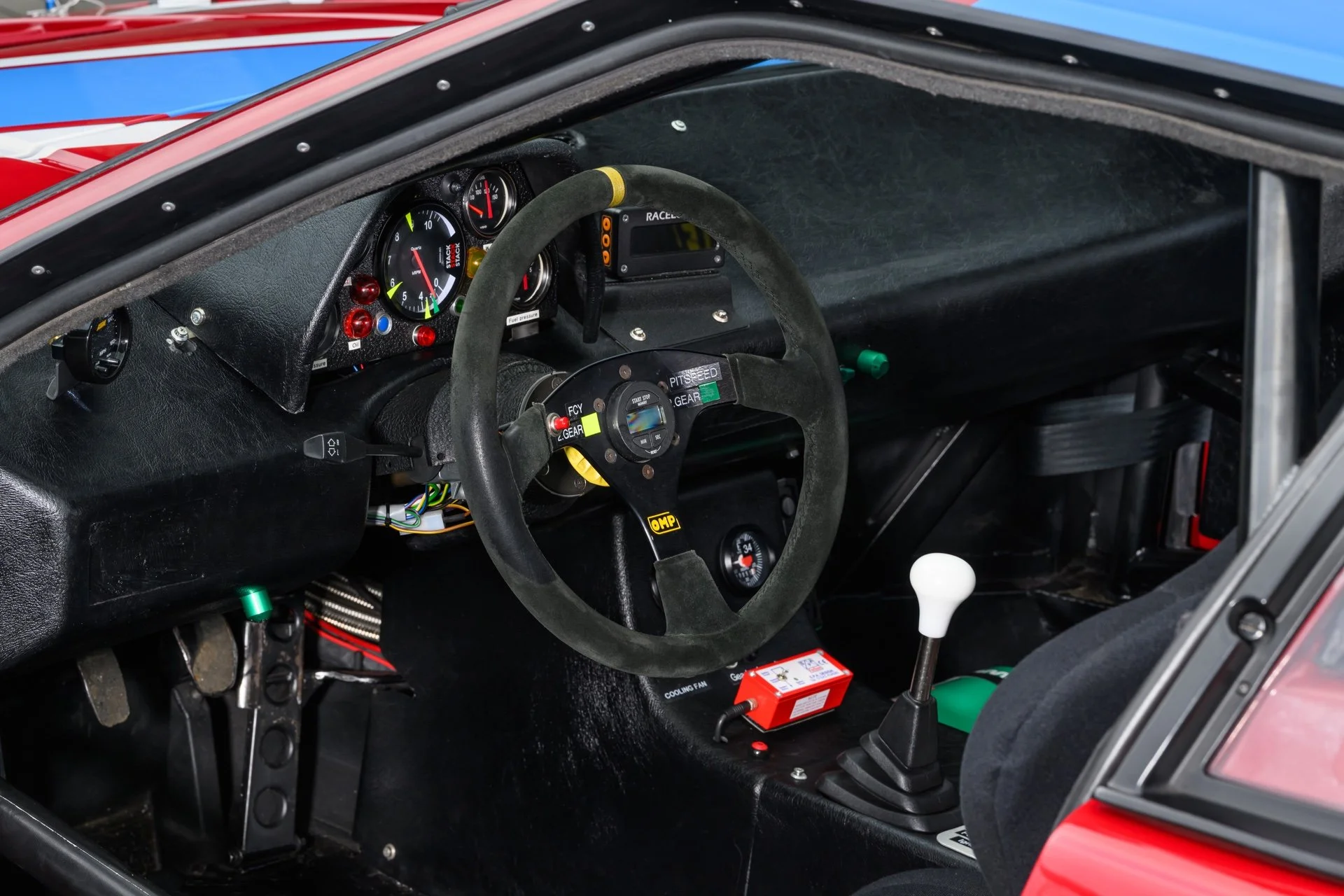
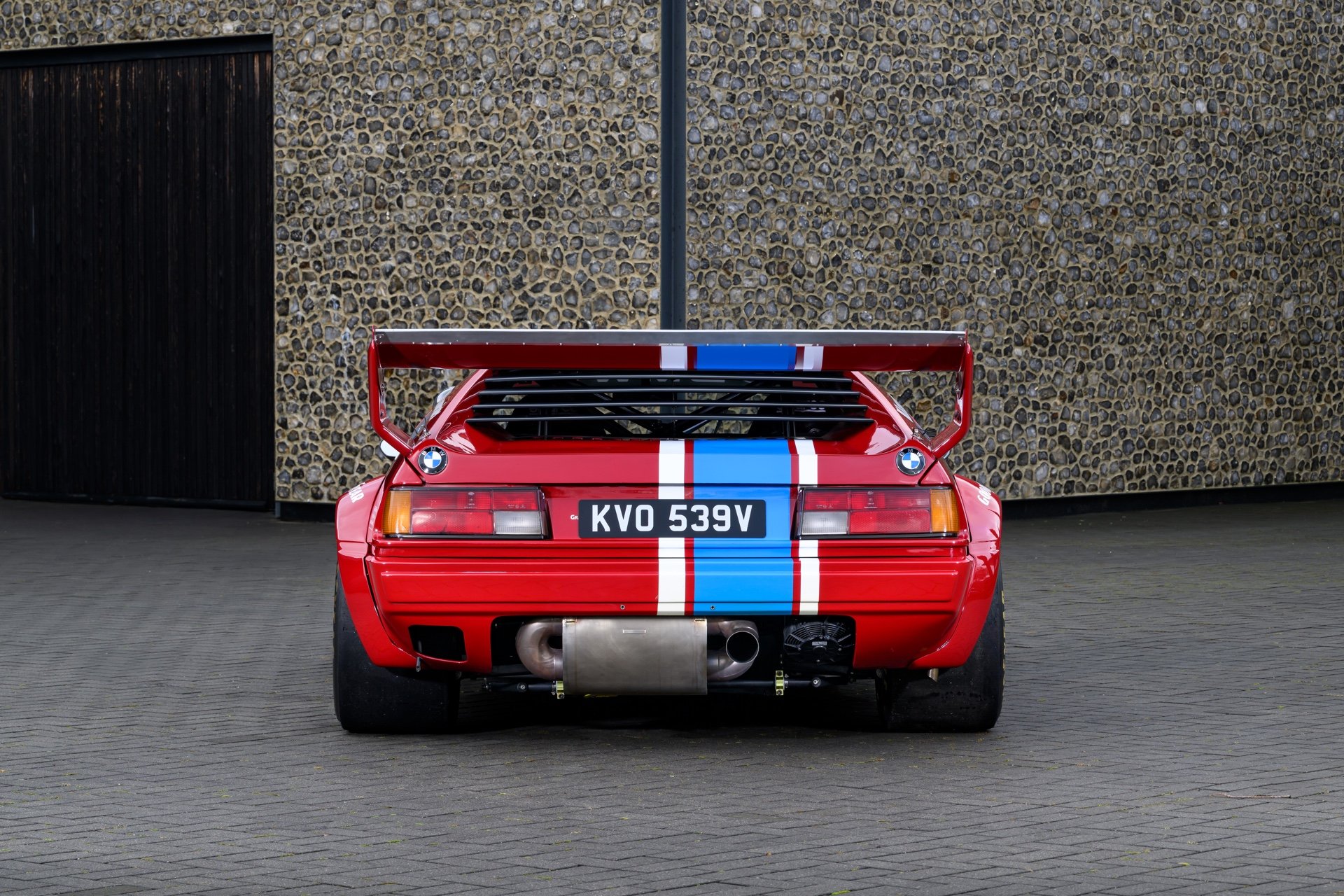
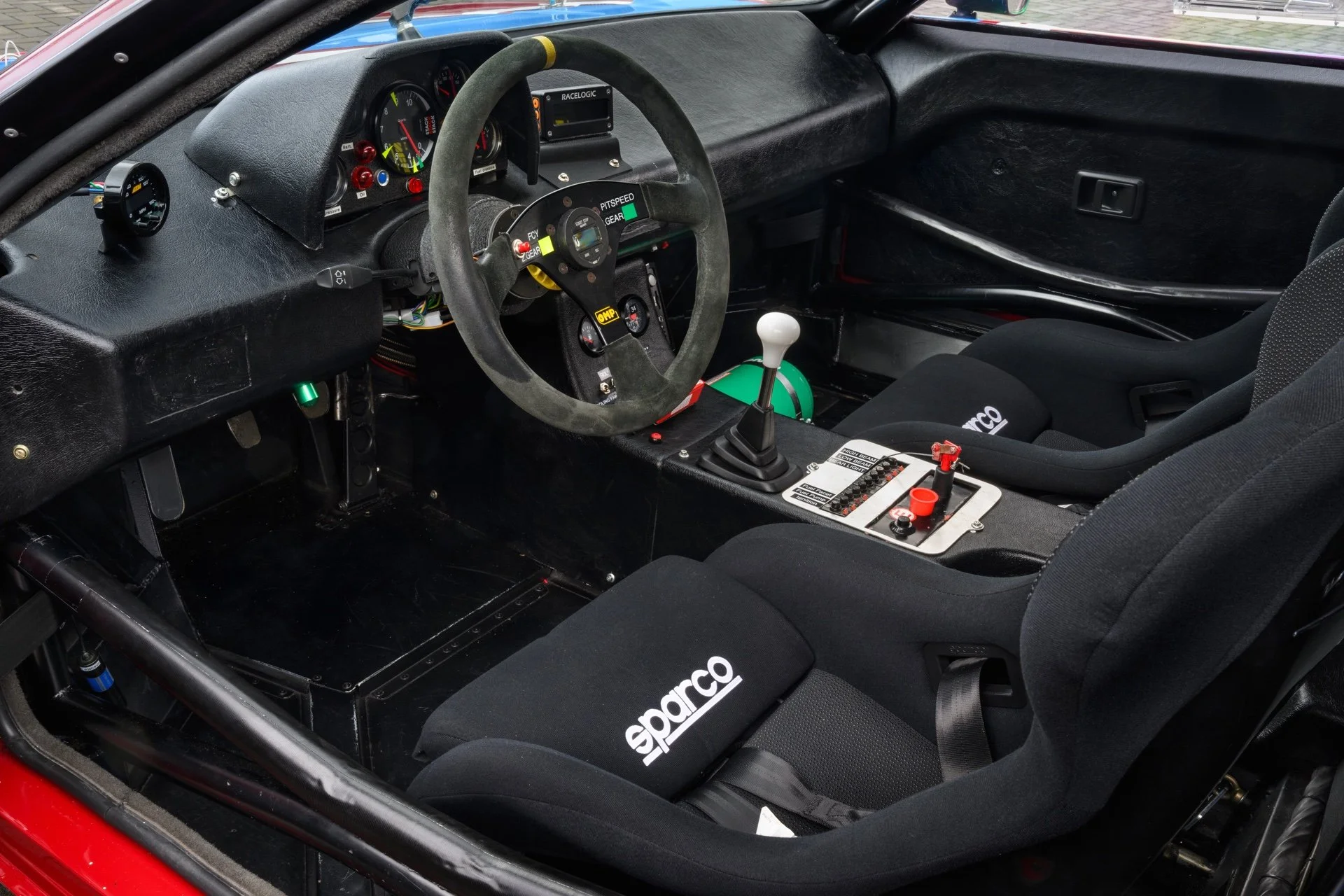
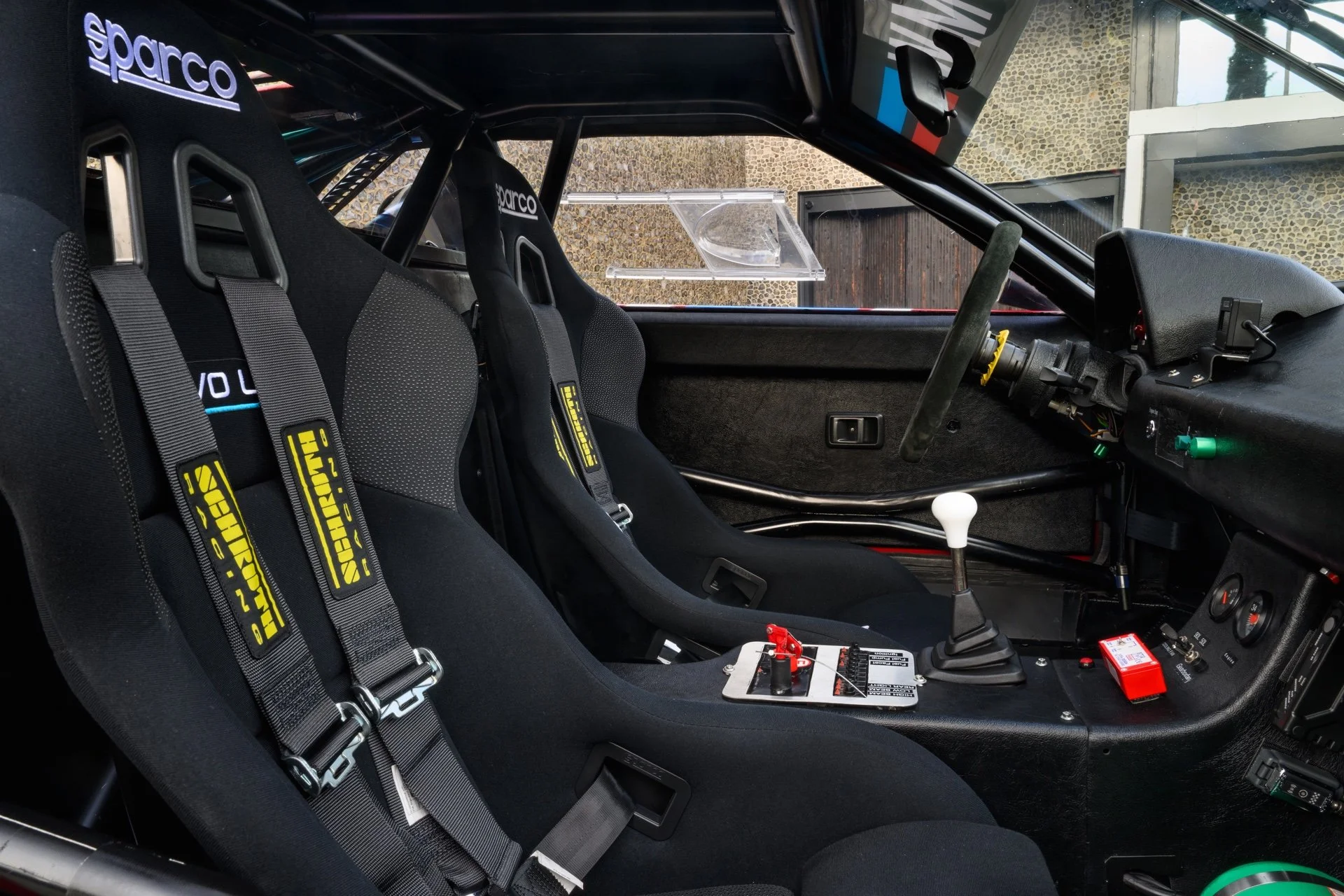
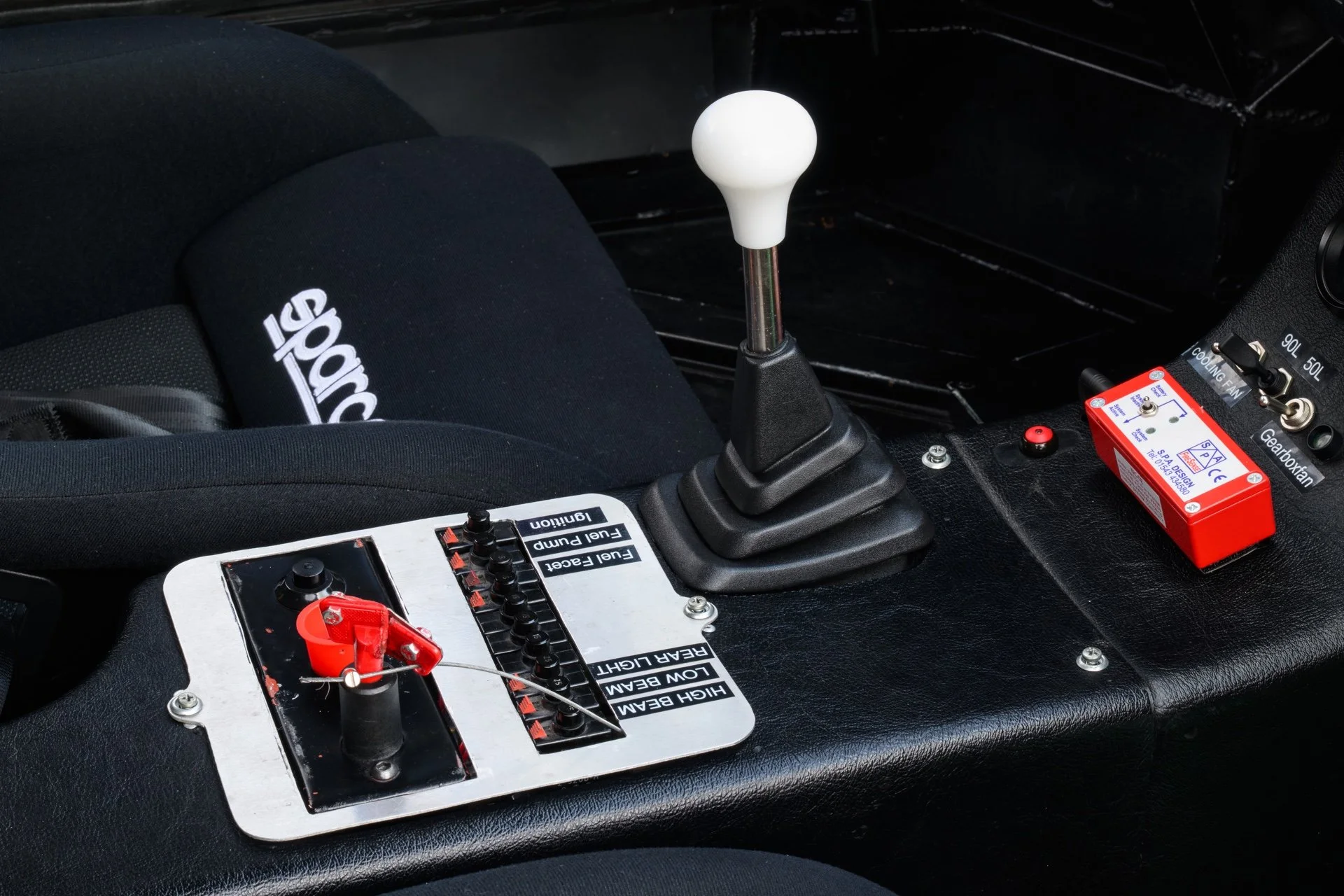
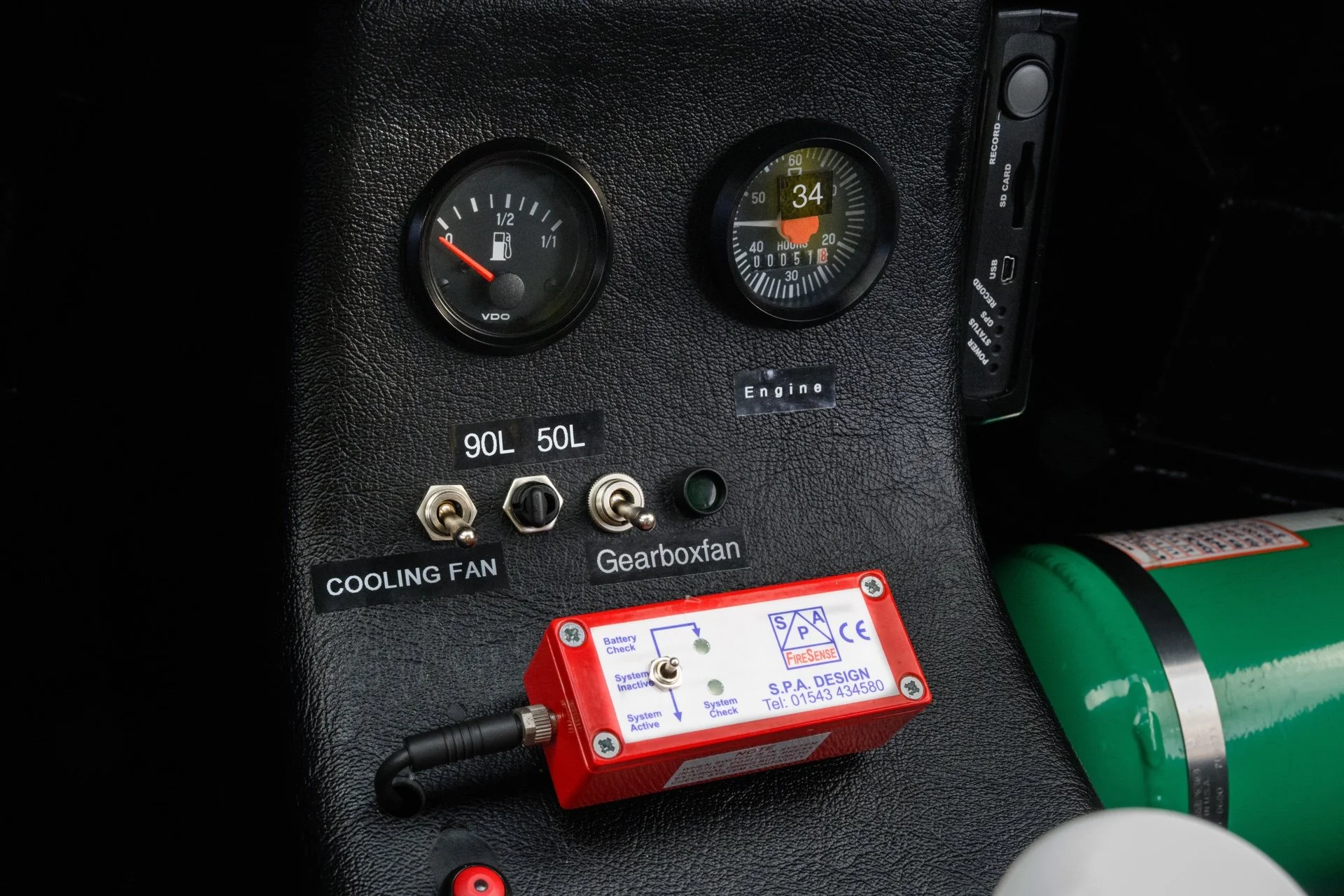
Recently road registered in the UK and prepared for tours and rallies with two seats, electronic handbrake and additional cooling (easily reversed to full race specification)
Eligible for Plateau 6 at Le Mans Classic Legend, Peter Auto CER2, Tour Auto, Modena Cento Ore, the Sebring and Daytona retrospectives, and more
-
In its fabled 50-year history, BMW Motorsport built just one sports car from scratch; the M1. Revealed early in 1978, the mid-engined supercar was created to form the basis of the German manufacturer's foray into the World Championship of Makes to take on the likes of Porsche and Ferrari. Revered as a road car, the M1 came into its own on the racetrack, initially in the one-make Procar series and subsequently scoring successes in the Group 4 and IMSA GTO category. Combining razor-sharp handling characteristics and striking styling with a glorious straight-six mounted amidship, the M1 Procar is supremely eligible for events like the Le Mans Classic, Classic Endurance Racing 2 by Peter Auto and the Sebring 12 Hours and Daytona 24 Hours retrospectives.
The BMW Motorsport department was originally formed in 1972 to successfully take on Ford in the World Touring Car Championship with the 3.0 CSL. A rule change saw the 3.0 CSL outlawed from touring car races and the existing cars were upgraded where possible to compete in the Group 5 GT category instead. In this guise, the CSLs were entered in endurance races that were part of the World Championship of Makes. In 1976, BMW finished runner-up, beaten only by Porsche with the altogether more extreme 935. Effectively a silhouette racer, it barely resembled the 911 Turbo it was derived from. The BMW Motorsport engineers quickly realised that in order to upstage the Porsche 935, a clean-sheet design would be required.
Fully aware of the monumental task ahead, BMW Motorsport enlisted the help of the hugely talented Italians Gianpaolo Dallara for the chassis and Giorgetto Giugiaro for the styling. For Lamborghini, Dallara had created the mid-engined Miura and Countach chassis, while Giugiaro was on his way to be crowned 'Designer of the 20th century.' Lamborghini was initially also involved as an engineering partner but after the first seven prototypes were constructed and after many delays, BMW Motorsport took back full control of the project.
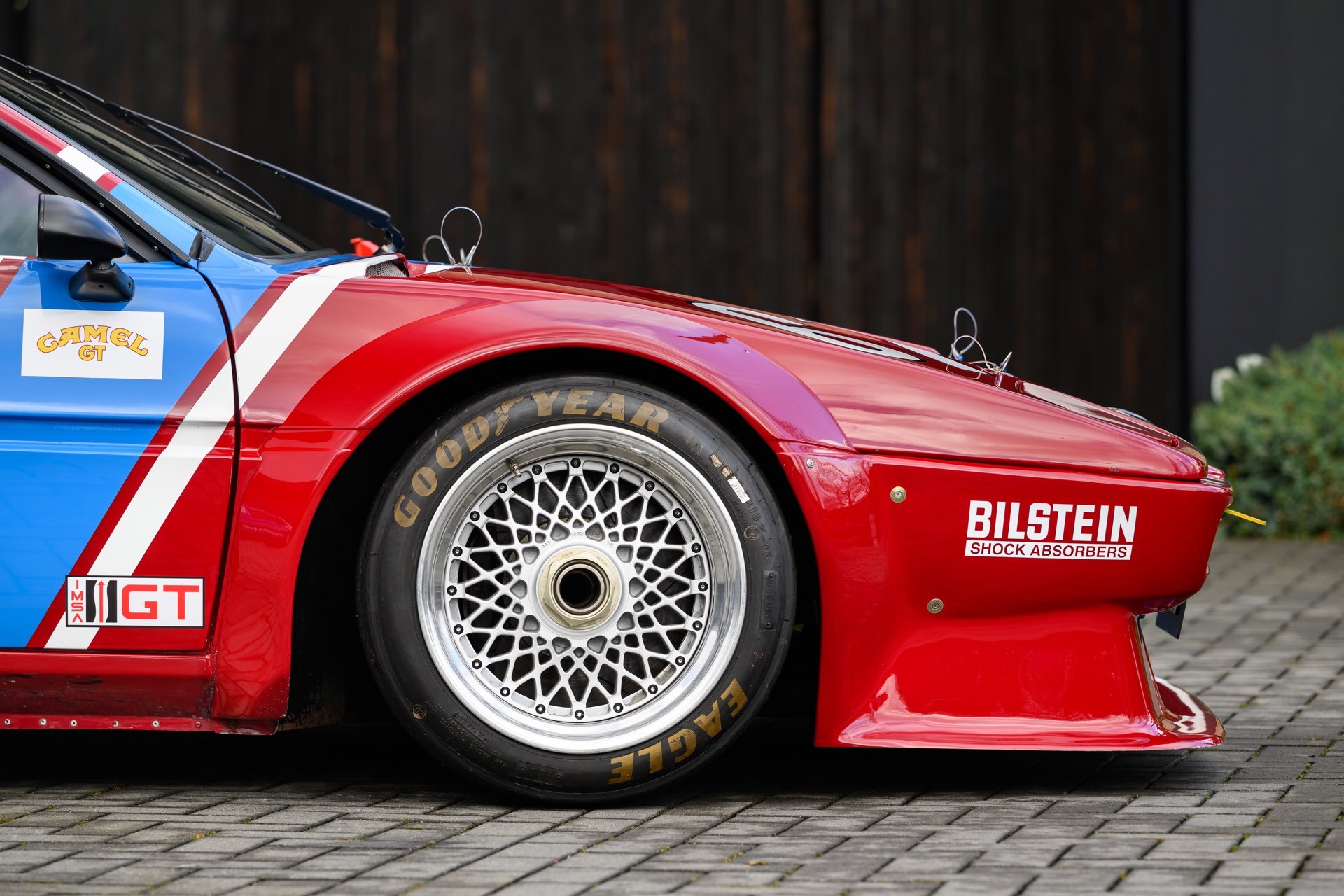
Dallara created a steel, tubular space-frame chassis with double wishbones, coil springs, adjustable dampers, ventilated disc brakes and Campagnolo alloy wheels on all four corners. Mounted amidships was the BMW Motorsport M88/1 straight-six. Derived from the engine that powered the Group 5 CSL, the 'six' had a 3.5-litre displacement, boasted four valves per cylinder and was equipped with Kugelfischer fuel injection. Mated to a five-speed ZF transaxle, it produced 273 bhp in road trim. Giugiaro penned an elegant wedge-shaped design that was inspired by the BMW Turbo Concept of 1972. The fibreglass bodywork included subtle BMW design elements like the kidney grille. The tail sported a BMW badge on each corner.
For the M1 to be eligible for the most extreme Group 5 category, it first had to meet Group 4 homologation. This required a minimum production number of 400 road cars. This proved quite a challenge due to the complicated logistics involved with the construction of the cars. The chassis frame was built by Marchesi and the bodywork moulded by Italina Resina, which were both located in Modena, Italy. At Giugiaro's Italdesign, the body was mounted on the chassis and then a minimalistic interior was fitted. The shell then moved to Baur in Germany, where the drivetrain was fitted before the nearly complete M1s were shipped to BMW Motorsport for the finishing touches.
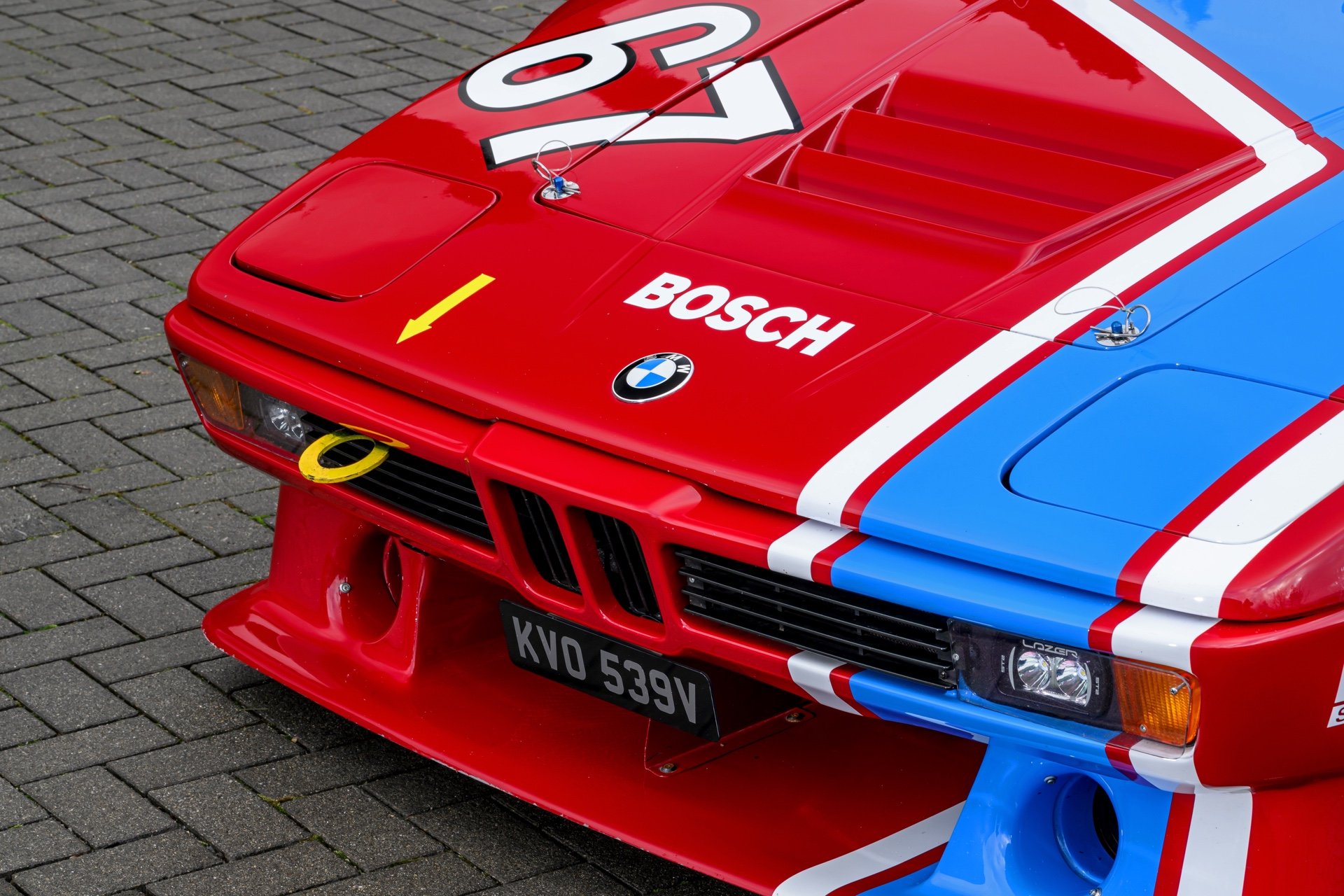
Even though the road car was introduced in the spring of 1978 to universal acclaim, it quickly became apparent that Group 4 homologation would take much longer than anticipated. The work on the competition car nevertheless continued. Stripped to its bare bones, it weighed a mere 1,020 kg and featured a deep front spoiler, flared wheel arches and a full-width rear wing. The M88/1 was modified to produce 470 bhp. Construction of the competition cars was also outsourced, to specialists like Osella in Italy and Ron Dennis's Project Four.
With the M1 still not homologated, BMW Motorsport supremo Jochen Neerpasch had an inspired idea; a one-make support series for select Formula 1 events for the M1 built to Group 4 specification. Known as the Procar Championship, the championship debuted at the 1979 Belgian Grand Prix and saw many Formula 1 drivers compete. BMW Motorsport reserved factory-run M1 Procars for the top-five qualifiers for that weekend's Grand Prix. The Procar events featured spectacular door-to-door racing and saw Niki Lauda and Nelson Piquet crowned champions in 1979 and 1980 respectively.
The Group 4 homologation requirements were finally met on December 1st, 1980. By that time, BMW Motorsport had already agreed an engine deal with the Brabham Formula 1 team, so the M1 was no longer a priority. An official Group 5 version was never created but privately run M1 Procars did prove successful in the Group 4 and IMSA GTO category. One was famously painted by Andy Warhol and then went on to finish sixth overall at Le Mans in 1979.
The BMW M1 Procar represents the best of many worlds, combining German engineering and Italian flair with a glorious soundtrack from the straight-six engine and beautiful handling from the lightweight chassis. Crucially, it is supremely eligible for major events around the world, including the new-for-2026 Le Mans Classic Legend.
-
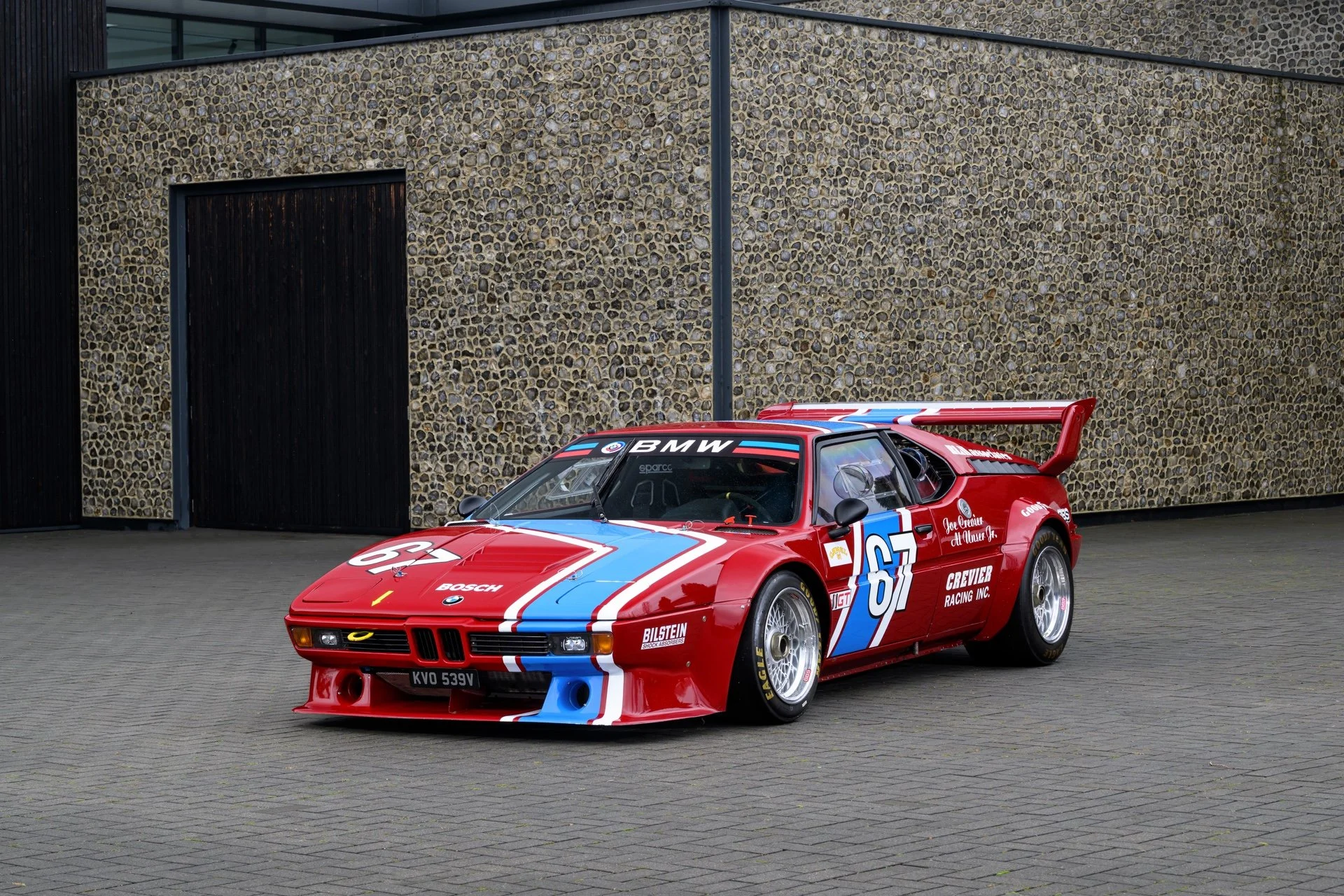
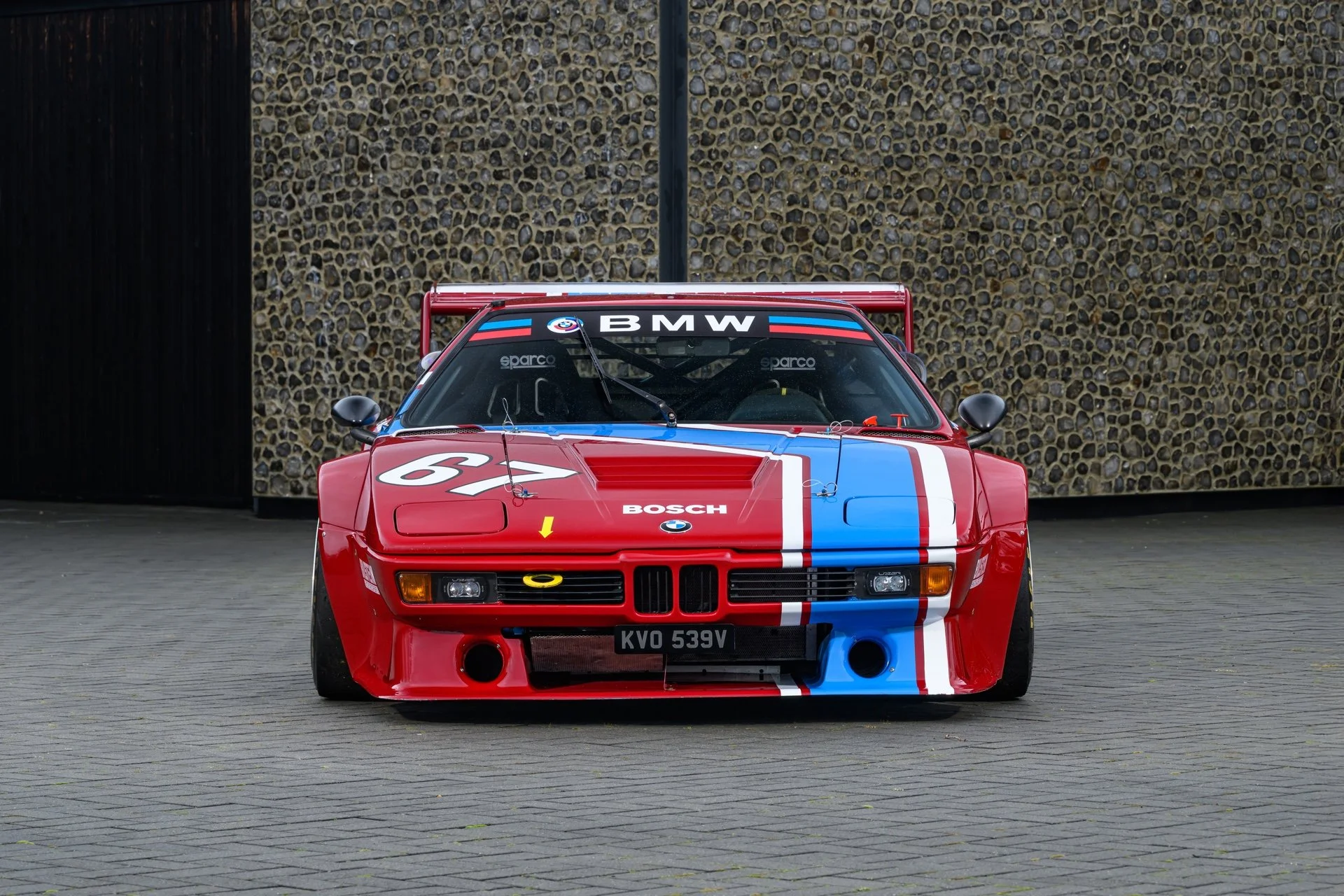
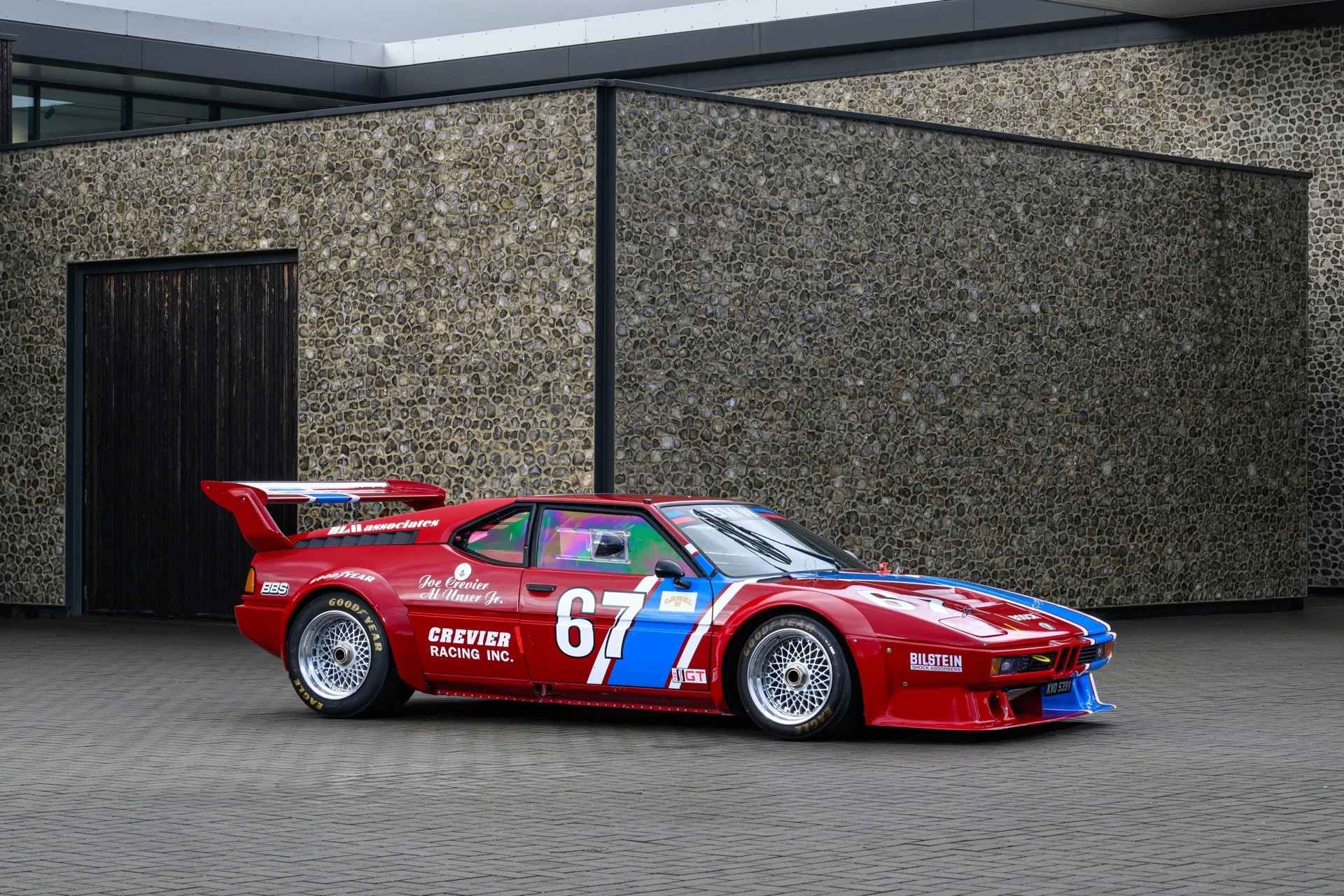
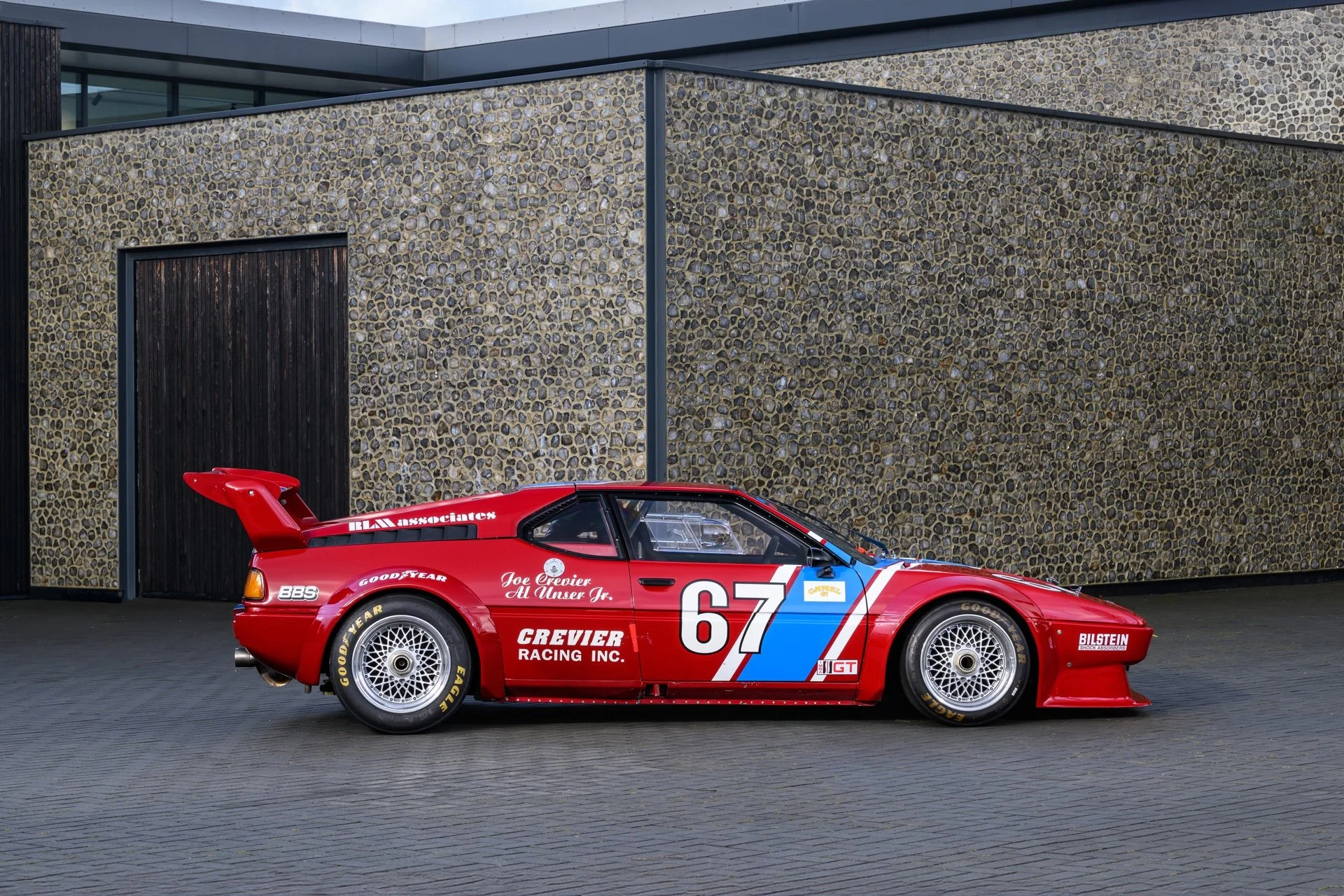
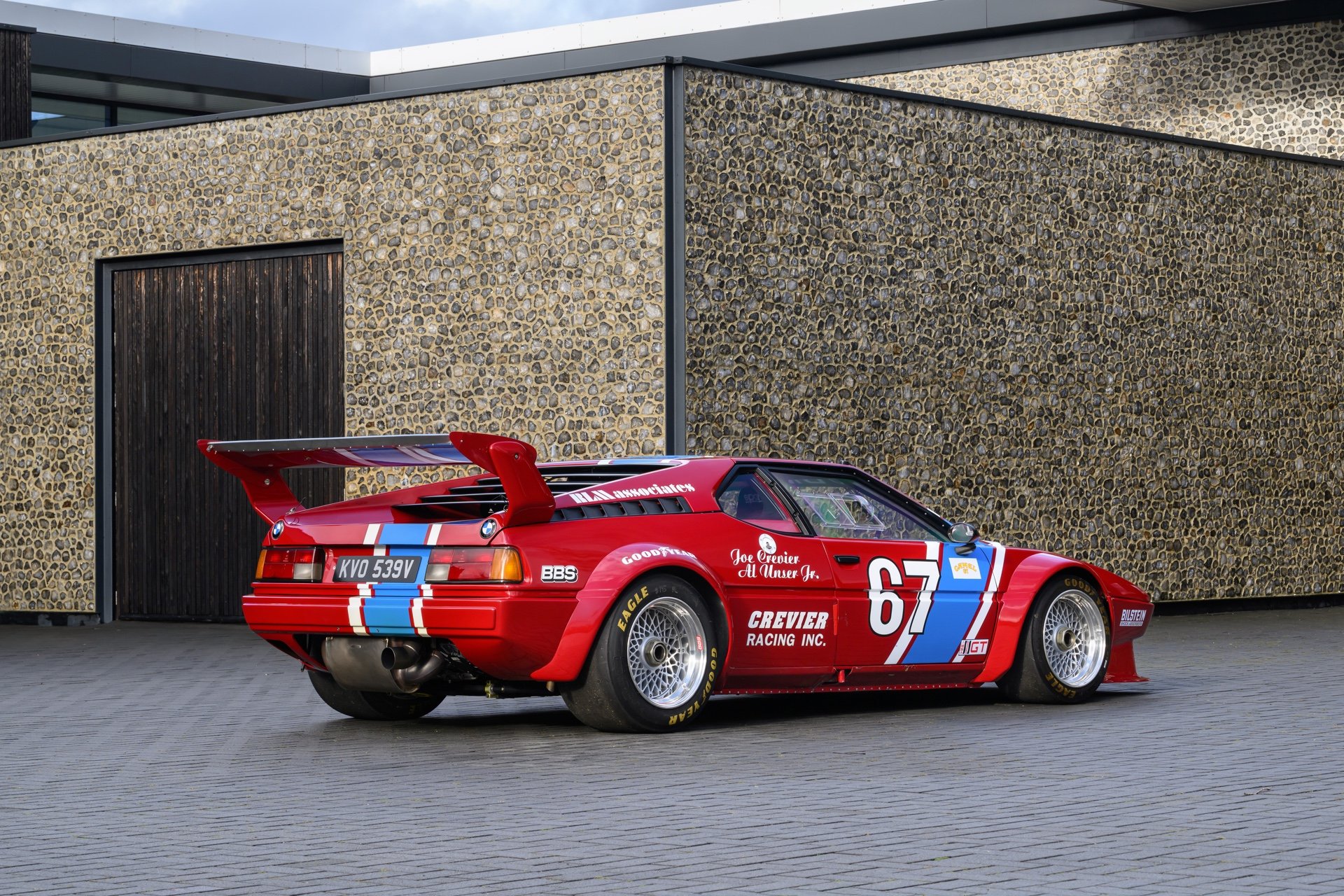
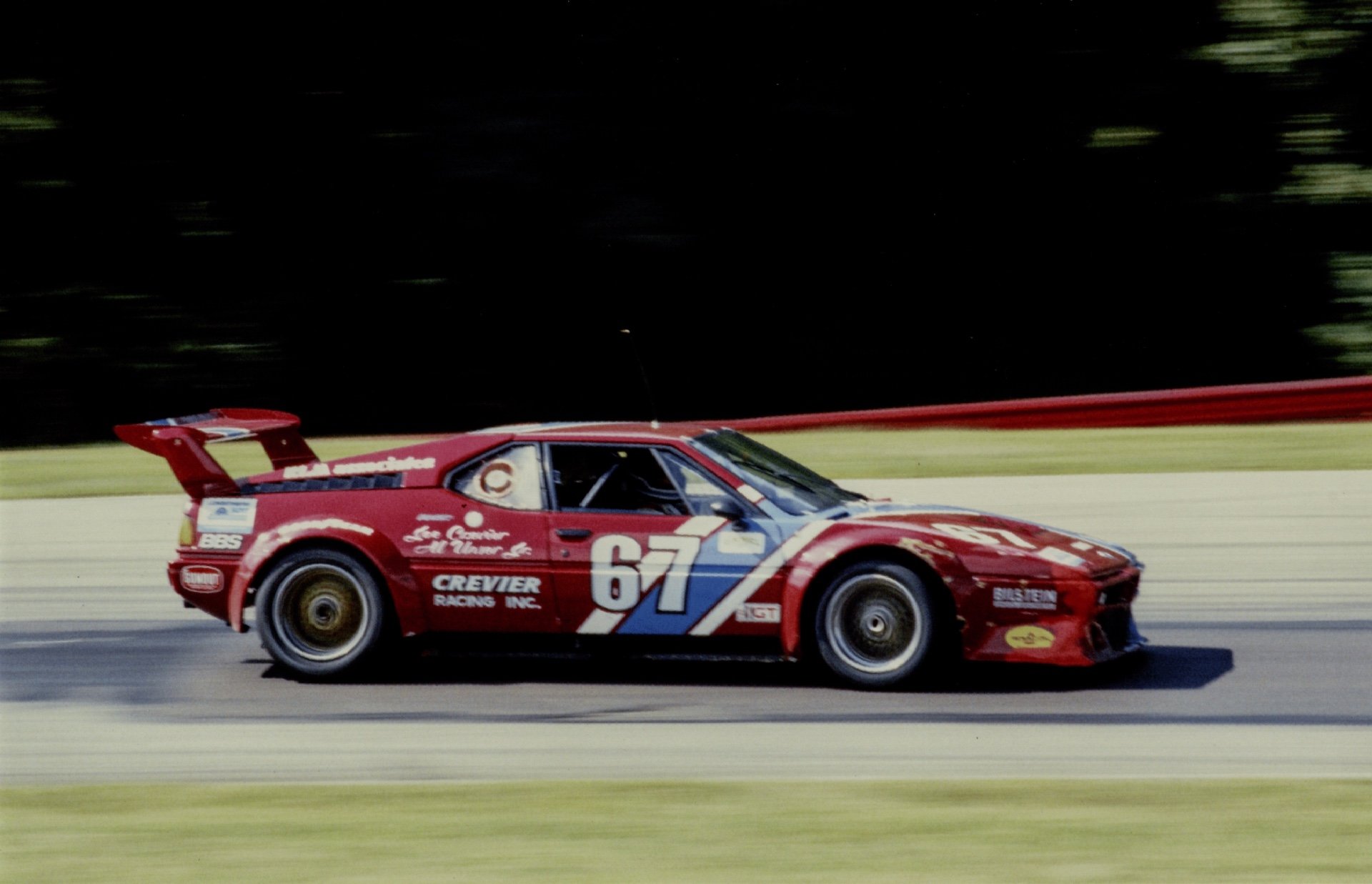
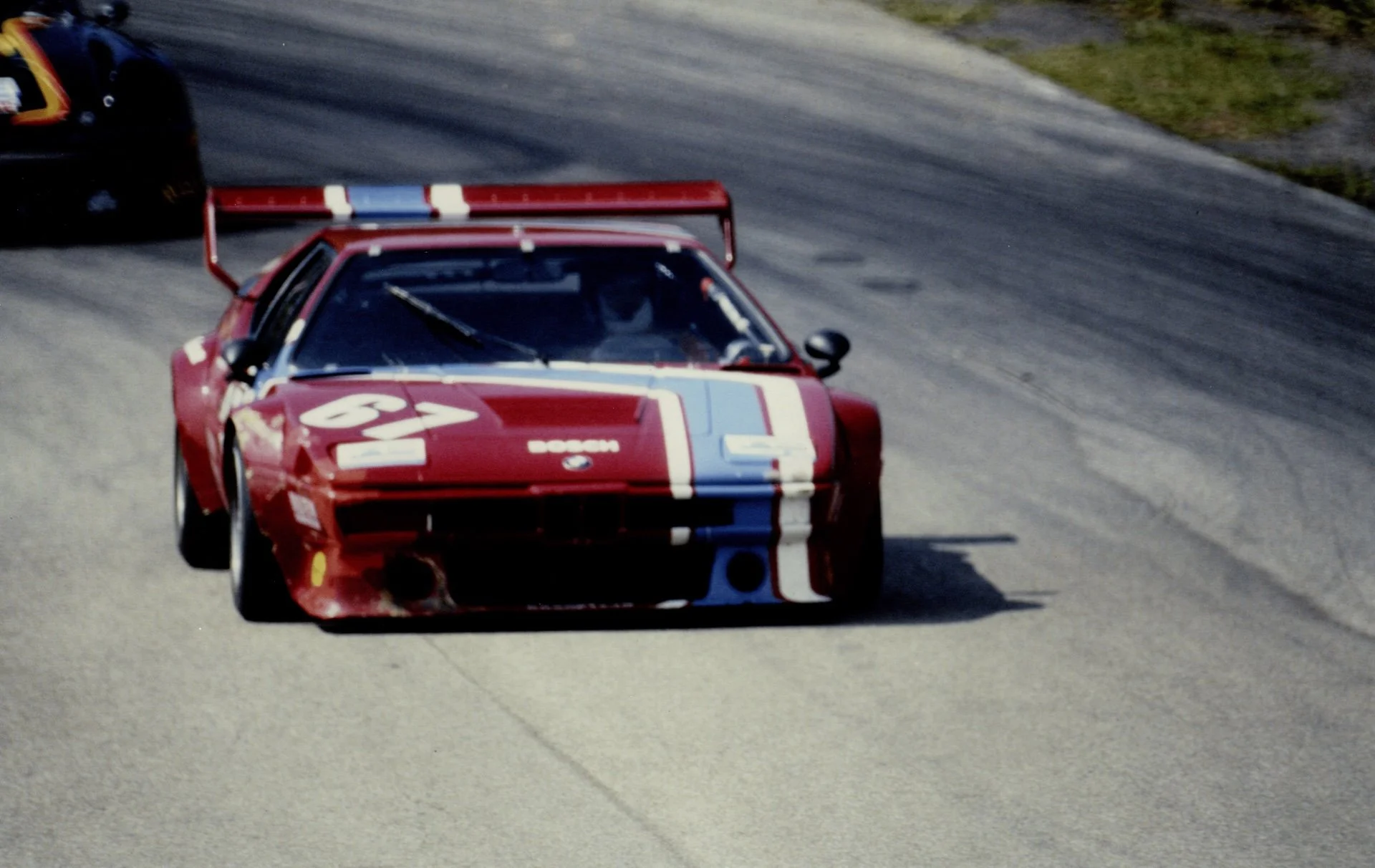
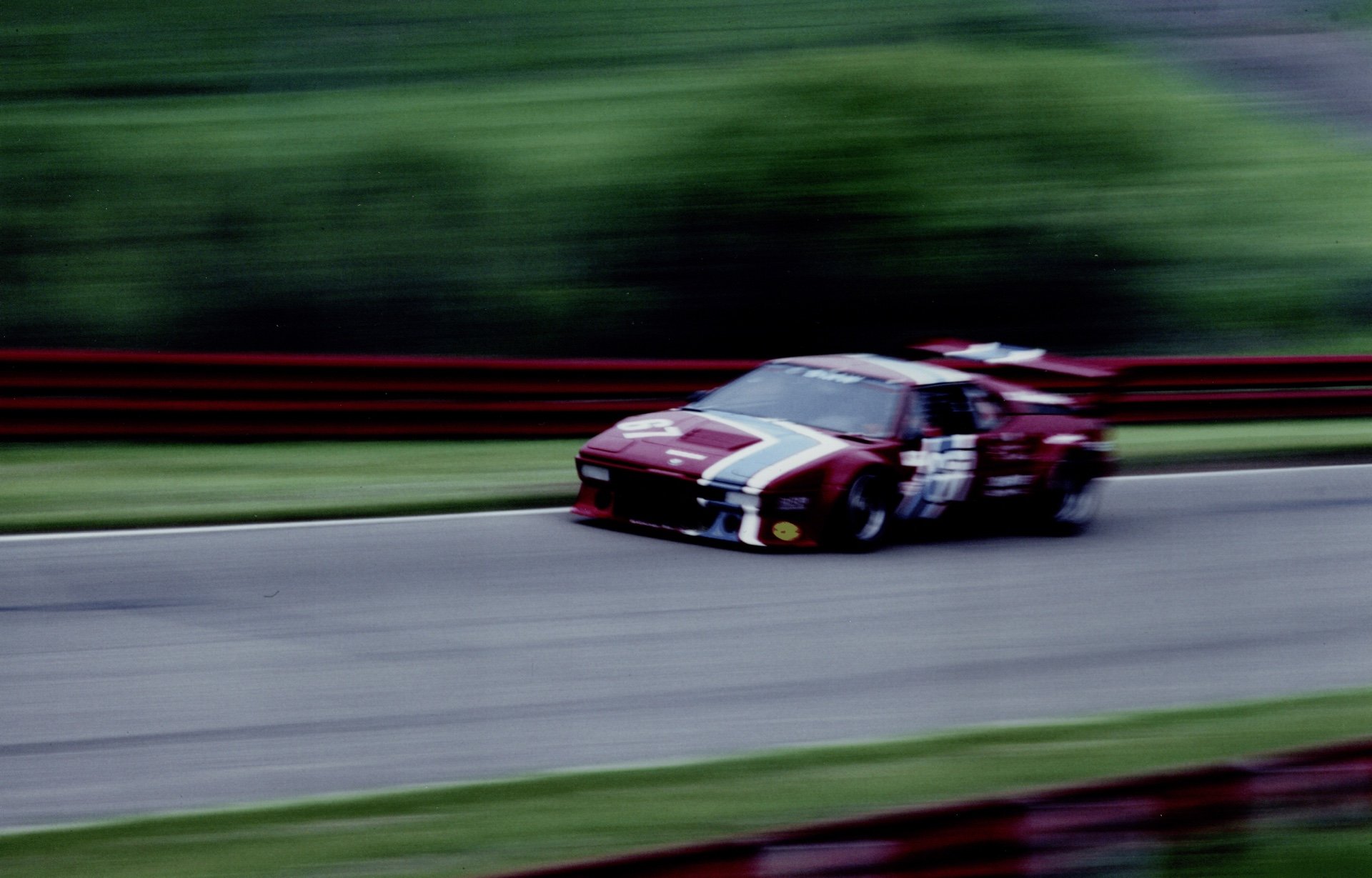
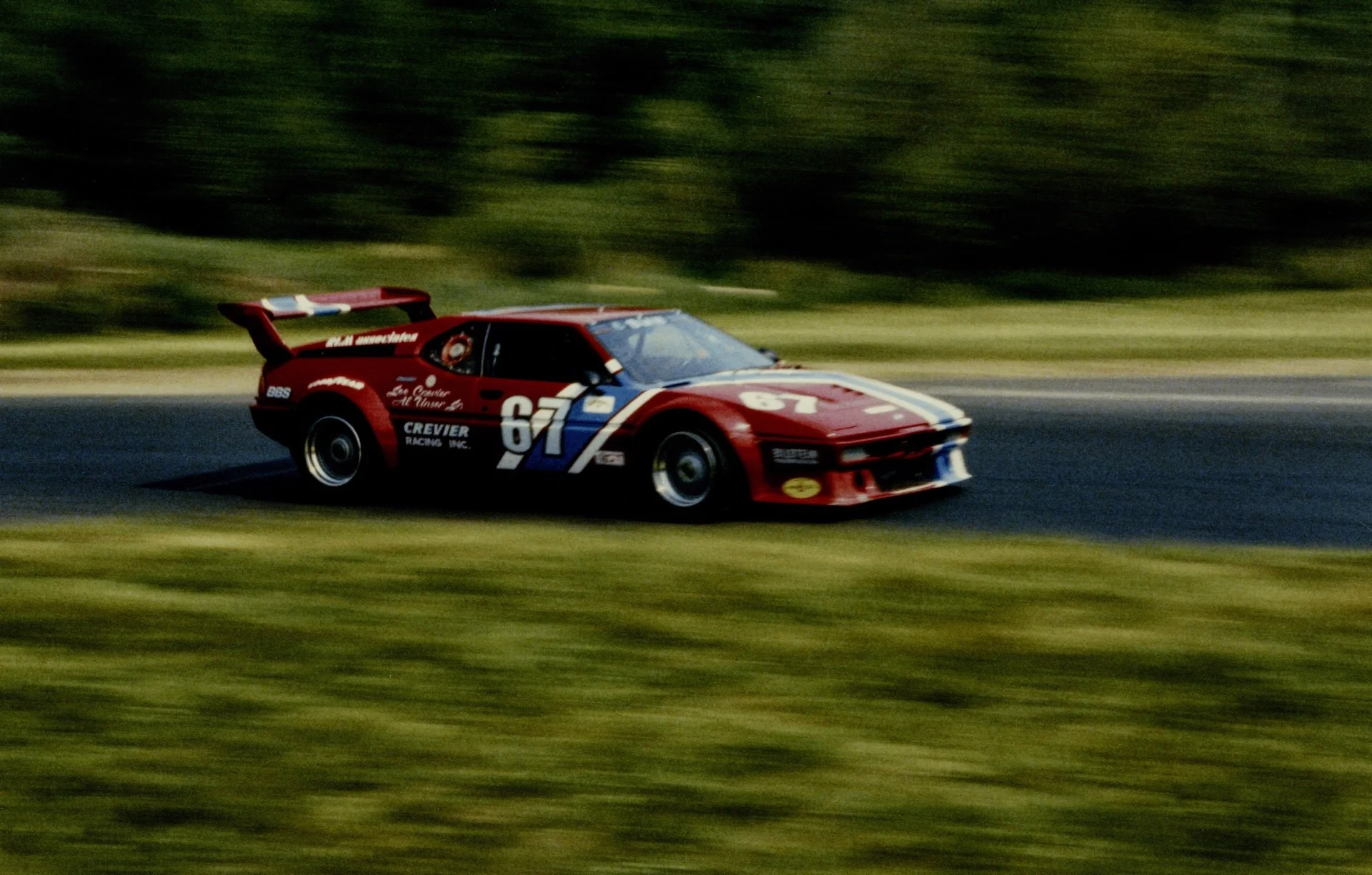
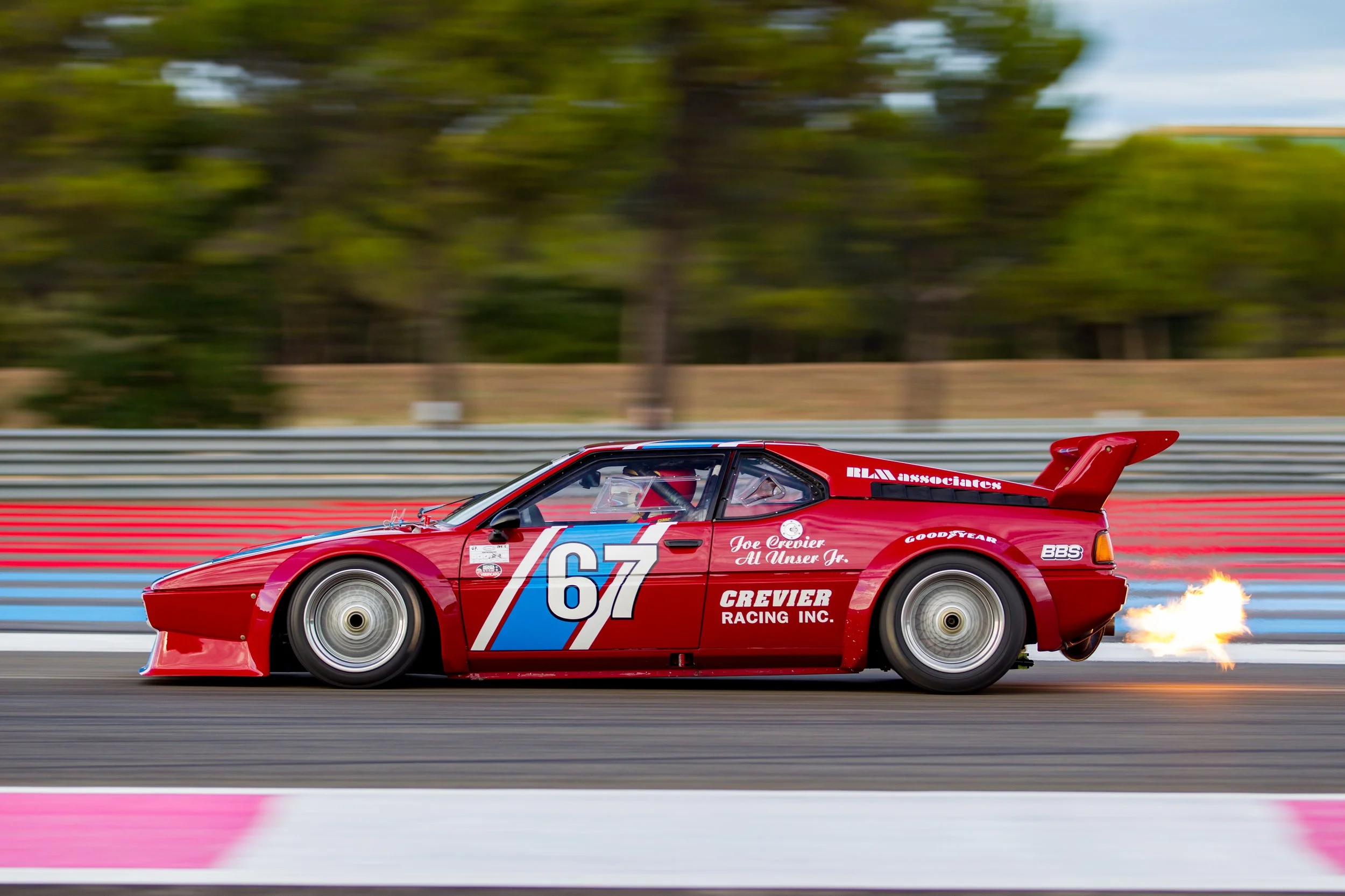
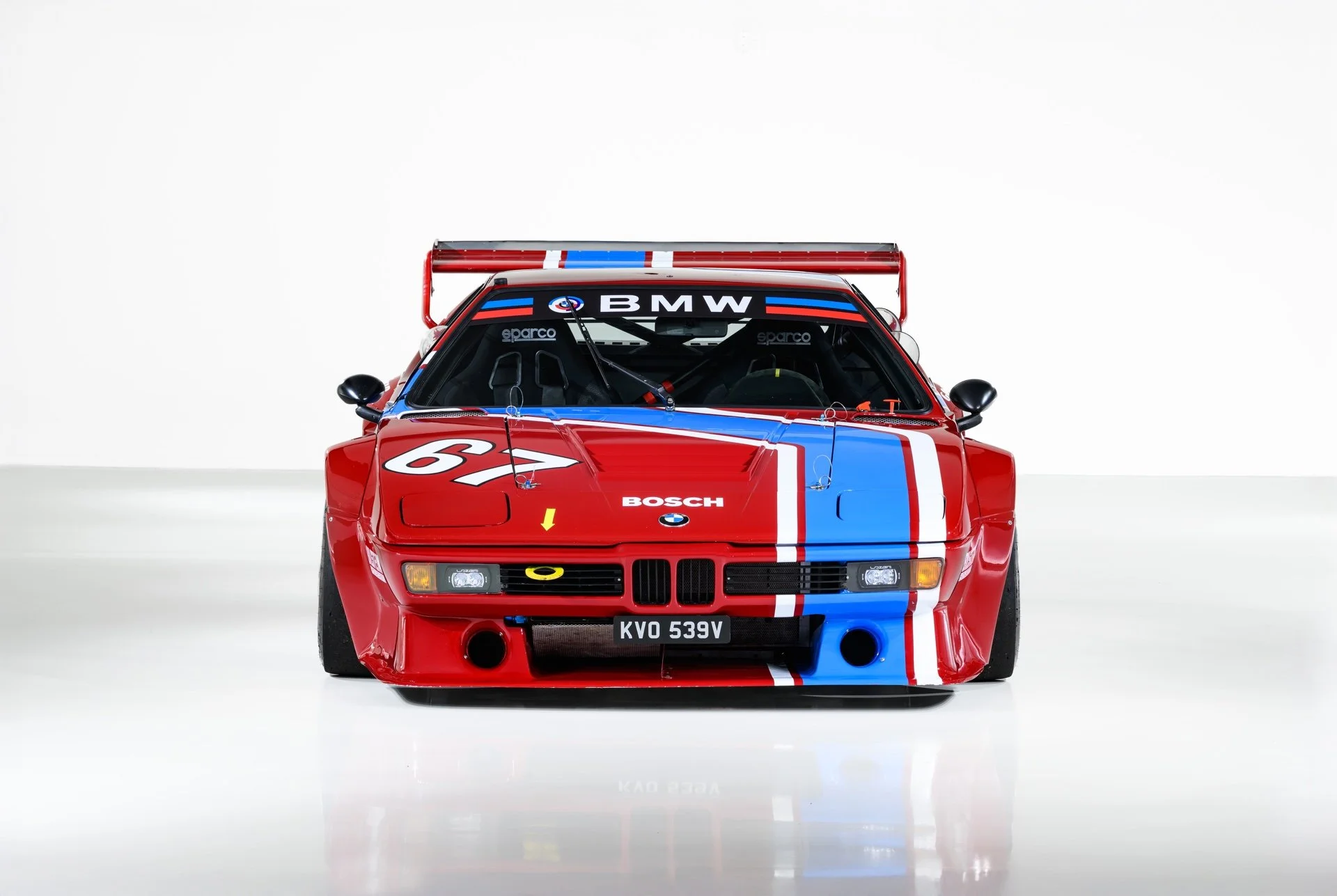
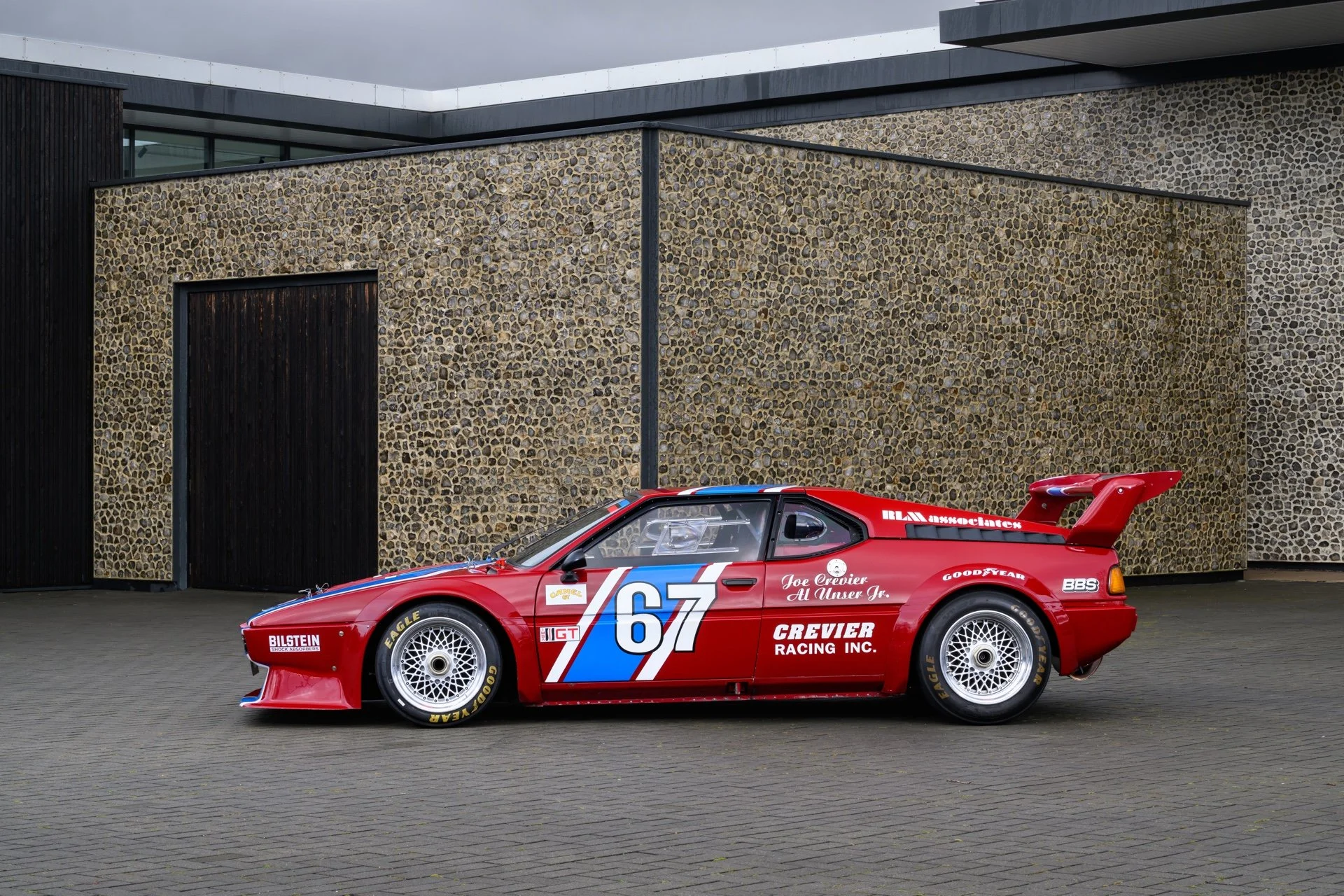
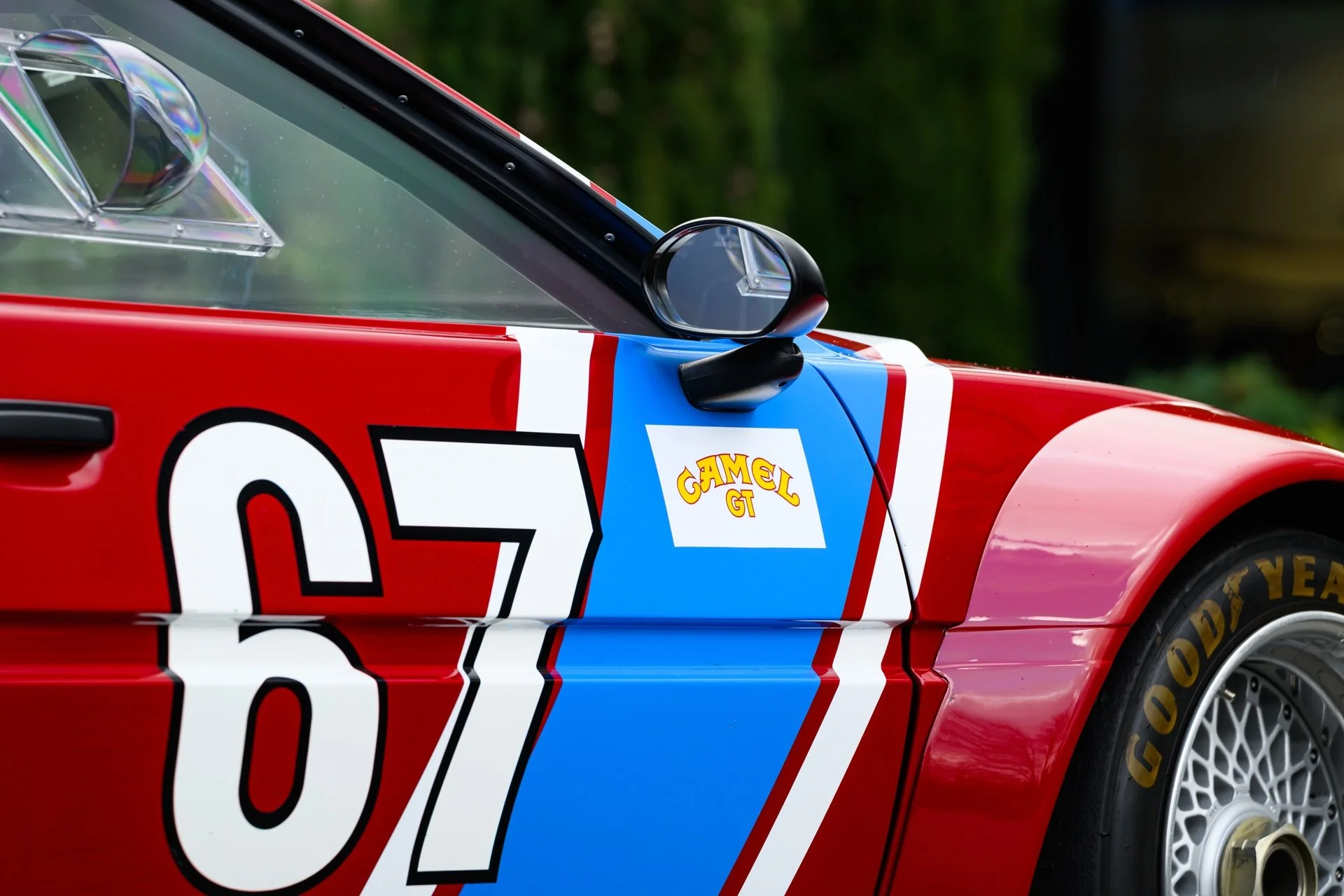
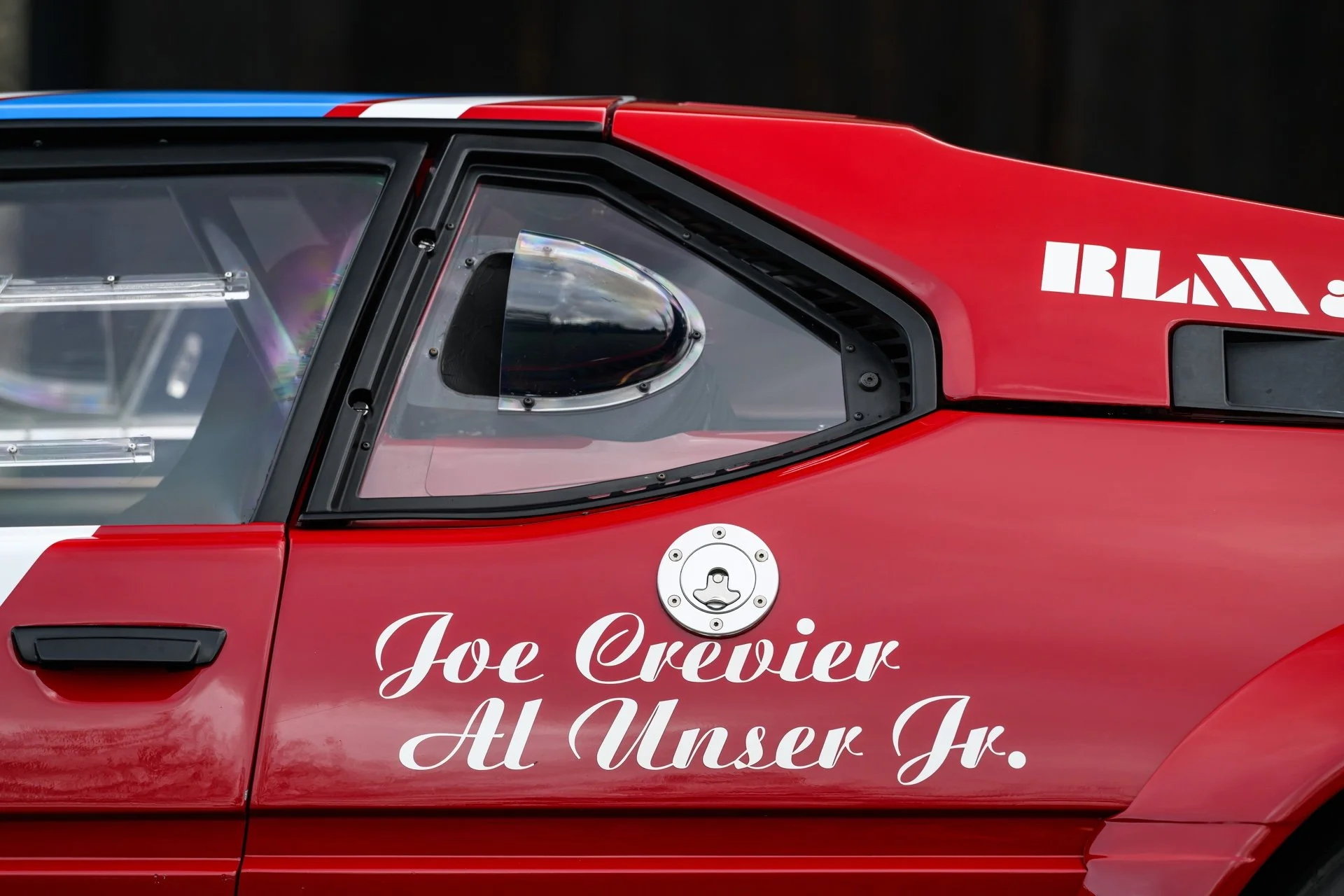
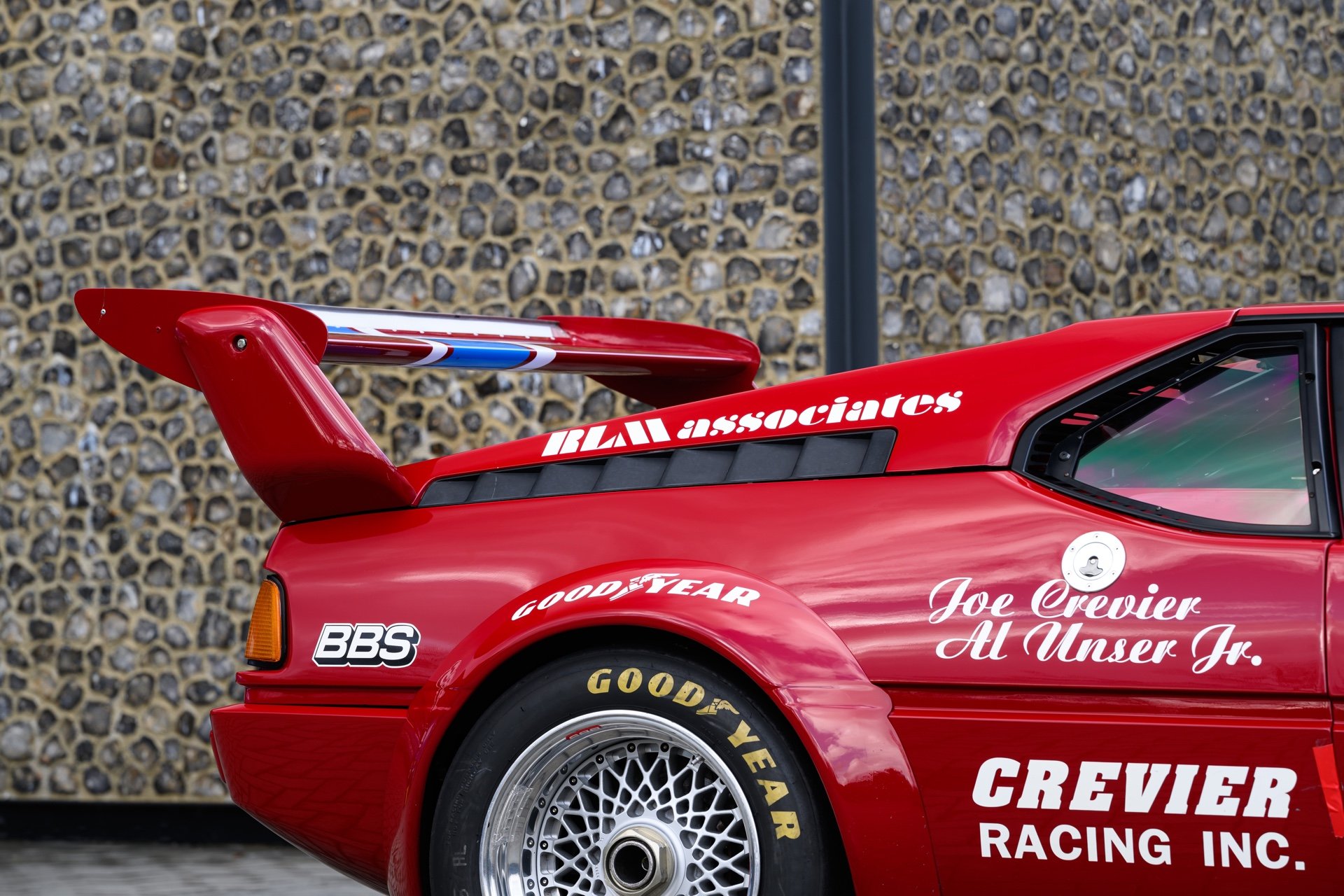
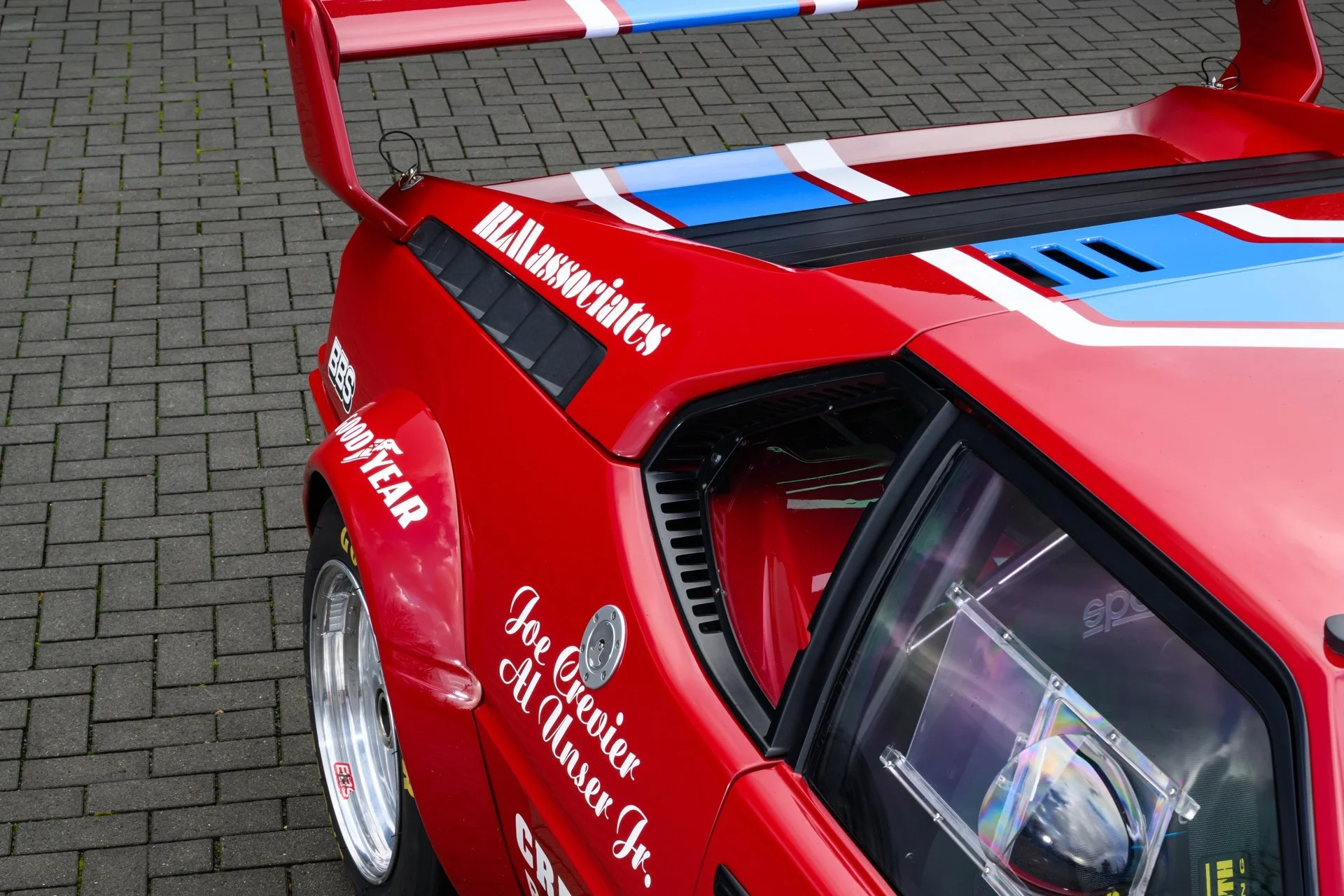
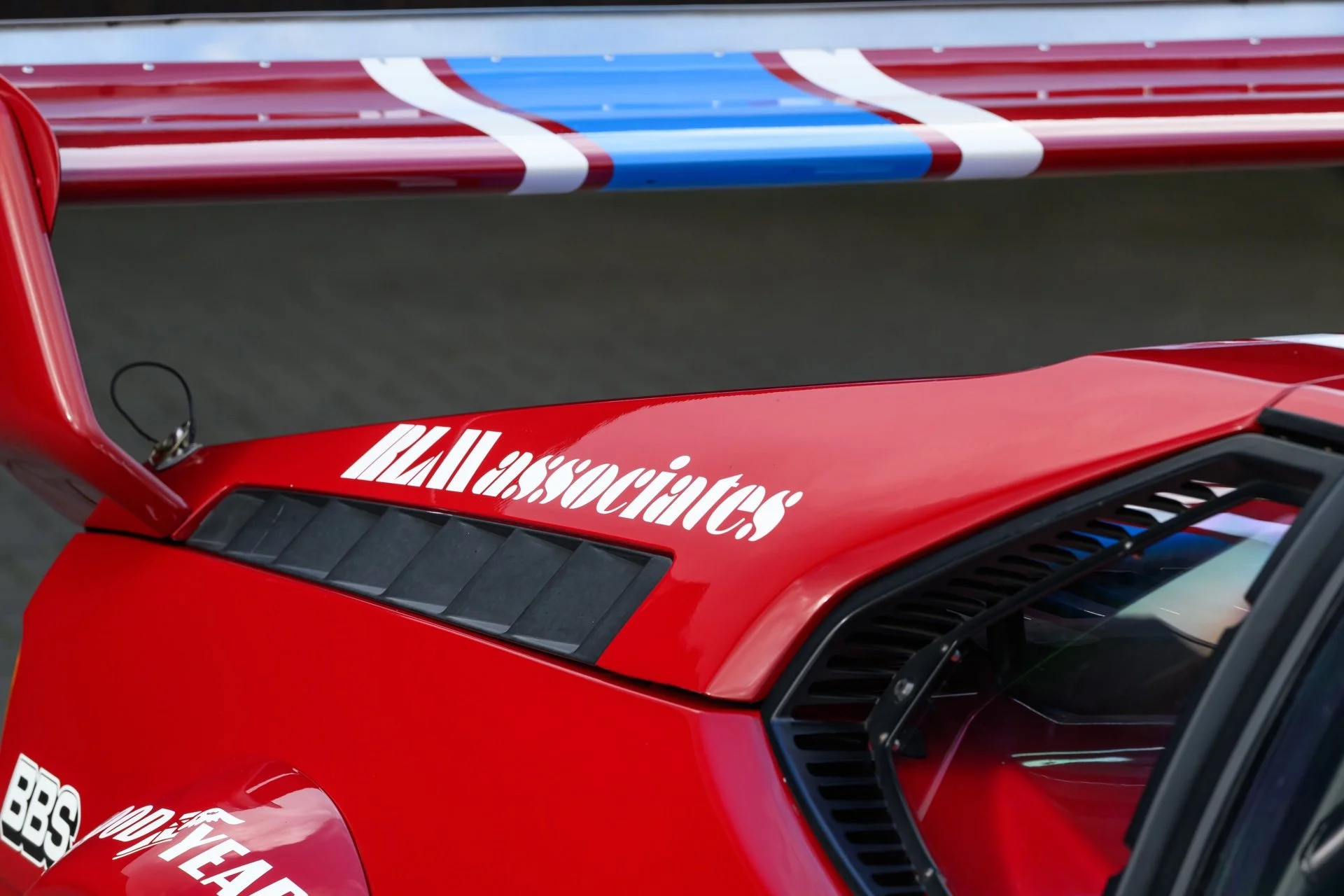
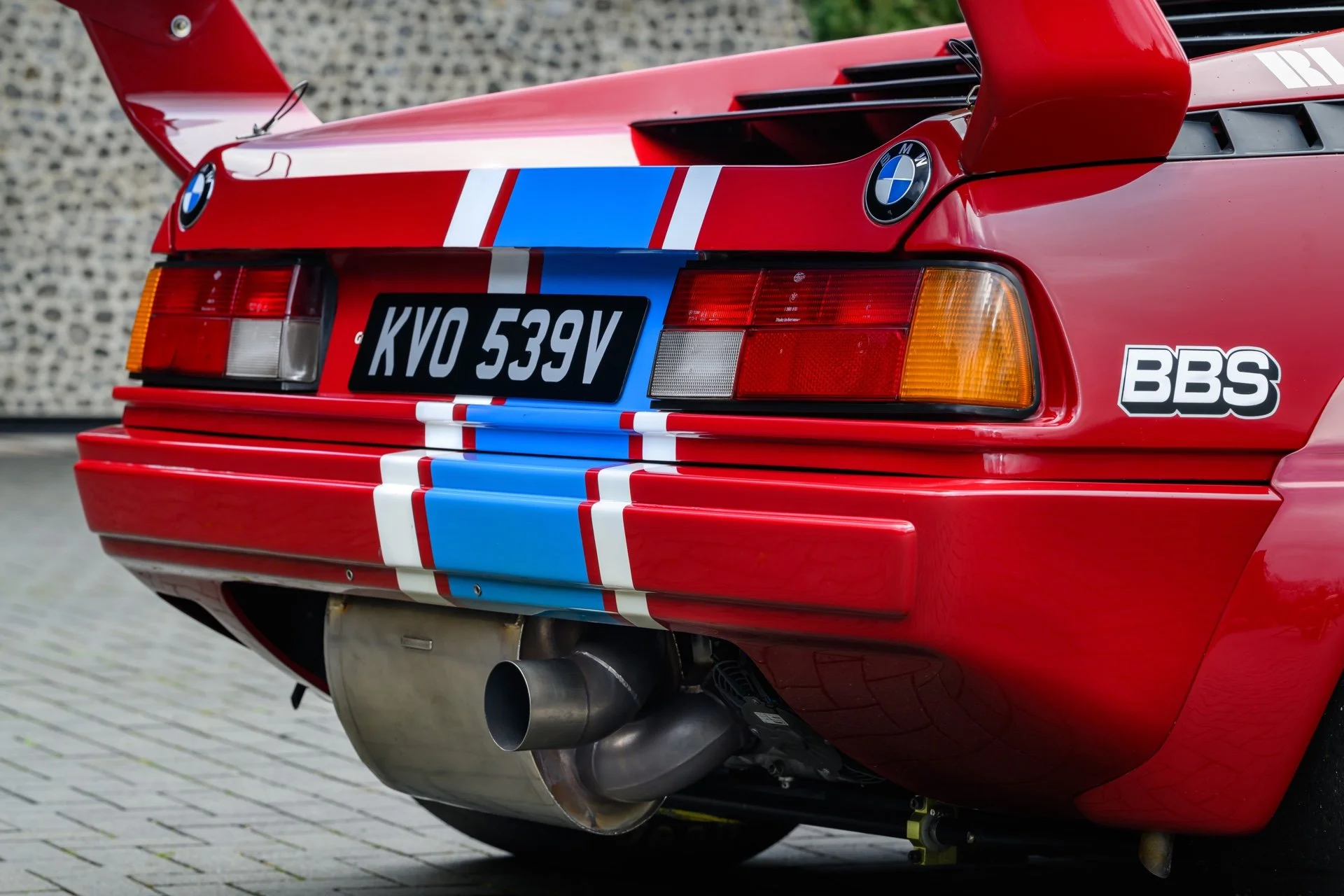
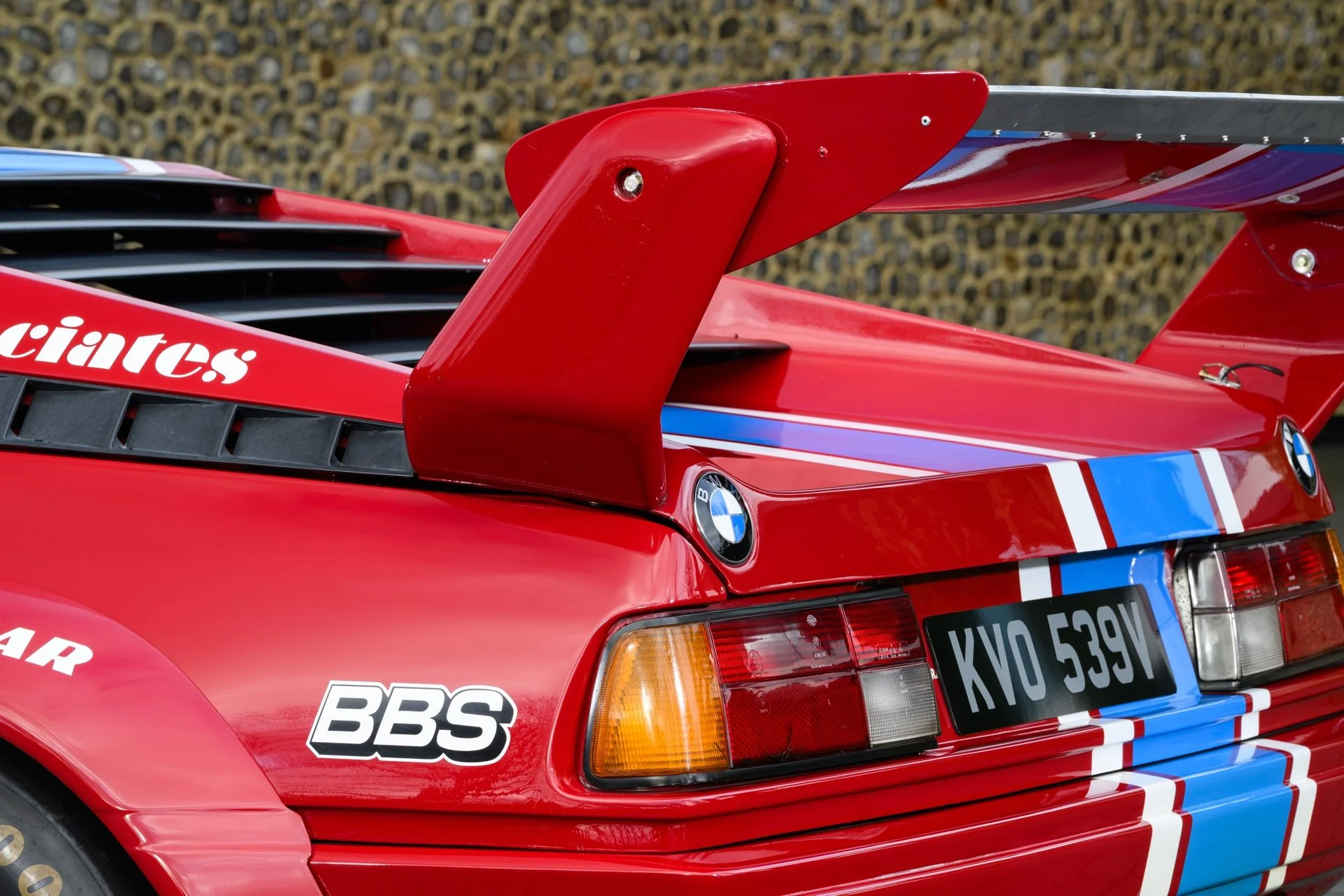
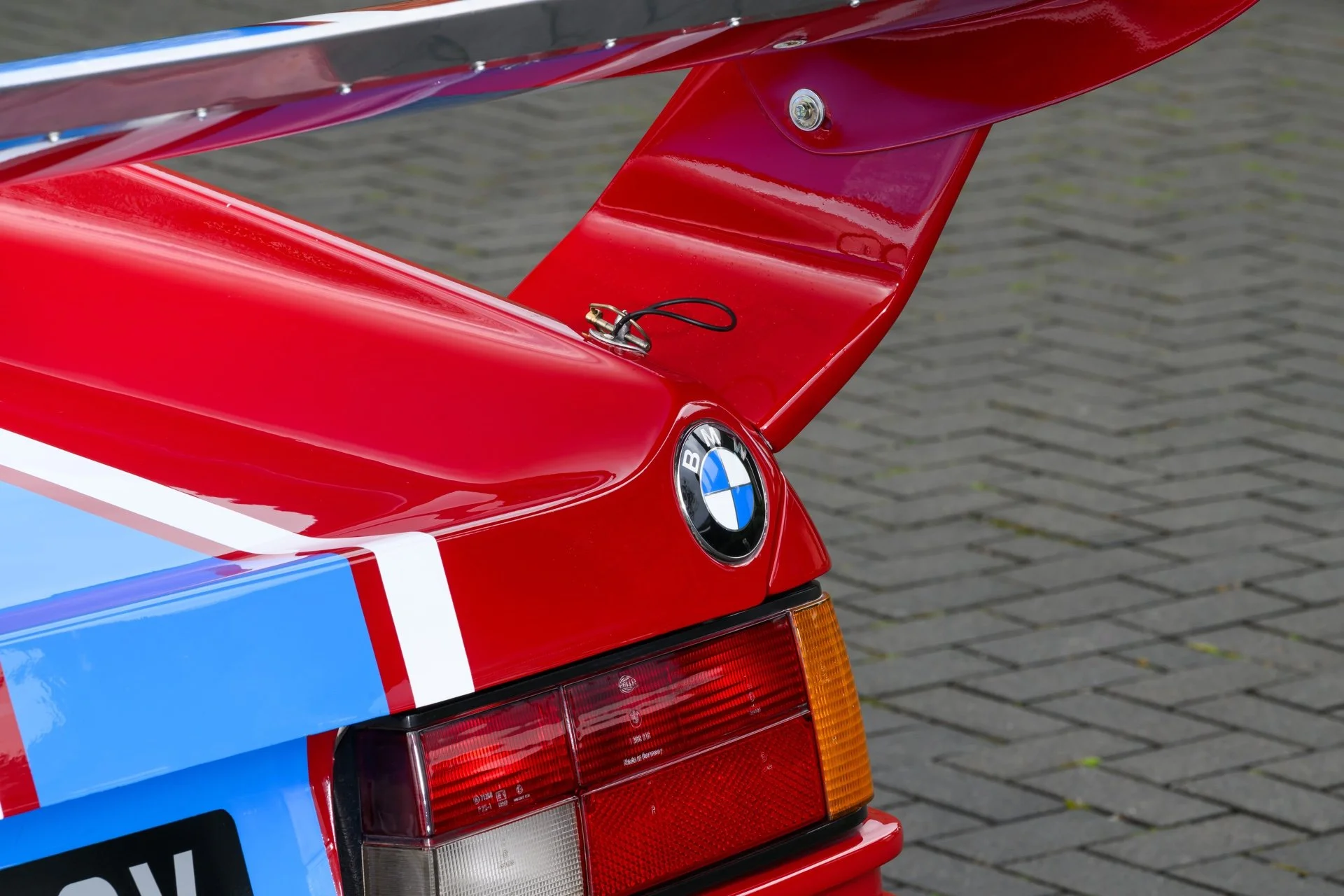
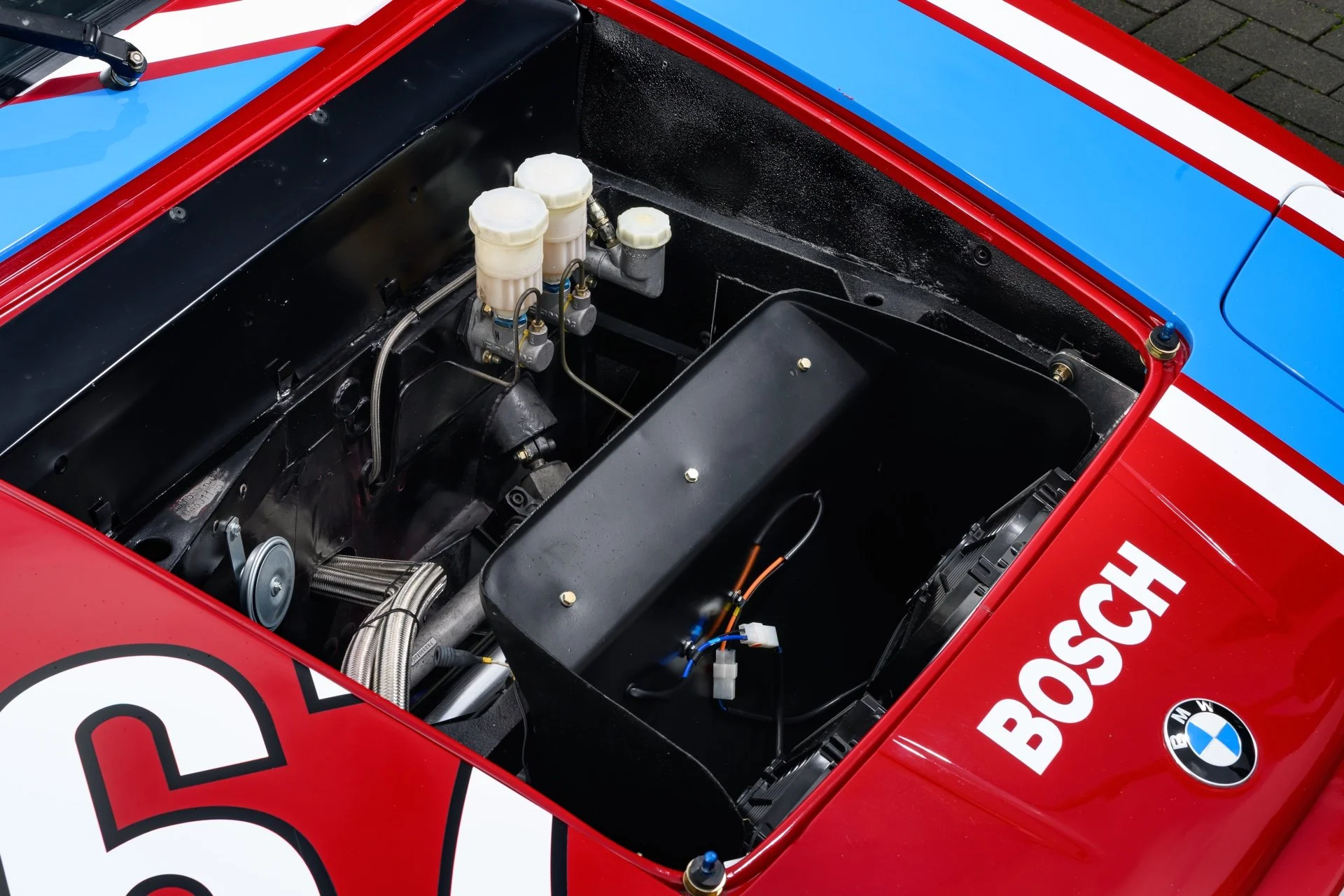
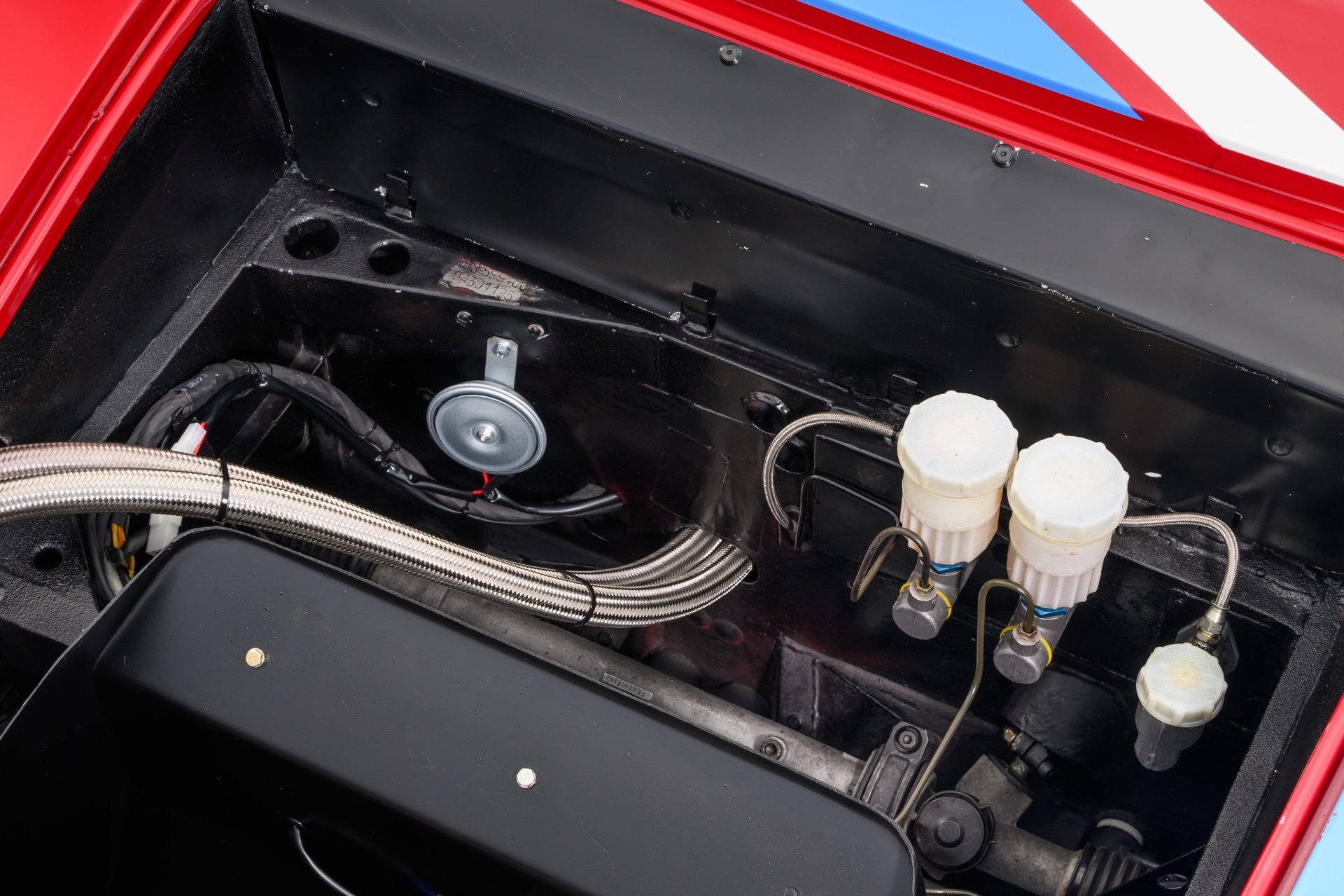
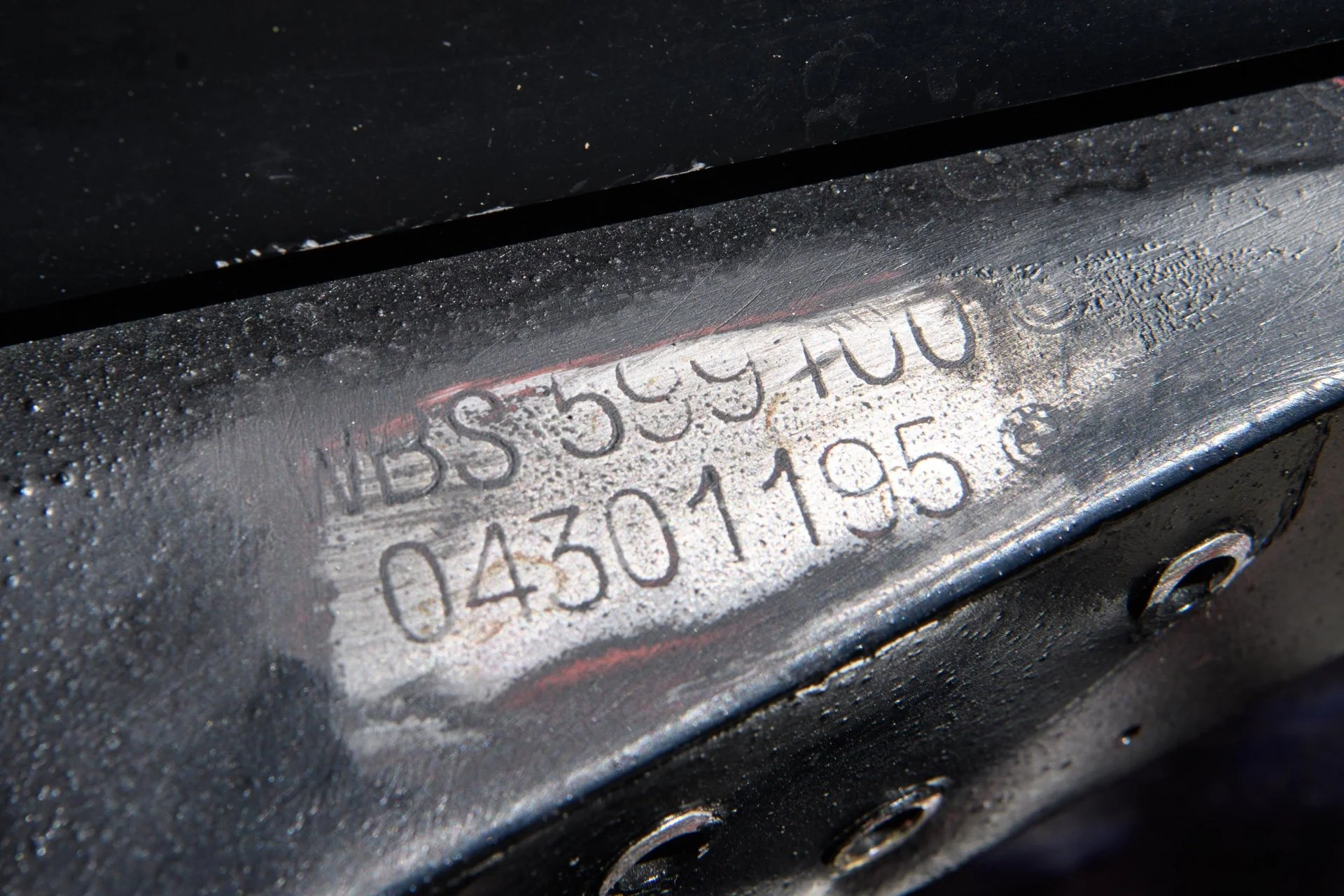
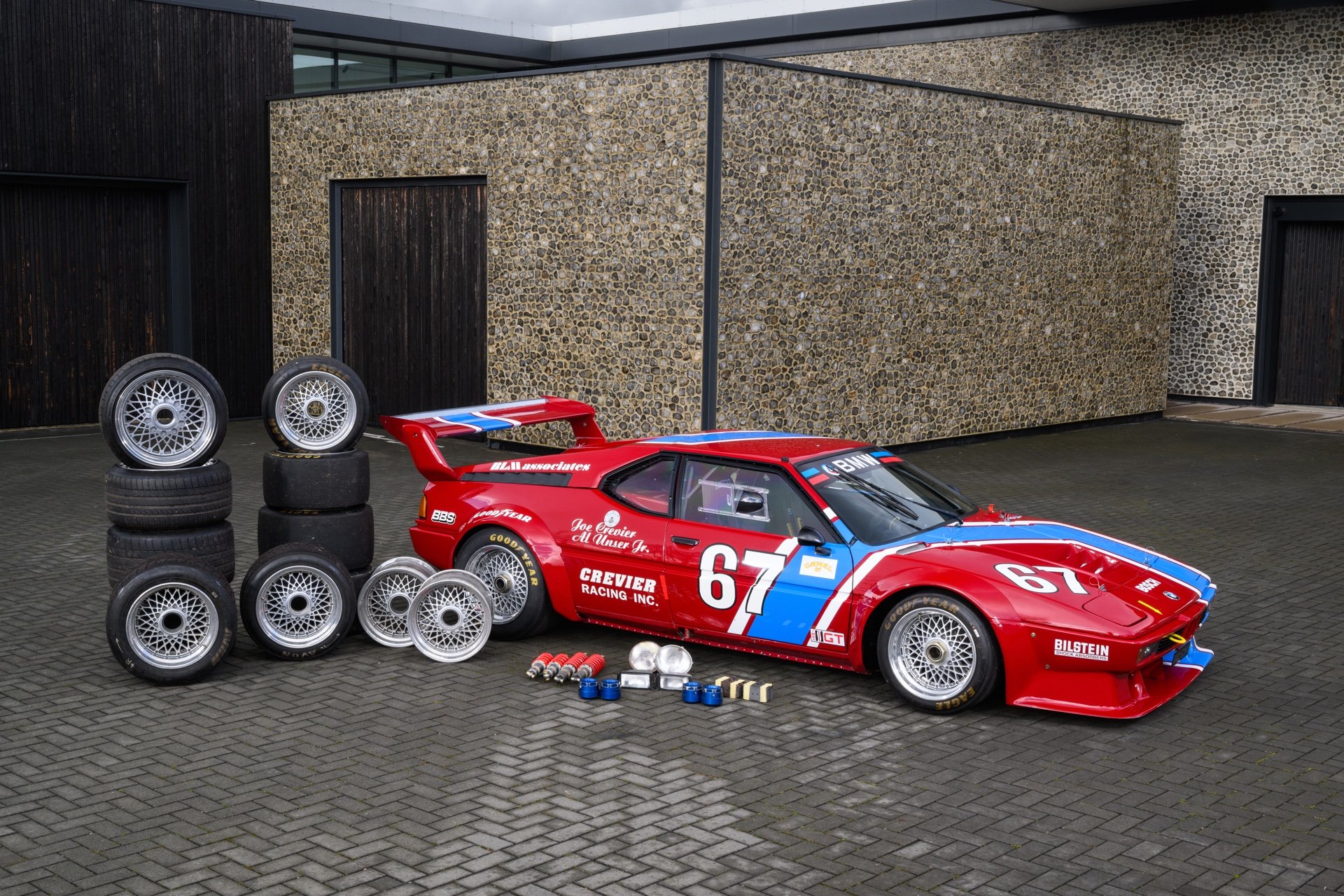
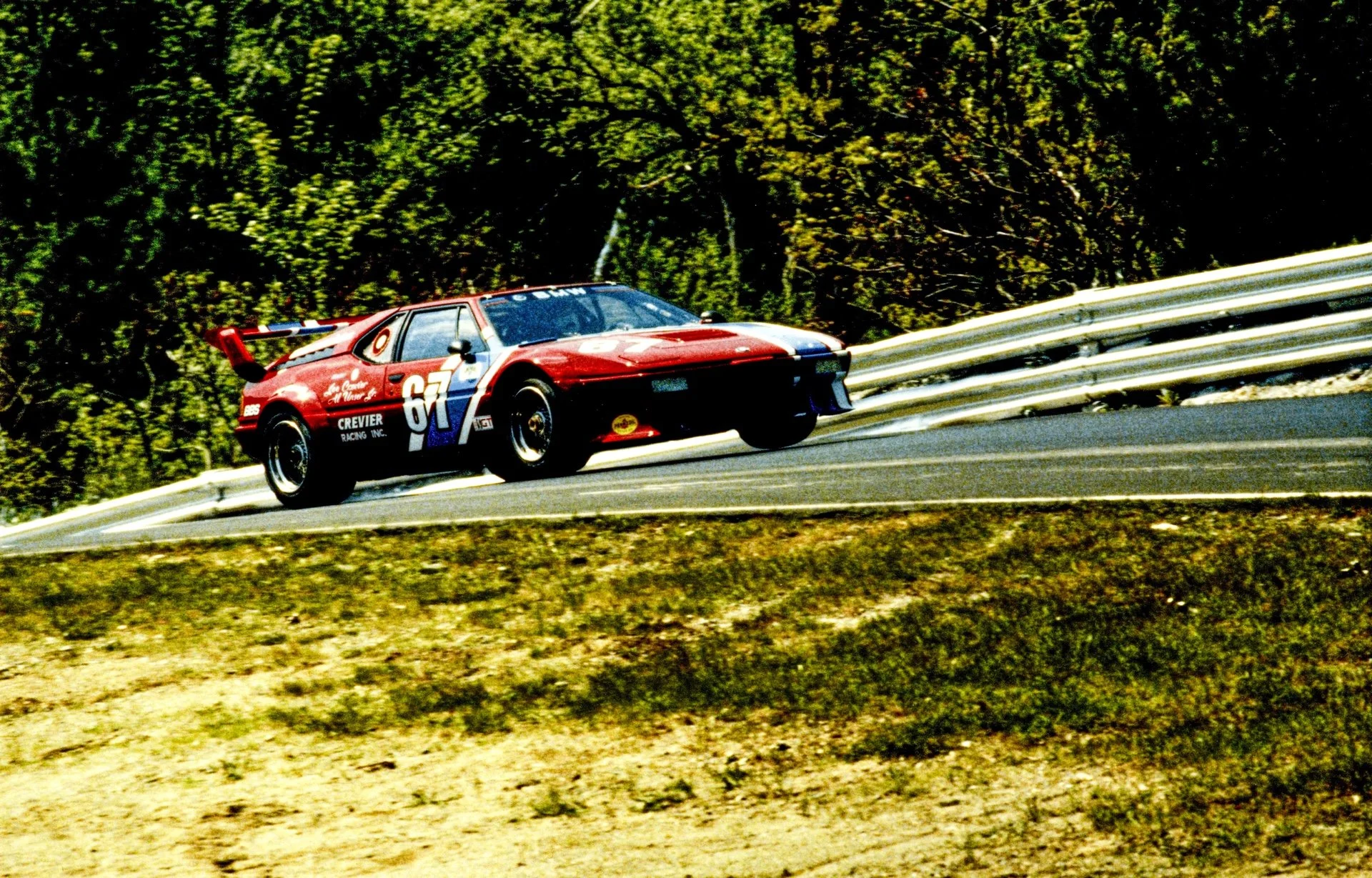
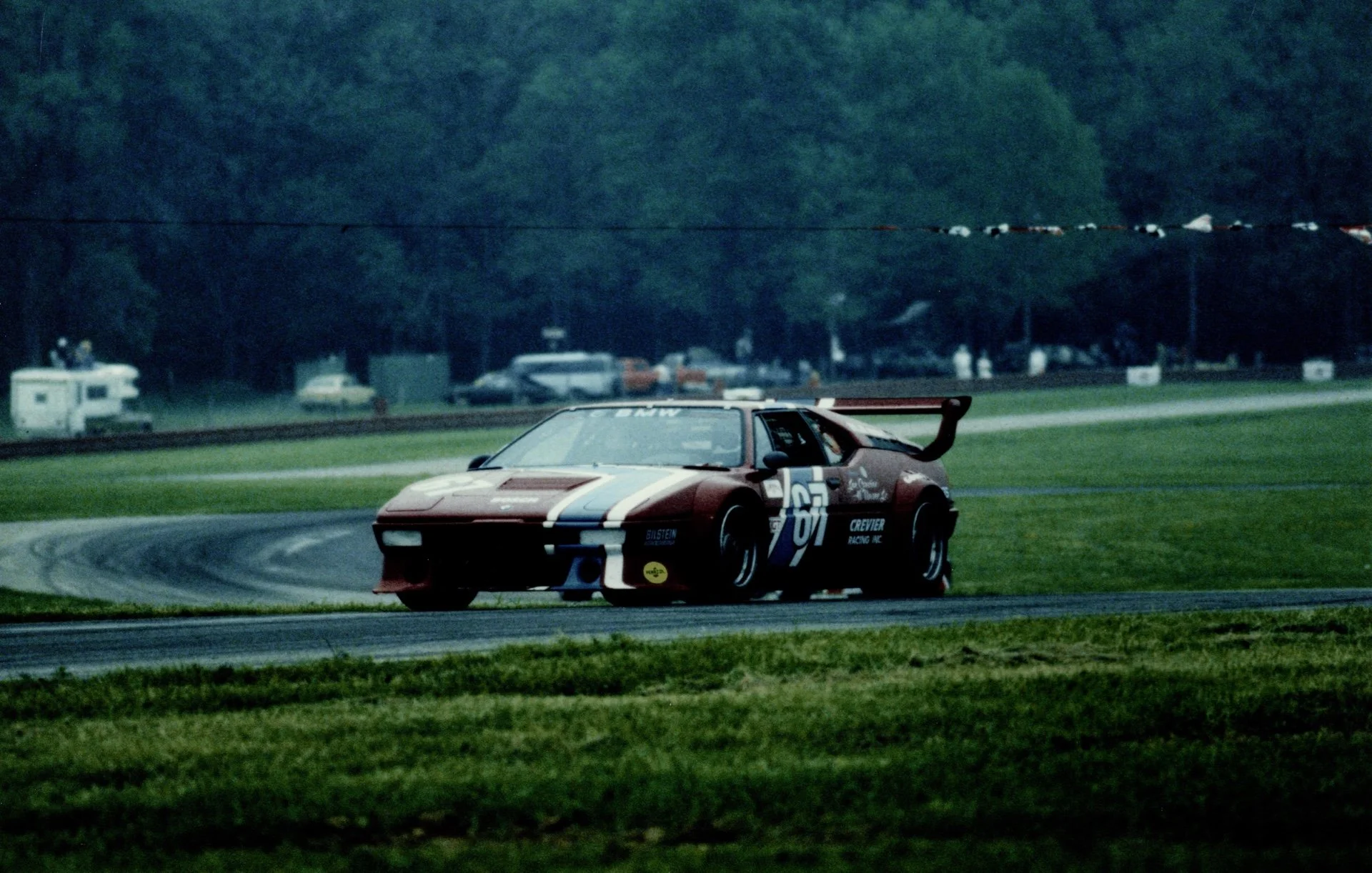
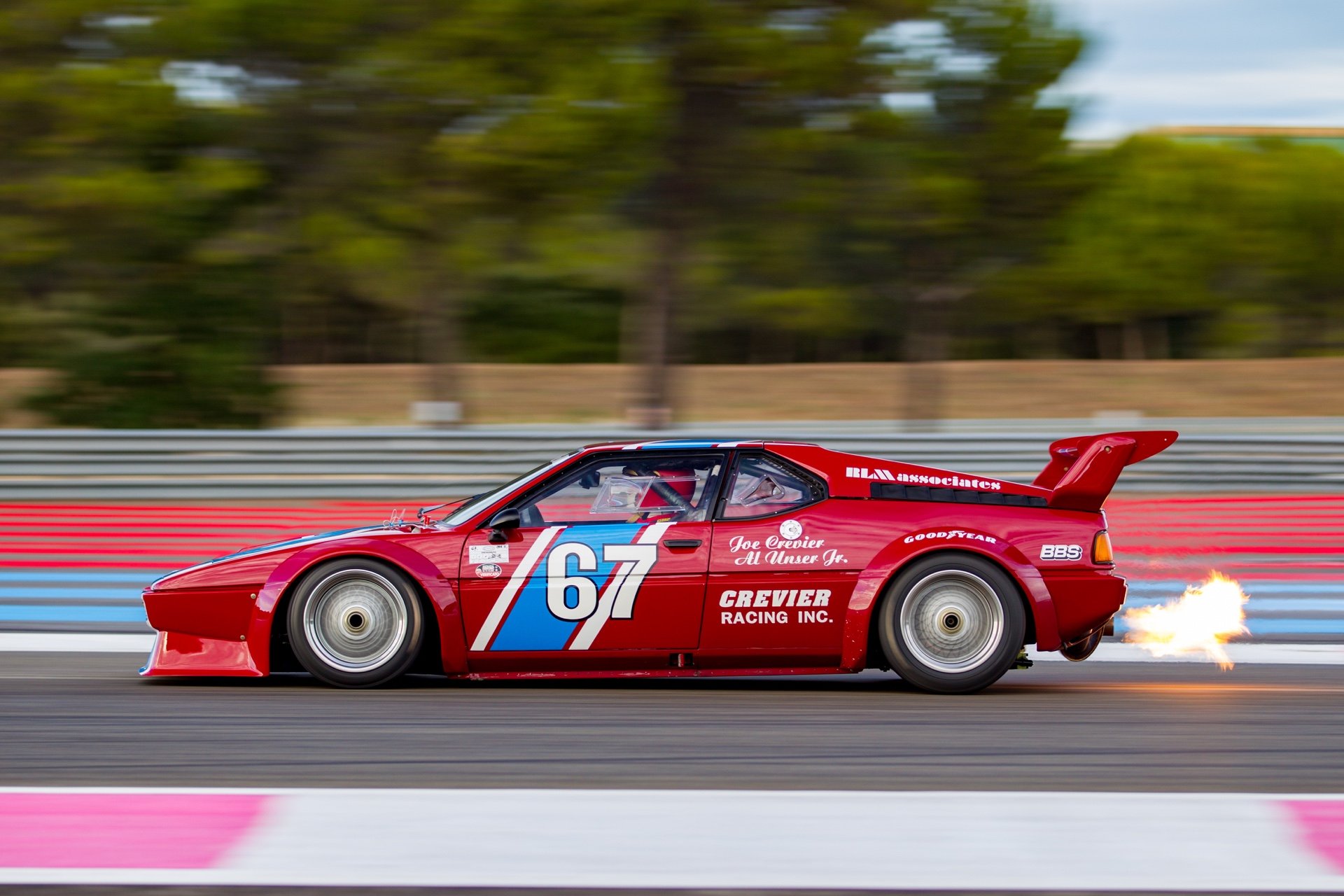
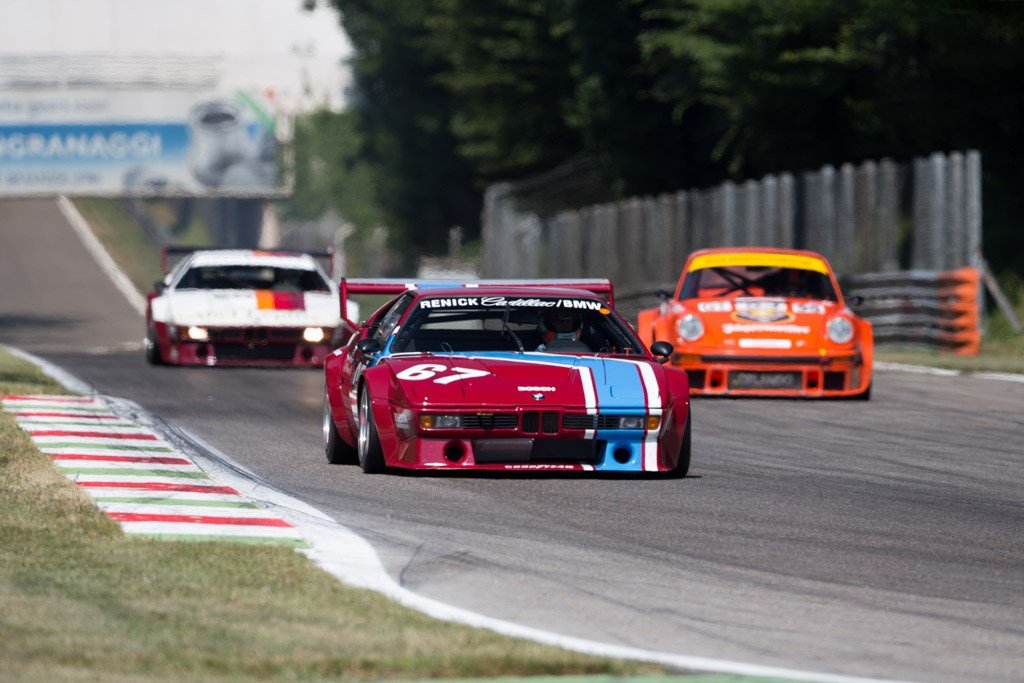
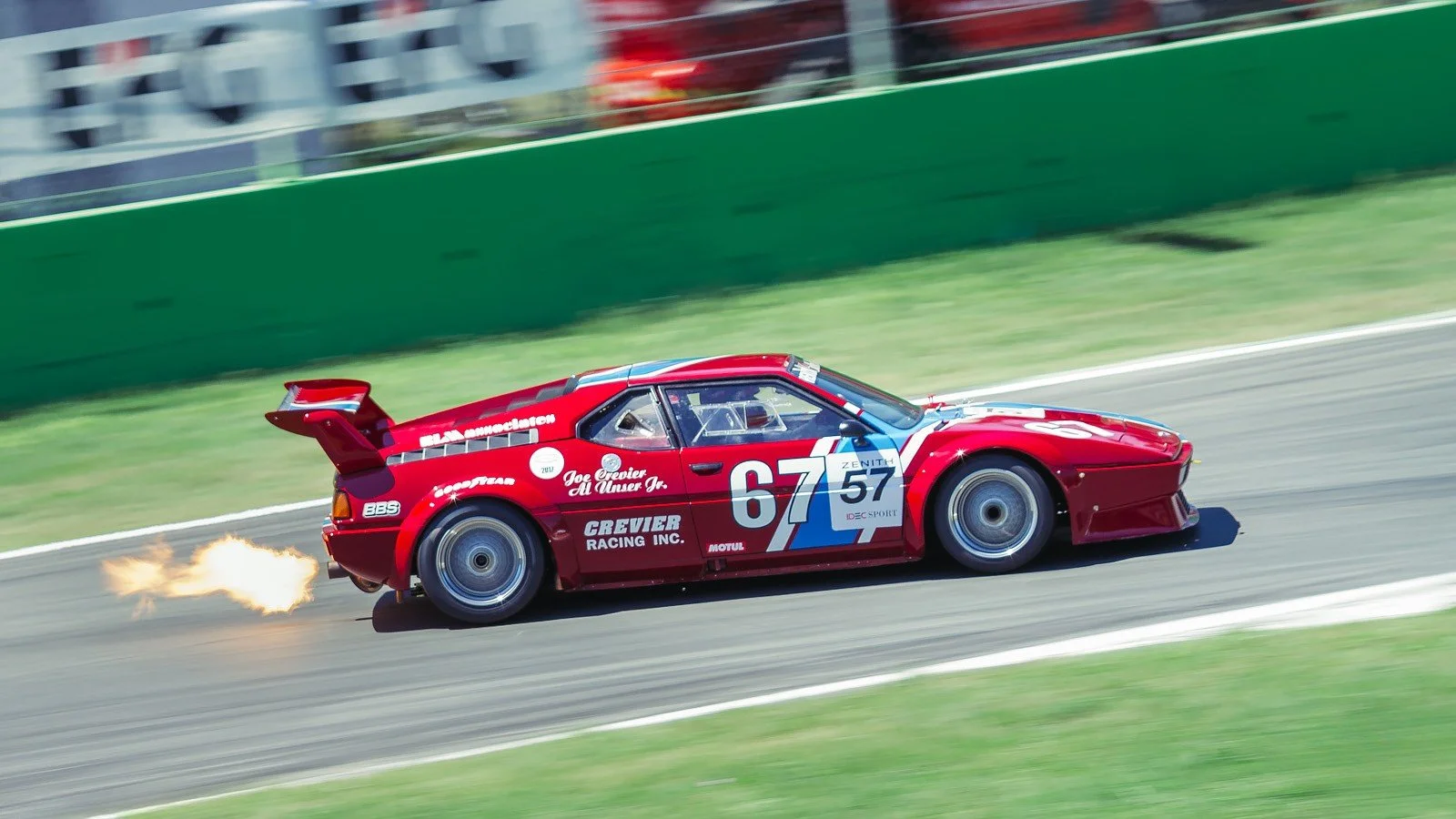
Completed early in January 1980, and one of the final M1 Procars constructed, chassis 4301195 was sold directly to American Joe Crevier. A car dealer during the week, he started competing under the Crevier Racing banner with an ageing Ferrari 365 GTB/4 Daytona in 1979. For the 1981 IMSA season, the car would be painted in a distinctive dark red, with striking blue and white stripes, reminiscent of the colours which adorned his Competizione Daytona. He first raced the M1 Procar in the 1981 Riverside 6 Hours with future Indy racer Al Unser Jr. as his co-driver. Having set no time in qualifying, they moved up the order from the back of the grid to finish 11th overall and 3rd in the IMSA GTO class.
The following week, Al Jr. drove the car solo in the Monterey Triple Crown at Laguna Seca. Starting 18th, he finished 14th overall and second in class in the 100-mile race. This strong run continued at subsequent outings at Lime Rock and Mid-Ohio where Crevier and Unser Jr. finished eighth overall and third and second in the GTO class respectively. For its next outing, the car was entrusted to fellow American Jeff Scott. For the Pepsi Grand Prix at Brainerd, Scott qualified 20th and was classified 15th overall and fourth in class.
Crevier was back behind the wheel of chassis 4301195 for the Sears Point 100 Miles late in July of 1981, campaigning the car for the remainder of the 1981 season. On occasion, Crevier was joined by Al Jr., Bill Koll and Tom Winters. With the latter, Crevier scored another class podium finish when he finished 11th overall and third in class during the Kenwood Stereo 500 Grand Prix at Pocono.
At the start of the 1982 season, chassis 4301195 was entered by Crevier in the Daytona 24 Hours. This time, he shared the driving duties with Fred Stiff and Dennis Wilson. The three Americans qualified 28th overall and 13th in class for the twice-round-the-clock race. The car completed 367 laps before it was forced to retire. Partnering with Paul Fassler and Bob Seigel, Crevier looked for vindication at the Sebring 12 Hours. Qualifying 32nd overall and 13th in class, they had a strong race to finish 19th overall and 8th in class. Later in the year, Crevier scored two more class podium finishes in the M1 Procar with a second at Charlotte and a third at Mid-Ohio. His final outing with the car came in May, 1982 during the Coca-Cola 400 at Lime Rock Park, where he finished fourth in class.
At the end of the 1982 season, the M1 Procar was sold by Crevier to fellow American racer Don Walker. He is understood to have campaigned the car off and on for several more years in the IMSA GTO Championship. In 1987, it was acquired by legendary Swiss designer Franco Sbarro. His small company started out producing replicas of Lola T70s, BMW 328s, Ford GT40s and even a Bugatti Royale but he later moved to one-off show cars. In more recent years, he even established the Sbarro Espera design school. Franco Sbarro would own the M1 Procar for well over a decade before selling it to Carrozzeria Alfa in Norway in 2000.
In 2006, it returned to Switzerland and passed to specialists Graber Sportsgarage. In their ownership, chassis 4301195 was meticulously restored and prepared for historic racing. The work was fully documented with photos and the invoices totalled CHF 171,603. Once the restoration was completed, the M1 passed to historic racer Pedro Mello-Breyner in 2009. The following year, he entered the car in the Le Mans Classic and also raced it in the Classic Endurance Racing events during the 2010 Silverstone 1000km and the 2011 Spa Classic.
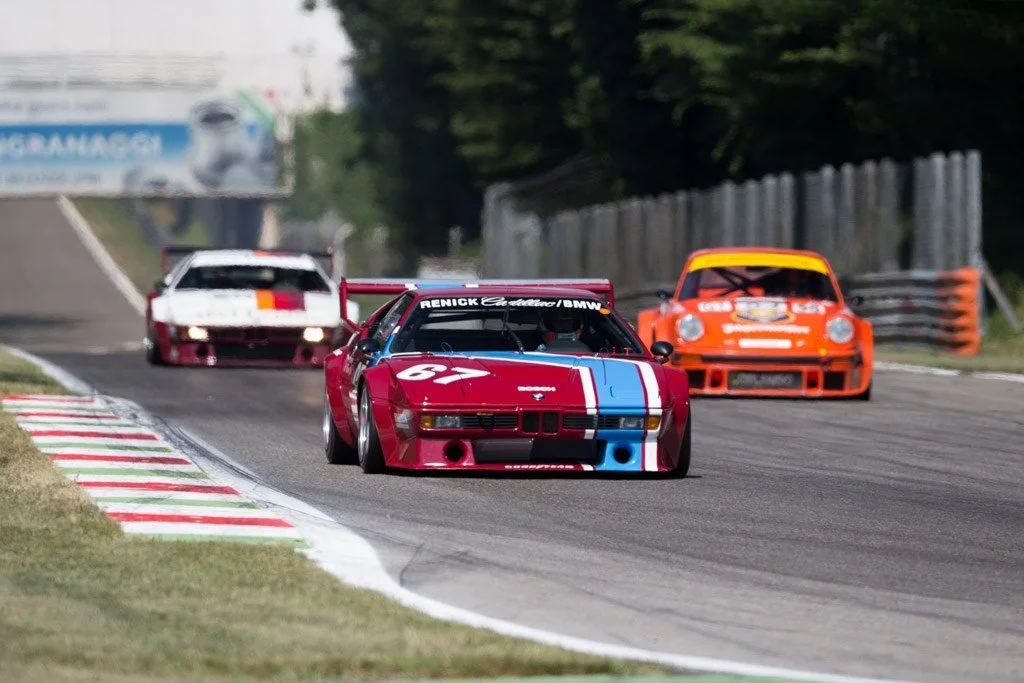
Ahead of the 2013 season, chassis 4301195 was then acquired by a discerning German collector and historic racer. Still under the care of Graber Sportsgarage no expense was spared on its preparation, including a new engine installed in the winter of 2018. It was then regularly raced in historic events between 2013 and 2019, where the driving duties were often shared by our very own Sam Hancock who was the owner’s professional driver and coach. After much testing and development, the car proved highly competitive in the GT2 class of Peter Auto’s CER II grid, with Sam scoring class pole at the 2019 Spa Classic, keeping pace with much faster prototypes in the process, and a 2nd in class at the 2017 Monza Historic.
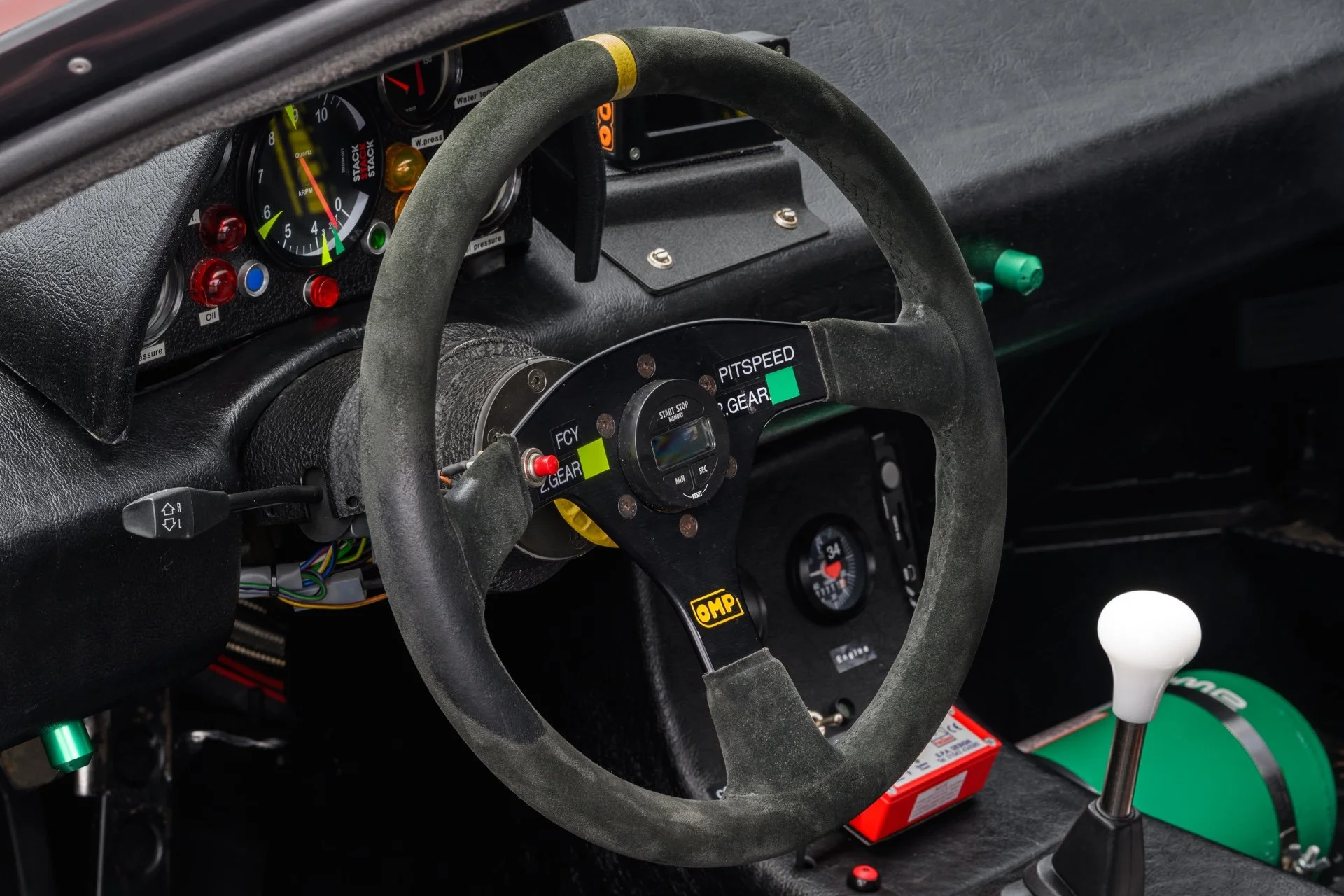
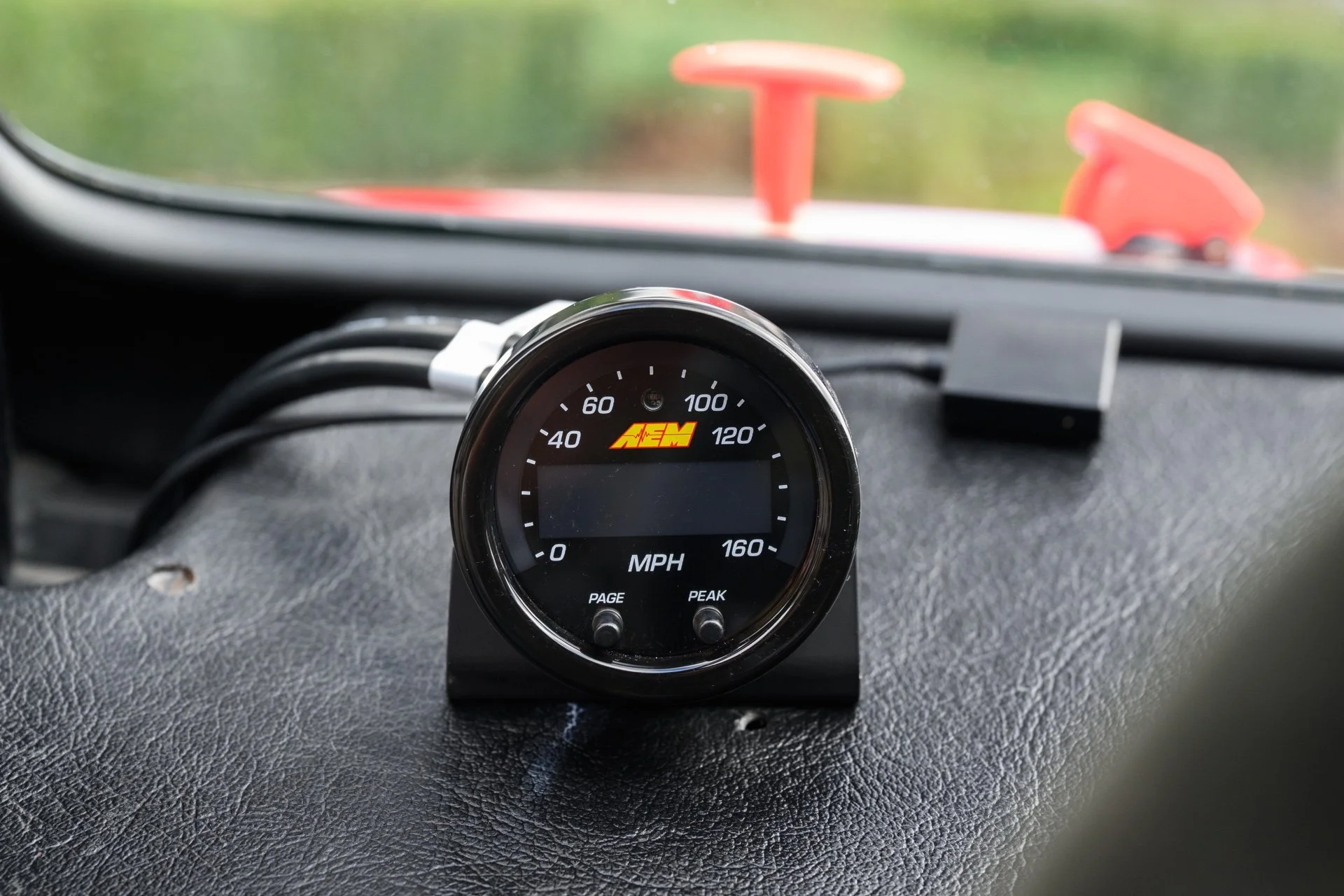
The next custodian was American collector and art dealer Adam Lindemann, who acquired the car early in 2020 but did not use it following the disruption of the global pandemic. It was then sold to the current vendor later that year. An esteemed collector and highly decorated concours entrant, our vendor entrusted the car to regular preparer, Aldo Riti at Riverside Performance Engineering, for adjustment to road-usable specifications. All reversible, this involved fitting a passenger seat and racing harness (with strengthened mounting points), 18-inch wheels, road tyres, bespoke dampers, new lights, electronic hand-brake and a speedometer. It was road registered in the UK and MOT’d in 2023. It has been used sparingly since, being driven for an estimated four hours on the road in unstressed conditions.
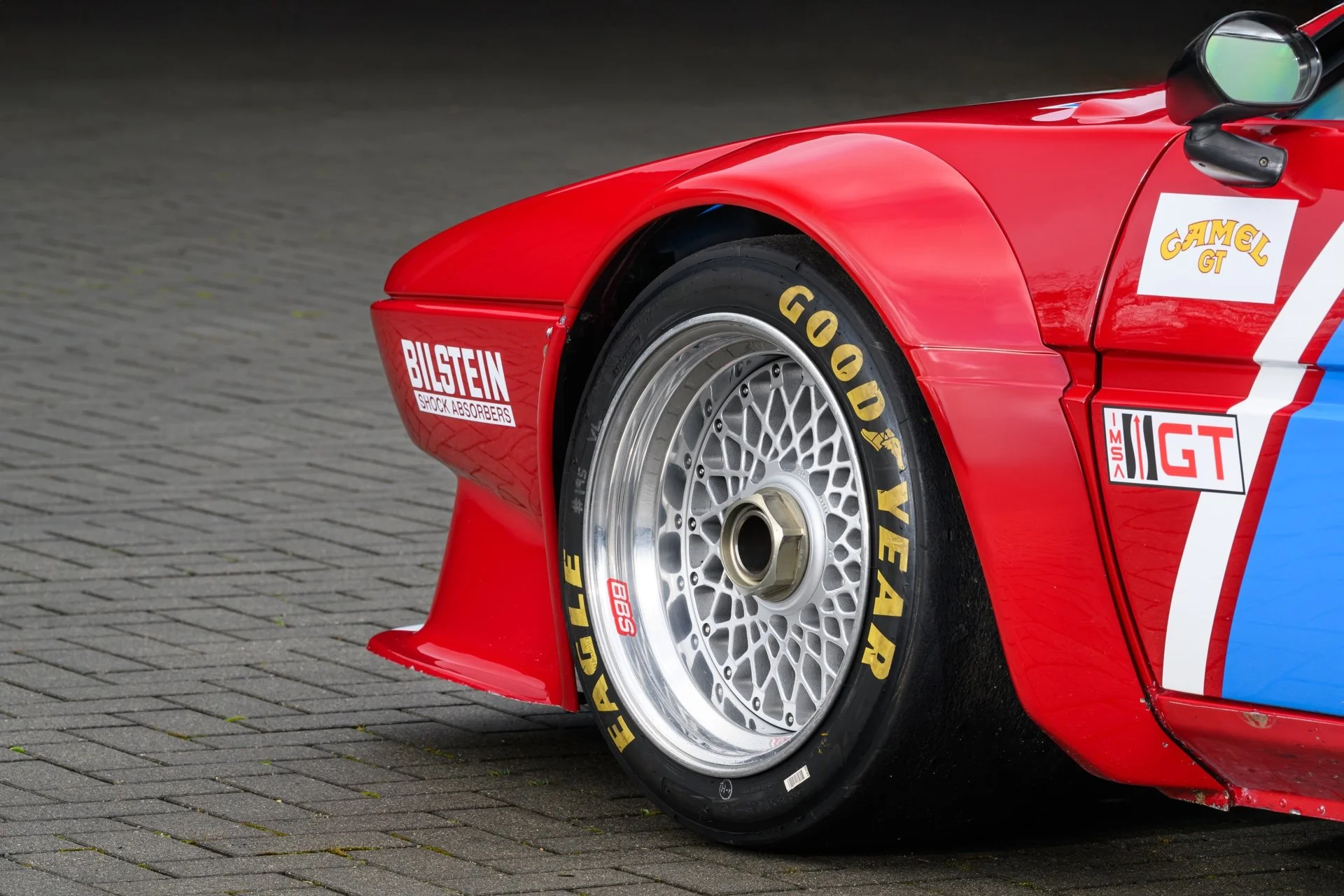
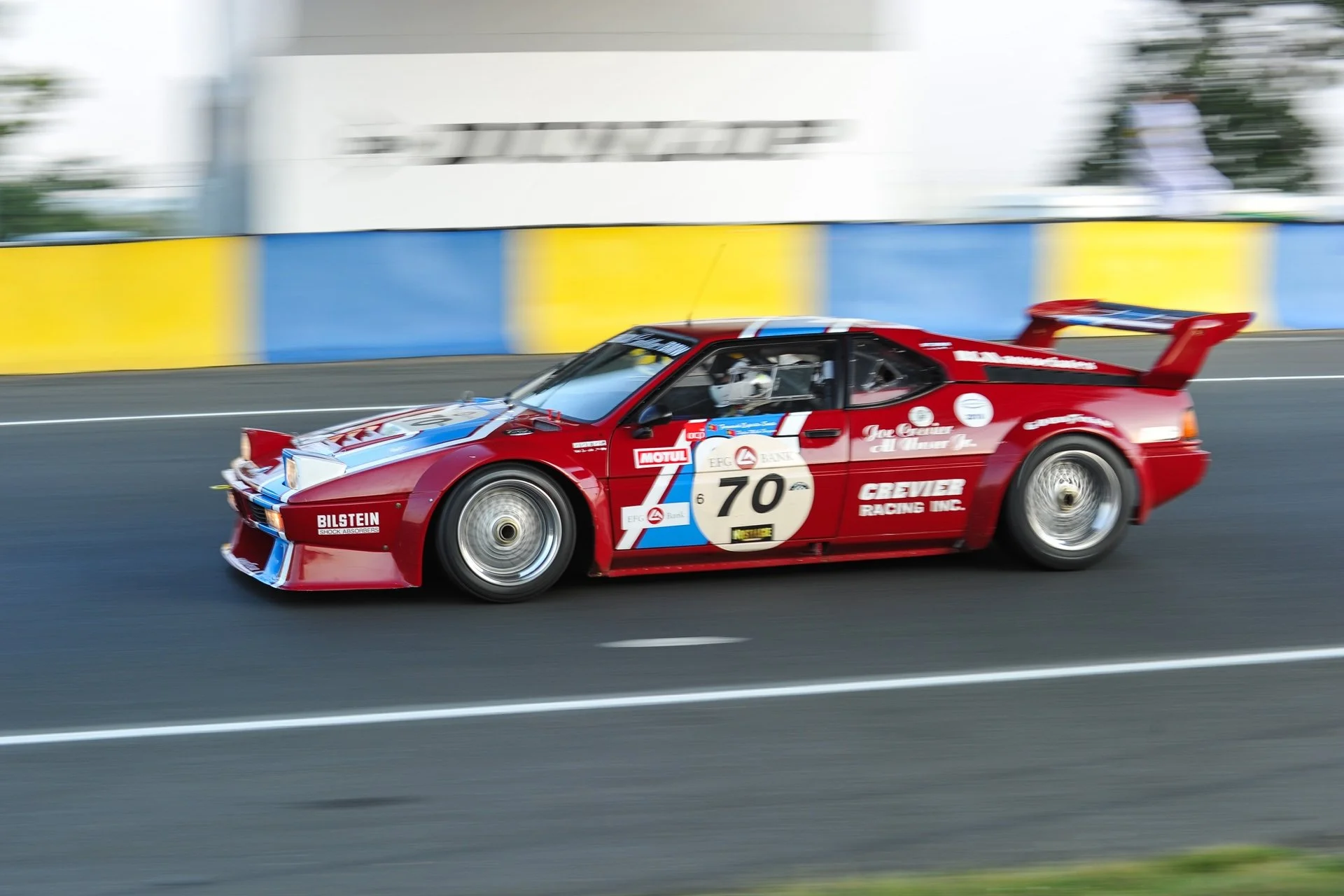
Today, it is back on its 16-inch racing wheels and still wears the red livery used by Crevier during the 1981 IMSA season. It is accompanied by two sets of spare 16-inch racing wheels, the road-usable 18-inch wheels mounted with fresh Michelin tyres, and the original racing springs and dampers (as used by Sam Hancock in Peter Auto) that meet the FIA’s HTP requirements. All adjustments by the vendor to road use are easily reversible should you prefer to prepare the car for circuit racing - and if not, you now have the basis of an exceptional tour or rally entrant.
With its road registered status and valid HTP, this glorious M1 Procar is eligible for Le Mans Classic Legend as well as the Tour Auto, Modena Cento Ore and the Classic Endurance Racing 2 Championship of the Le Mans Classic Series. Considering its period IMSA history, it is also a great candidate for the Daytona 24 Hours and Sebring 12 Hours retrospective events and also the Rolex Monterey Motorsports Reunion and much more.
-
Technical Passport:
Issuer: FIA
Date of expiry: 31st December 2027
Crack Testing:
Status: Not Applicable
Engine Life:
New engine installed in October 2018 by Graber Sportgarage
Current Engine Hours: Dyno mileage of 2 hours, with an estimated race mileage of 2 hours. An additional 4 hours of road use by the current vendor, as confirmed by Riverside Performance Engineering Ltd in January 2026
Recommended Engine Rebuild Interval: A revision is due every 35-40 hours for normal racing use, as recommended by Christian Traber of Graber Sportgarage
Gearbox:
4 hours of road use since purchase by the current vendor, with the gearbox oil changed during that time, as confirmed by Riverside Performance Engineering Ltd in January 2026
Fuel Cell Certification:
Expiry date: November 2022
New fuel cell required
Seatbelt Certification:
Expiry Date: Until the end of 2026
Seat Certification:
Expiry Date: Until the end of 2026
-
Category: Competition GT Car
Chassis: Steel tubular frame - design by Giampaolo Dallara
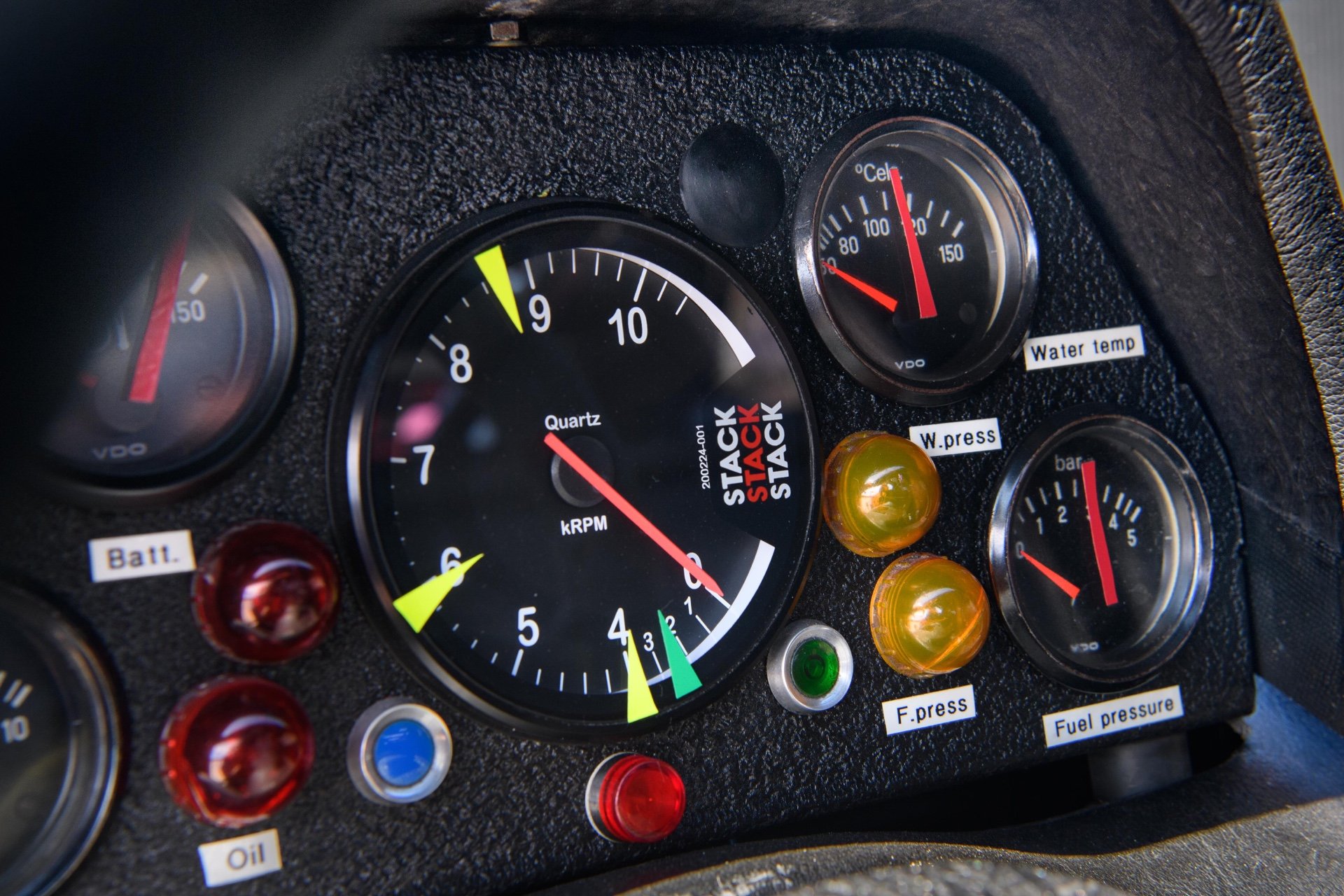
Engine: 3,453cc, BMW M88/1 24-valve, naturally-aspirated straight-six, producing 491 bhp @7,900 RPM (according to a dyno sheet from Rutronics in September 2018)
Gearbox: ZF five-speed manual transmission
Front & Rear suspension: Double wishbones, coil springs, adjustable telescopic dampers, adjustable anti-roll bar (the current dampers fitted to the car are Quantum One.Zero 3-way adjustable dampers, set up for road use, the car comes with a full set of dampers set up for historic circuit racing)
Brakes: ATE ventilated steel discs all-round
Weight: Estimated weight of 1,000 kgs, according to Riverside Performance Engineering in January 2026
Tyres: Competition use: 16-inch Avon racing slicks/wets, Road use: 18-inch Michelin road tyres
-
Le Mans Classic Legend
Newly announced, Le Mans Classic Legend will alternate with Le Mans Classic Heritage each year, focusing on cars that competed between 1976 and 2015. Held over four days, this BMW M1 Procar would be eligible for the Plateau 6 grid, for cars which competed at Le Mans between 1976 and 1981 and would be highly competitive among the GT classes. The first edition is set to take place in July 2026.
Peter Auto – Classic Endurance Racing 2
For Le Mans Prototypes and GT cars, which competed in major endurance championships between 1972 and 1981, Peter Auto’s CER2 holds a full annual calendar of events in Europe and the Middle East. These events take place at some iconic circuits, including Spa, Imola and Paul Ricard. This particular M1 Procar has proven itself not only a GT class front runner in CER2, but also capable of challenging all but the fastest few of the prototype entries.
Tour Auto
The annual Tour Auto is one of the most prestigious rallies in Europe. It is held over six days in April, with the rally travelling from Paris to Nice and is for models, which competed in the Tour de France between 1951 and 1986. The next running of the Tour Auto is set to take place between 3rd-9th May, 2026 and the M1 Procar is fast becoming a sought-after contender for entrants seeking a chance at overall victory.
Modena Cento Ore
The annual Modena Cento Ore is one of Europe’s most popular rallies. Held over a week in October, with the rally travelling from Modena to Rome and is for cars constructed between 1919 and 1981, which hold a valid FIA HTP. The next running of the Modena Cento Ore is set to take place between October 6th and 11th, 2026.
HSR Group 8 - Including Daytona and Sebring Classics
For Post-Historic FIA Grp 4/5/6 and IMSA GTs, HSR’s Group 8 holds a number of events in the United States. Among these events are two of the premier events for historic endurance competition, which are HSR Classic Daytona in November and HSR Classic Sebring 12 Hour in December.
Monterey Motorsports Reunion – Peter Gregg Trophy
This annual event takes place during the iconic Monterey car week at the world-renowned Laguna Seca circuit. This event holds a variety of races, including the Peter Gregg Trophy for cars which competed in Endurance Championships, including IMSA GT, between 1973 and 1981. The next event takes place in August 2026.
-
The car is accompanied by a useful spares package, including three sets of wheels (two 16-inch racing sets and one 18-inch road-useable set), the original racing set of HTP-conforming dampers (as used and raced by Sam Hancock between 2015-2019), spare front lights and brake pads.
-
Car Location: this car is located at our Petersfield showrooms in Hampshire, United Kingdom where viewings are welcome by appointment.
Taxes: Car is sold UK taxes paid
Sam Says“A thousand kilograms, nearly 500bhp, a mid-mounted 3.5-litre straight-six, a Dallara-designed chassis, proper suspension and proper brakes, wide racing slicks, and a lovely five-speed H-pattern ZF gearbox. These are dream ingredients — and they deliver a sensational driving experience, especially in this example, which I’ve been privileged to campaign extensively over the past decade and can confidently say is one of the very best.”
VideoWatch our very own Sam Hancock take this very BMW M1 Procar to CER2 class pole at the 2019 Spa Classic!
GALLERY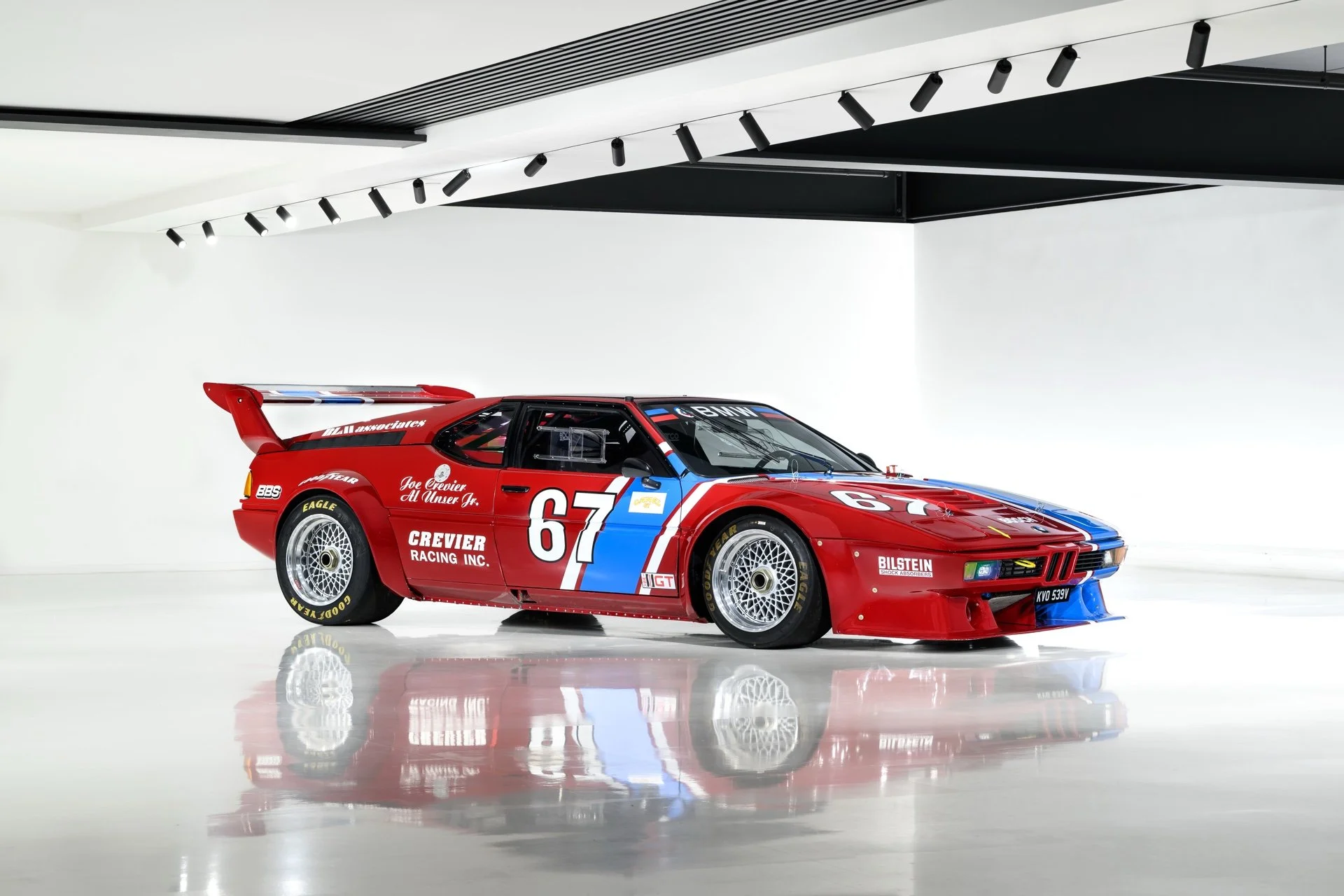

EnquiriesFor further information, please don’t hesitate to contact us.
ImagesTim Scott, Wouter Melissen